
Written by Acorn Sales Company, manufacturing stamps and seals since 1964 · Reviewed by Holly R, VP of Sales and Marketing at Acorn Sales, against Vermont Secretary of State, Office of Professional Regulation on 22 September 2026 · Updated 22 September 2026
Vermont requires every licensed forester to possess a seal and to apply it. Rule 6-3 of the Administrative Rules for Foresters opens: “Each forester shall possess a seal embosser, stamp, or electronic insignia, in a format provided at the Office website. Application of the seal denotes formal acceptance of professional responsibility for the forestry work bearing the seal. Non-use of a seal does not excuse a licensee from any professional responsibility.” Subsection (b) adds the application duty: “A stamp or seal must be affixed to any completed, written forestry work product prepared by or under the supervision of the licensee.” Shall, and must. There is no permissive reading of this rule.
There is one gap on this page and it is the one that affects your order. The rule does not state the seal’s wording, shape or size. It delegates all of that to a template: the seal must be “in a format provided at the Office website.” That template is published by the Office of Professional Regulation as a Forester Seal Template PDF. We could not read it. The file carries no machine readable text, and the host refused a direct download to our tools, so we cannot tell you what it says. Request the template from OPR before you have artwork cut, and do not let anyone design a Vermont forester seal without it.
Vermont forester seal requirements at a glance
| Requirement | Vermont rule | Source |
|---|---|---|
| Seal required | Yes, mandatory on both counts. Possession: “Each forester shall possess a seal embosser, stamp, or electronic insignia.” Application: “A stamp or seal must be affixed to any completed, written forestry work product prepared by or under the supervision of the licensee.” | Administrative Rules for Foresters, Rule 6-3 (Seals and Stamps), lead paragraph and (b) |
| Required elements | Unresolved, and this is the gap on this page. Rule 6-3 lists no elements. It says the seal must be “in a format provided at the Office website,” and that template is an image only PDF we could not read. The only element list in the rule itself is the printed fallback in 6-3(c): the licensee’s name, Vermont license number and license expiration date. That describes the fallback, not the seal, and we do not assert it as the seal’s content. Get the template from OPR before ordering. | Rule 6-3; OPR Forester Seal Template (not readable to us) |
| Size and shape | None is published in the rule. Rule 6-3 states no diameter, no dimension and no shape. Any dimension would sit in the OPR template, which we could not read. We did not infer a size from another state or from any product. | Rule 6-3; OPR Forester Seal Template (not readable to us) |
| Device allowed | Three, expressly and on an equal footing: a seal embosser, a stamp, or an electronic insignia. No device is excluded and no reproduction test is imposed. | Administrative Rules for Foresters, Rule 6-3 (Seals and Stamps) |
| Signature and date | Not addressed. Neither Rule 6-3 nor 26 V.S.A. ch. 101 requires a signature or a date alongside the seal. The only date named anywhere is the “license expiration date” in the printed fallback at 6-3(c). | Administrative Rules for Foresters, Rule 6-3 (Seals and Stamps)(c); 26 V.S.A. ch. 101 |
| What must be sealed | “any completed, written forestry work product prepared by or under the supervision of the licensee, including without limitation: (i) management plans and related maps; (ii) timber appraisals; (iii) contracts and agreements; and (iv) regulatory or permitting filings completed in the licensee’s capacity as a forester.” The list is expressly not exhaustive. Working papers, incomplete work, notes, correspondence and other non-deliverable work are excluded by 6-3(d). | Administrative Rules for Foresters, Rule 6-3 (Seals and Stamps)(b), (d) |
| Electronic seal | An electronic insignia is one of the three permitted forms, named in the primary device list rather than in a separate rule. No digital certificate, PKI or authentication technology is required or mentioned. Rule 6-3(d) also relieves the duty for “electronic submissions that do not allow for the same.” | Administrative Rules for Foresters, Rule 6-3 (Seals and Stamps), (d) |
| Renewal and lapse | Licenses “shall be renewed every two years upon payment of the renewal fee,” with 24 hours of continuing education per period, and OPR states that expiration dates are printed on the license. Effect on the seal is not directly addressed: no rule requires surrender of a seal. It is a violation to “practice forestry during the time a license issued under this chapter is suspended or revoked.” Name change is not addressed. | 26 V.S.A. Sec. 5224(a); 26 V.S.A. Sec. 5203(a)(5) |
| Firm requirements | Not addressed. 26 V.S.A. ch. 101 licenses individuals. No firm licensure and no firm seal is provided for. | 26 V.S.A. ch. 101, Sec. 5201 to 5226 |
| Regulator | Vermont Secretary of State, Office of Professional Regulation. Foresters are regulated by the Director of Professional Regulation with advisor appointees, so there is no separate forester board. | 26 V.S.A. Sec. 5211, Sec. 5212 |


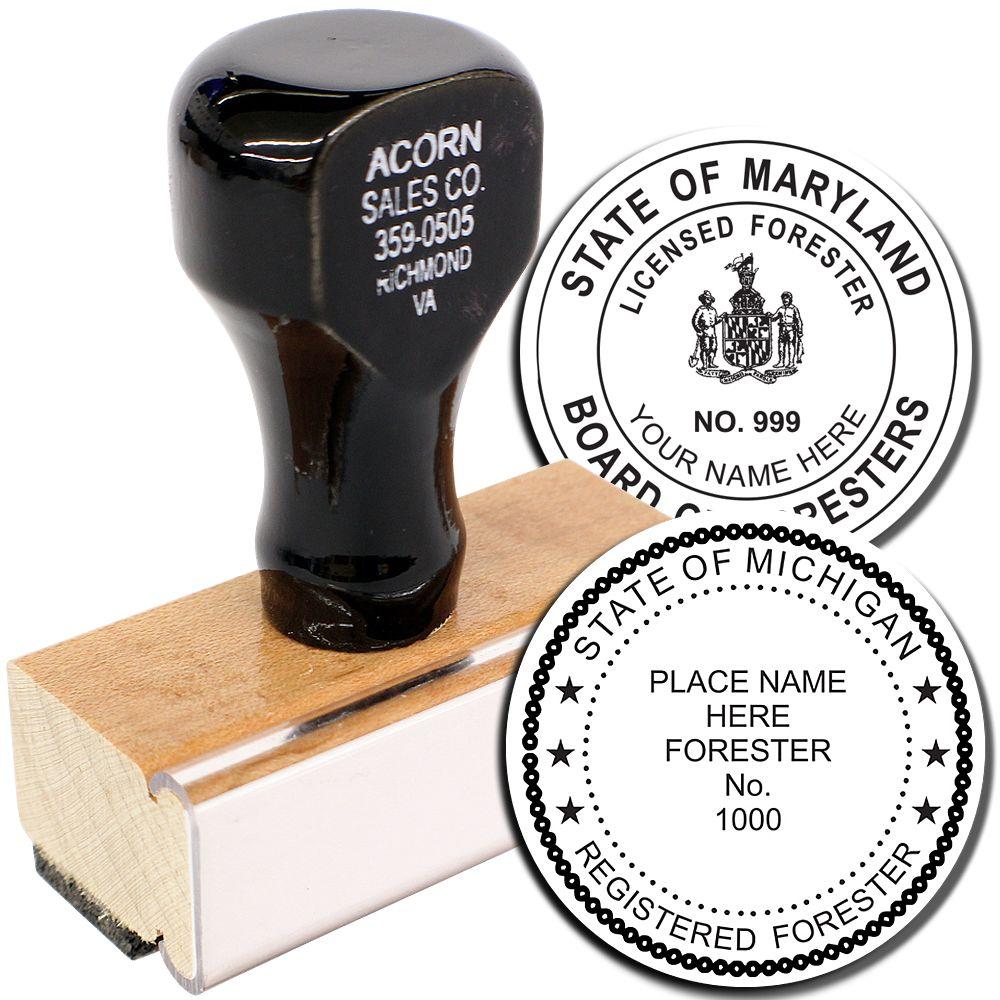

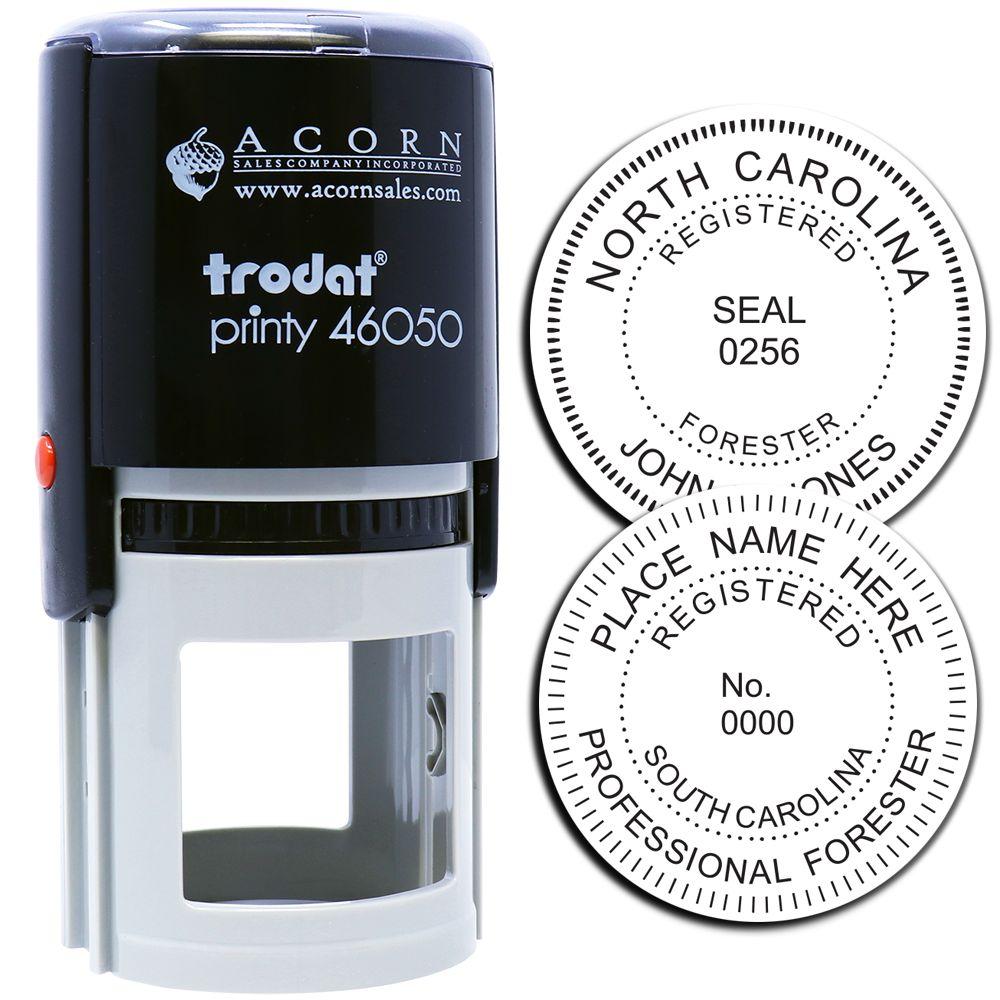

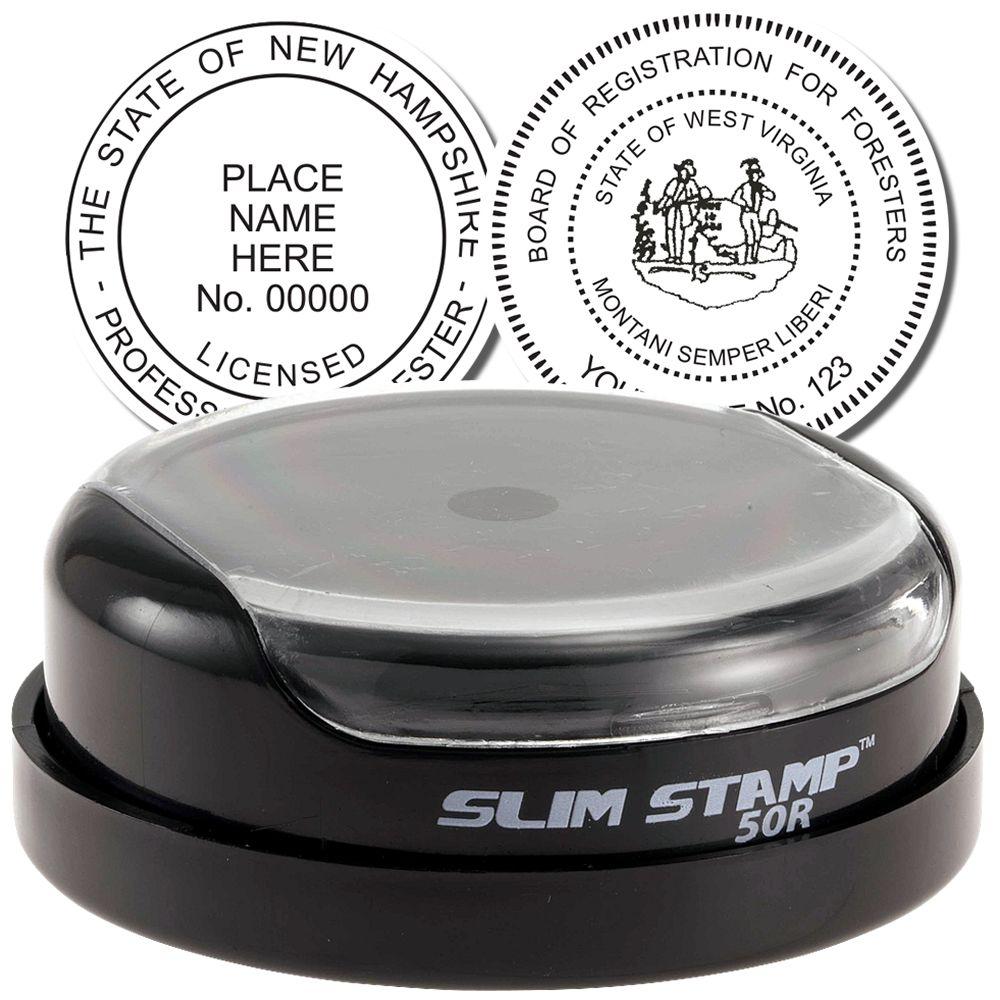

Does Vermont require a forester to have a seal?
Yes, and the rule imposes two separate duties. The first is possession: “Each forester shall possess a seal embosser, stamp, or electronic insignia, in a format provided at the Office website.” That obligation attaches to holding the license, not to producing any particular document. The second is application, in Rule 6-3(b): “A stamp or seal must be affixed to any completed, written forestry work product prepared by or under the supervision of the licensee.”
The rule also closes the obvious loophole before anyone can try it. The lead paragraph states “Application of the seal denotes formal acceptance of professional responsibility for the forestry work bearing the seal. Non-use of a seal does not excuse a licensee from any professional responsibility.” Leaving the seal off does not move the responsibility off you. It simply means you have failed to apply a seal you were required to apply.
The format comes from a template, and we could not read it
This is the part of the Vermont page that matters most, so we are putting it high rather than burying it. Rule 6-3 does not describe the seal. It does not give a diameter, a shape, a legend or a wording. It delegates the whole design with seven words: “in a format provided at the Office website.”
That format is published by the Office of Professional Regulation as a Forester Seal Template PDF, linked from the forester forms and instructions page. We could not read it, and we will not pretend otherwise. The PDF contains no machine readable text, being an image only file, and a direct download from that host was refused to our tools. So we can tell you with confidence that a template exists and that the rule makes it binding, and we cannot tell you what is on it. Ask OPR for the template, or download it yourself from the forester forms page, and send that to whoever makes your device. A Vermont forester seal designed without the template is a guess, and the rule ties compliance to the format the Office provides.
What the rule does hint about the content, and why we stop short
There is one clue inside the rule and it is worth reading carefully, along with its limits. Rule 6-3(c) provides a fallback for a licensee who is away from their device: “Where a licensee cannot reasonably access his or her stamp or seal, the licensee may print the licensee’s name, Vermont license number, and license expiration date in lieu of a stamp or seal.”
Three elements are named there: name, Vermont license number, license expiration date. It would be reasonable to suppose the seal itself carries the same three, since the printed version stands in for it. Reasonable, but not stated. The rule describes what you may write by hand when the seal is out of reach; it does not say the seal bears those items. We report the fallback accurately and decline to convert it into a specification. The template is the authority on the seal’s content, and that is where the answer is.
Three devices, and an electronic insignia among them
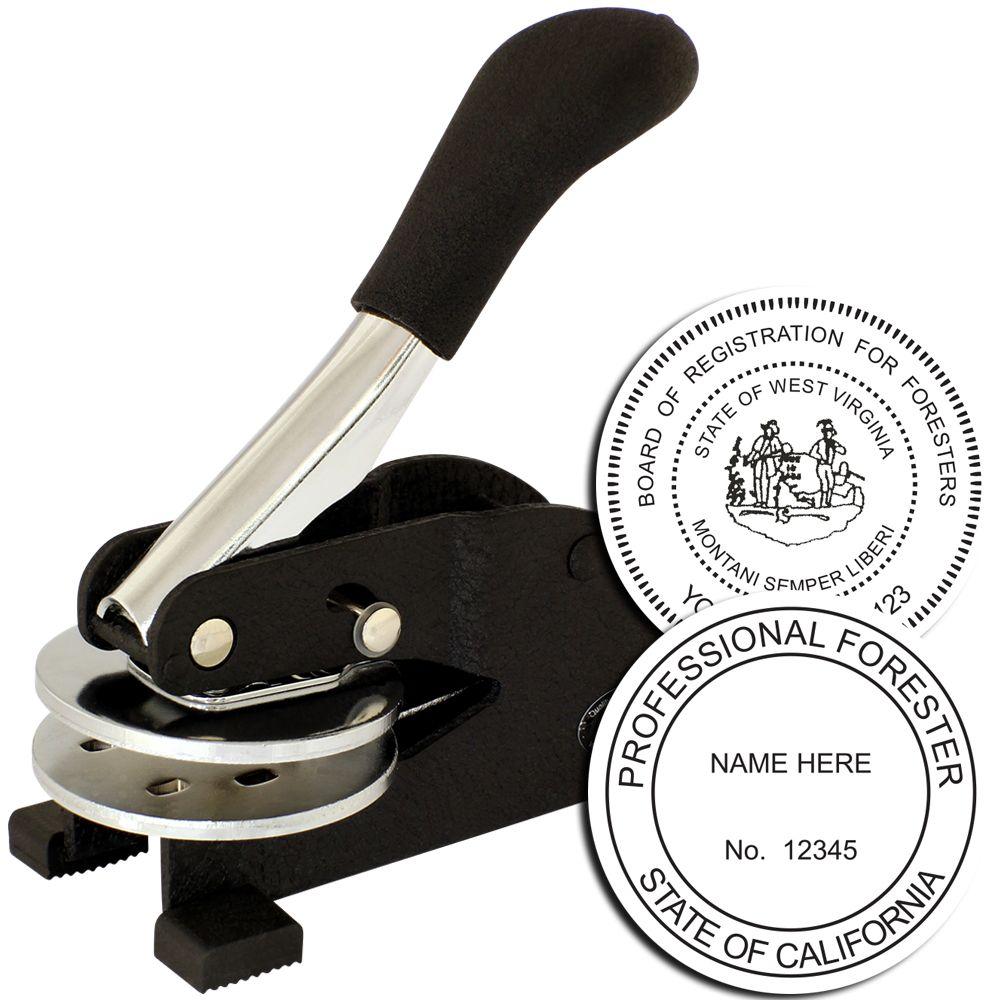
Rule 6-3 names a seal embosser, a stamp and an electronic insignia, and treats all three as satisfying the possession duty. Nothing excludes an embosser, and no reproduction or legibility test is attached that would quietly disqualify one.
Vermont is notable for where it puts the electronic option. Many states bolt an electronic seal provision onto the end of a rule written for ink and paper, often with conditions about digital certificates or signing platforms. Vermont names the electronic insignia in the primary device list alongside the physical devices and attaches no technology conditions to it at all. There is no requirement for a third party certificate, no public key infrastructure, and no approved platform. An electronic insignia in Vermont is the template design in electronic form, applied by you.
What has to be sealed
Rule 6-3(b) gives the duty and then a list that it expressly does not close: a stamp or seal must be affixed to any completed, written forestry work product prepared by or under the supervision of the licensee, “including without limitation: (i) management plans and related maps; (ii) timber appraisals; (iii) contracts and agreements; and (iv) regulatory or permitting filings completed in the licensee’s capacity as a forester.”
Read the four items and the breadth is obvious. Management plans and their maps, which is the core deliverable. Timber appraisals, which in Vermont sit inside the forester’s scope rather than a separate credential. Contracts and agreements, which foresters in other states routinely leave unsealed. And regulatory or permitting filings made in your capacity as a forester, which reaches paperwork going to a town, a district or a state program. The words “including without limitation” mean a deliverable not on that list is not thereby exempt. The test is whether it is a completed, written forestry work product.





What does not need the seal
Rule 6-3(d) draws the boundary, and it is a sensible one: “This rule shall not be construed as requiring a stamp or seal upon a forester’s working papers, incomplete work, notes, correspondence, or other non-deliverable work; nor shall it be construed as requiring a stamp or seal on electronic submissions that do not allow for the same.”
Two exemptions there. The first is about completeness: drafts, field notes, internal working papers and ordinary correspondence are outside the duty, which is why 6-3(b) is written around a “completed” work product. The second is practical and increasingly common: where an electronic submission system does not accept a seal, for example a web form that takes typed fields only, the rule does not require one. That is a narrow relief tied to the system’s capability, not a general option to skip the seal on anything filed electronically.
What the seal must not be applied to
Rule 6-3(a) states the prohibitions: “A stamp or seal shall not be affixed to: (i) any document pertaining to subject matter that exceeds the licensee’s scope of practice based upon education, training, and experience; (ii) any document not prepared by the licensee or under the licensee’s supervision.”
Those pair with the lead paragraph’s statement that applying the seal “denotes formal acceptance of professional responsibility for the forestry work bearing the seal.” The seal is an assumption of responsibility, so it may not travel onto work outside your competence or work that is not yours. Rule 6-5(e) points the same way, requiring a forester not to “exaggerate or mislead clients or licensing authorities in relation to his or her qualifications, nor in relation to the degree of supervision afforded an unlicensed delegate.” Supervised work can carry your seal; unsupervised work cannot, and overstating the supervision is itself a conduct problem.
Signature and date are not addressed
Unlike New Hampshire, Vermont does not pair the seal with a signature requirement. We read all of Rule 6-3 and 26 V.S.A. ch. 101 and found no provision requiring a signature beside the seal, and none requiring the seal or the document to be dated.
The only date element anywhere in the seal material is the license expiration date named in the 6-3(c) printed fallback. Whether that date also appears on the seal is exactly the question the template would answer and we cannot. If your template does carry an expiration date, that changes how often you replace the device, which is a practical reason to read the template before you order rather than after.
Renewal, lapse and what the currency of the license implies
26 V.S.A. Sec. 5224(a) provides that “Licenses shall be renewed every two years upon payment of the renewal fee,” with 24 hours of continuing education per renewal period. OPR’s renewal instructions note that expiration dates are printed on your license.
The effect of a lapse on the seal is not directly addressed. Rule 6-3 says nothing about it, and no rule requires you to surrender or destroy a device. What the statute does say is that it is a violation to “practice forestry during the time a license issued under this chapter is suspended or revoked,” under 26 V.S.A. Sec. 5203(a)(5). Read that with 6-3(c), whose printed alternative includes the license expiration date, and the implication is that the currency of the credential travels with the marking. We state that as an implication rather than a rule, because the rule does not say it. A name change is likewise not addressed.




Vermont is a practice act, and an SAF designation is not a license
26 V.S.A. Sec. 5203(a) makes it a violation to “practice forestry unless licensed to do so under the provisions of this chapter” and to “represent himself or herself as being licensed in this State to practice forestry or use in connection with a name any words, letters, signs, or figures that imply that a person is a forester when not licensed.” Sec. 5202 defines a forester as “a person who is licensed to practice forestry under this chapter.” Both the work and the word are restricted.
Rule 1-9 closes a common misunderstanding: “the SAF Certified Forester designation does not entitle any unlicensed individual to practice or hold himself or herself out as a forester in Vermont.” A national certification is not a Vermont license, and it does not bring a right to a Vermont seal. Sec. 5204 exempts practice on one’s own lands, with a 400 acre ceiling for businesses, other licensed professionals, persons working under a forester’s supervision, and activities not requiring forestry expertise.
Ordering a Vermont forester seal
The order of operations matters more here than anywhere else in this batch. First, get the Forester Seal Template from the Office of Professional Regulation. It is published on the OPR forester forms and instructions pages and is the format Rule 6-3 makes binding. Second, decide which device or devices you want: an embosser, a stamp, an electronic insignia, or more than one. Third, send the template with your licensing details to whoever is making the device.
We can cut to the OPR template once you have it, and we can produce a matching electronic insignia from the same artwork so your paper and electronic deliverables read identically. What we will not do is invent a Vermont design, because the rule points at a specific document and we have told you plainly that we could not read it. Contact us with the template attached, and the forester stamps and seals overview shows how Vermont compares with states that publish the design in the rule itself.
Care, and the check at each renewal
Re ink a self inking stamp when the impression starts to gray rather than when it fails, keep a pre inked stamp capped, and keep ink devices out of heat and direct sun. Embossers need little beyond keeping grit off the die faces. Keep an electronic insignia file where only you can open it, since Rule 6-3(a) makes the seal an acceptance of personal responsibility and Rule 6-5(e) is concerned with overstated supervision.
At each two year renewal, check three things. Does the name on the device still match your license. Does the Vermont license number still match. And, if the OPR template includes a license expiration date, does that date still read correctly, because that is the one element that can make a correct device wrong at a renewal. If you are not sure what the template carries, that is another reason to have a copy of it on file. This page is a research summary and not legal advice.
- Forester Stamps and Seals: State Rules, Sizes and Prices
- New Hampshire Forester Seal: Exact 1-9/16 Inch Spec
- South Carolina Forester Seal: Optional, Two Fixed Sizes
Frequently asked questions
Does Vermont require a licensed forester to have a seal?
Yes. Rule 6-3 provides that “Each forester shall possess a seal embosser, stamp, or electronic insignia, in a format provided at the Office website,” and subsection (b) requires that a stamp or seal “must be affixed to any completed, written forestry work product prepared by or under the supervision of the licensee.”
What does a Vermont forester seal have to look like?
The rule does not say. It delegates the design to a Forester Seal Template published on the OPR website. We could not read that template: the PDF has no machine readable text and the host refused a direct download to our tools. Get the template from OPR before artwork is cut.
How big is a Vermont forester seal?
No size is published in the rule. Rule 6-3 states no diameter, dimension or shape. Any dimension would be in the OPR template. We did not infer a size from a neighboring state or from any product.
Can I use an electronic seal in Vermont?
Yes. An electronic insignia is one of the three devices named in Rule 6-3, alongside a seal embosser and a stamp. No digital certificate, signing platform or authentication technology is required or mentioned. Rule 6-3(d) also relieves the duty for electronic submissions that do not allow a seal.
Which documents need the seal?
Any completed, written forestry work product prepared by or under your supervision, including without limitation management plans and related maps, timber appraisals, contracts and agreements, and regulatory or permitting filings made in your capacity as a forester. The list is expressly not exhaustive.
Do I have to seal drafts and field notes?
No. Rule 6-3(d) says the rule does not require a stamp or seal on a forester’s working papers, incomplete work, notes, correspondence or other non-deliverable work.
Does the seal carry my license number and expiration date?
We cannot confirm it. Rule 6-3(c) names the licensee’s name, Vermont license number and license expiration date as what may be printed by hand when the seal is out of reach, which suggests the seal carries the same items, but the rule does not say so about the seal and we decline to assert it. The template answers this.
Does an SAF Certified Forester designation let me practice in Vermont?
No. Rule 1-9 states that “the SAF Certified Forester designation does not entitle any unlicensed individual to practice or hold himself or herself out as a forester in Vermont.” Vermont is a practice act with title protection under 26 V.S.A. Sec. 5203.








