

Written by Acorn Sales Company, manufacturing stamps and seals since 1964 · Reviewed by Holly R, VP of Sales and Marketing at Acorn Sales, against Title 8, Chapter 16 of the Tennessee Code Annotated, Tenn. Comp. R. & Regs. 1360-07-02 and 1360-07-03, and the Secretary of State’s notary FAQ on 21 September 2026 · Updated 21 September 2026
Tennessee runs its ink rule backwards from every other state: your stamp must not be black, and must not be yellow either. The statute calls for any other color, provided it appears black when photocopied. The seal must be circular, carrying your name at the top, your county of election at the bottom, and in the center either “State of Tennessee Notary Public” or “Tennessee Notary Public”. One thing that is not on a Tennessee seal is your commission expiration date, though it must appear on the certificate. And as in several states, the command to use a seal sits in the powers section rather than the section headed “Seal”.
Tennessee notary stamp requirements at a glance
| Requirement | Tennessee rule | Source |
|---|---|---|
| Stamp required | Yes | T.C.A. § 8-16-112(a) |
| Required wording | A circular seal; Your name as it appears on the commission, printed at the top; The county of election, printed at the bottom; The words “State of Tennessee Notary Public” or “Tennessee Notary Public”, printed in the center | Tenn. Comp. R. & Regs. 1360-07-02-.01 |
| Size and shape | Shape yes, size no. | Tenn. Comp. R. & Regs. 1360-07-02-.01, 1360-07-03-.04 |
| Ink color | Addressed, and it runs the opposite way from what most people assume. “Such stamp shall imprint the seal of office in any color other than black or yellow, provided the color used to imprint the seal shall be clearly legible and appear as black when photocopied on a non-color copier.” In practice that means blue, purple, green or red, with black and yellow the two prohibited colors. | T.C.A. § 8-16-114(a), (b) |
| Embosser | Permitted, and it cannot invalidate an acknowledgment: “the use of an embossed notary seal after May 12, 2003, shall not render such an acknowledgement defective”. Older impression seals were grandfathered too, remaining “valid for use until the end of the notary’s term of office”. That said, the statute’s operative design contemplates “a rubber or other type of stamp” and puts the color rule on that stamp, and § 8-16-114(b) measures compliance by whether the document “legibly reproduces the required elements of the seal”, which an uninked emboss will not do. | T.C.A. § 8-16-114(a), (b) |
| Commission term | Terms run four years, beginning on the date the Governor issues the commission. | T.C.A. §§ 8-16-103, 8-16-104, 8-16-106, 8-16-107, 8-16-109, 8-16-110, 8-16-114(c), 8-16-120 |
| Name or address change | Report a surname change, or a move of your residence or principal place of business to another Tennessee county, to the county clerk of the county that elected you, not to the Secretary of State, with a $7 fee; the clerk then notifies the Secretary of State and forwards $2 of the fee. | T.C.A. §§ 8-16-103, 8-16-104, 8-16-106, 8-16-107, 8-16-109, 8-16-110, 8-16-114(c), 8-16-120 |
| Lost or stolen stamp | Not addressed for the paper seal. | T.C.A. § 8-16-114(c) |
| Commissioning authority | Three offices at once: the county legislative body elects you, the Governor issues the commission, the Secretary of State transmits and administers it, and the county clerk holds your $10,000 surety bond. Acting before the bond is filed is a Class C misdemeanor | Title 8, Chapter 16 of the Tennessee Code Annotated, Tenn. Comp. R. & Regs. 1360-07-02 |
Rules for other states are on notary stamp requirements by state.




Is a notary stamp required in Tennessee?
Yes, on every act within your authority, and the command is in the powers section rather than the section titled “Seal”: “in all such cases the notary public’s seal shall be affixed and the notary public shall sign such documents in ink by the notary’s own hand unless otherwise provided by law”. The section actually titled Seal carries the procurement, color and surrender duties instead.
The governing text is T.C.A. § 8-16-112(a); § 8-16-114(a), (c).
What must appear on a Tennessee notary stamp?
- A circular seal
- Your name as it appears on the commission, printed at the top
- The county of election, printed at the bottom
- The words “State of Tennessee Notary Public” or “Tennessee Notary Public”, printed in the center
Every one of those elements, and the circular shape, comes from an administrative rule rather than the statute. Section 8-16-114(a) says only that “The secretary of state shall prescribe and design an official seal to be used by a Tennessee notary public” and lists nothing. Rule 1360-07-02-.01 supplies the whole design, and its standard is that your seal “substantially conforms” rather than matches exactly. The commission expiration date is not a seal element: it belongs on the certificate under § 8-16-115, and leaving it off “shall not render void or invalidate such certificate of acknowledgement”. The online notary’s electronic seal is the exception and must carry the expiration date.
What size and shape must a Tennessee notary stamp be?
Shape yes, size no. The seal must be circular under Rule 1360-07-02-.01, on the substantially-conforms standard. No diameter, no border requirement appears in § 8-16-114, § 8-16-112, the rule, or the Secretary of State’s FAQ. Note the deliberate divergence for online notaries: the electronic seal may be circular, square or rectangular under Rule 1360-07-03-.04.
Notary public stamps are made to these conventions, and we check your lines against the statutory wording before we make the stamp.


What ink color is required for a Tennessee notary stamp?
Addressed, and it runs the opposite way from what most people assume. “Such stamp shall imprint the seal of office in any color other than black or yellow, provided the color used to imprint the seal shall be clearly legible and appear as black when photocopied on a non-color copier.” In practice that means blue, purple, green or red, with black and yellow the two prohibited colors. Then read the end of the same subsection, which removes the teeth: “No person shall incur any civil or criminal liability for failure to imprint the seal of office in a color required by this subsection (a) nor shall any document or title imprinted with a seal of the wrong color be invalid because of such failure.” Both halves are true at once. Outside the notary act there is no statewide recording color rule: § 66-24-101(b)(1) lets a register refuse a writing that is illegible or cannot be legibly reproduced, but § 66-24-101(b)(2) requires registration anyway once the prescribed best-available-original affidavit is attached.
More on the trade-off in stamp ink color rules.
Is a notary embosser required or optional in Tennessee?
Permitted, and it cannot invalidate an acknowledgment: “the use of an embossed notary seal after May 12, 2003, shall not render such an acknowledgement defective”. Older impression seals were grandfathered too, remaining “valid for use until the end of the notary’s term of office”. That said, the statute’s operative design contemplates “a rubber or other type of stamp” and puts the color rule on that stamp, and § 8-16-114(b) measures compliance by whether the document “legibly reproduces the required elements of the seal”, which an uninked emboss will not do. Use an inked stamp as your working seal and keep the embosser as a supplement if you want one. Nothing requires an embosser.
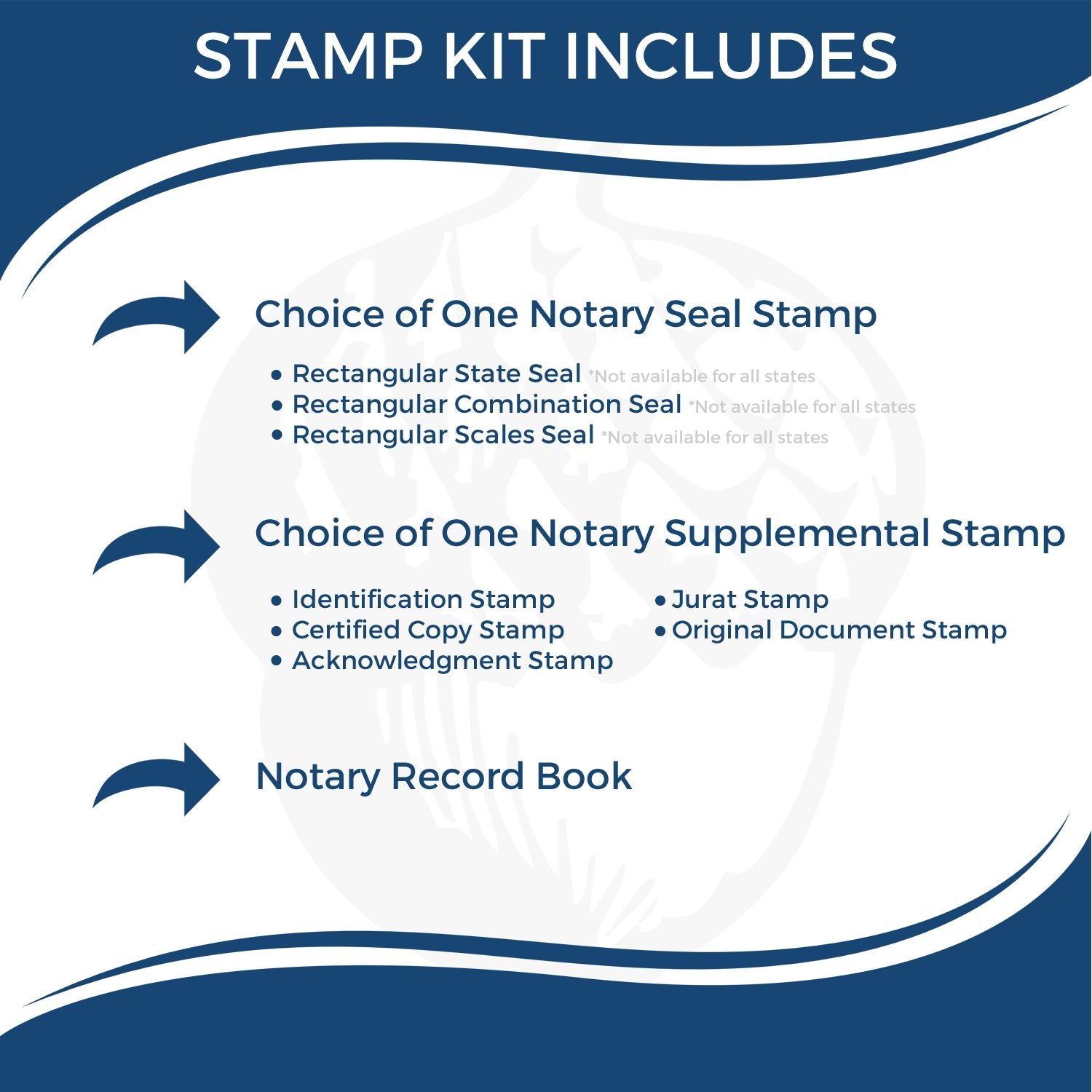
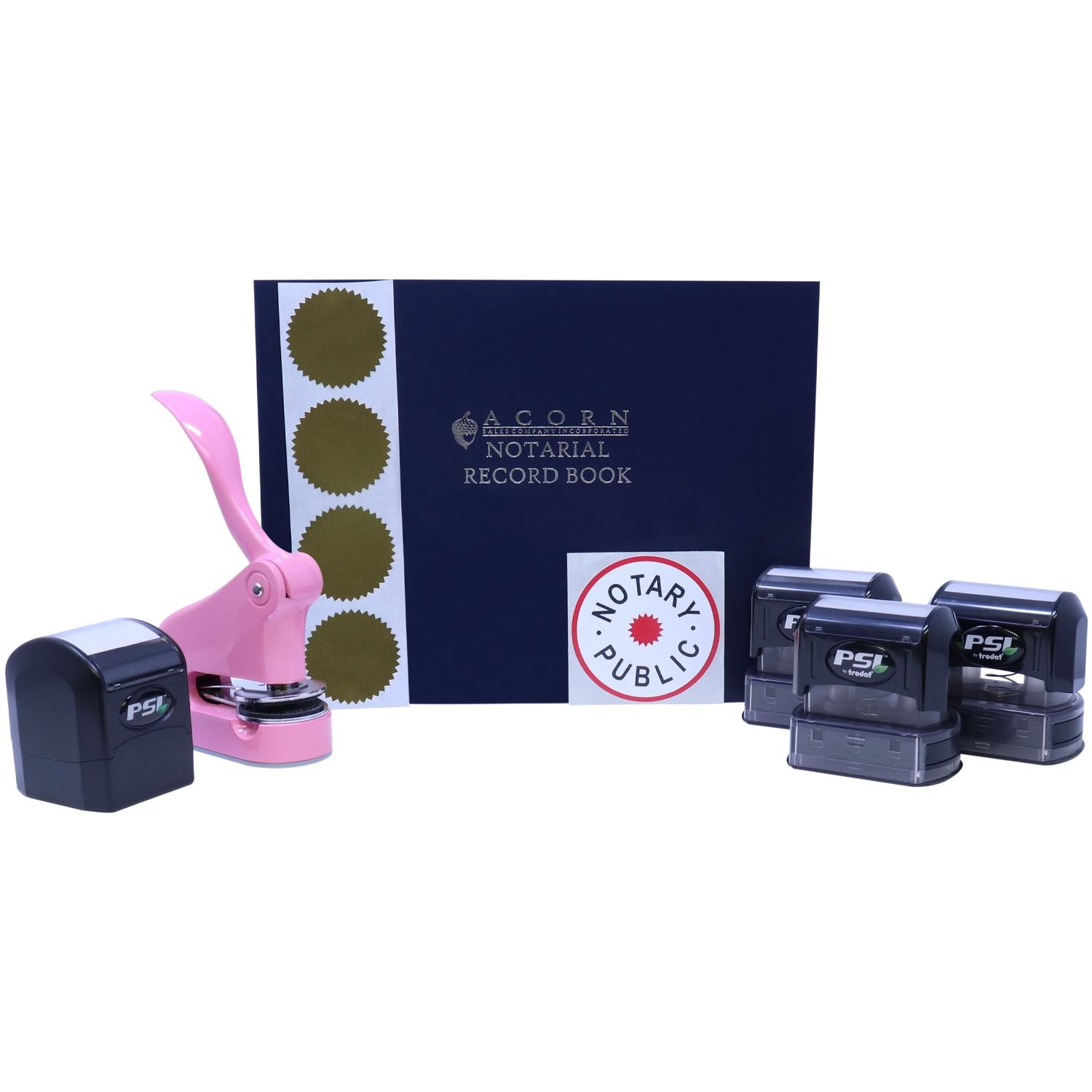
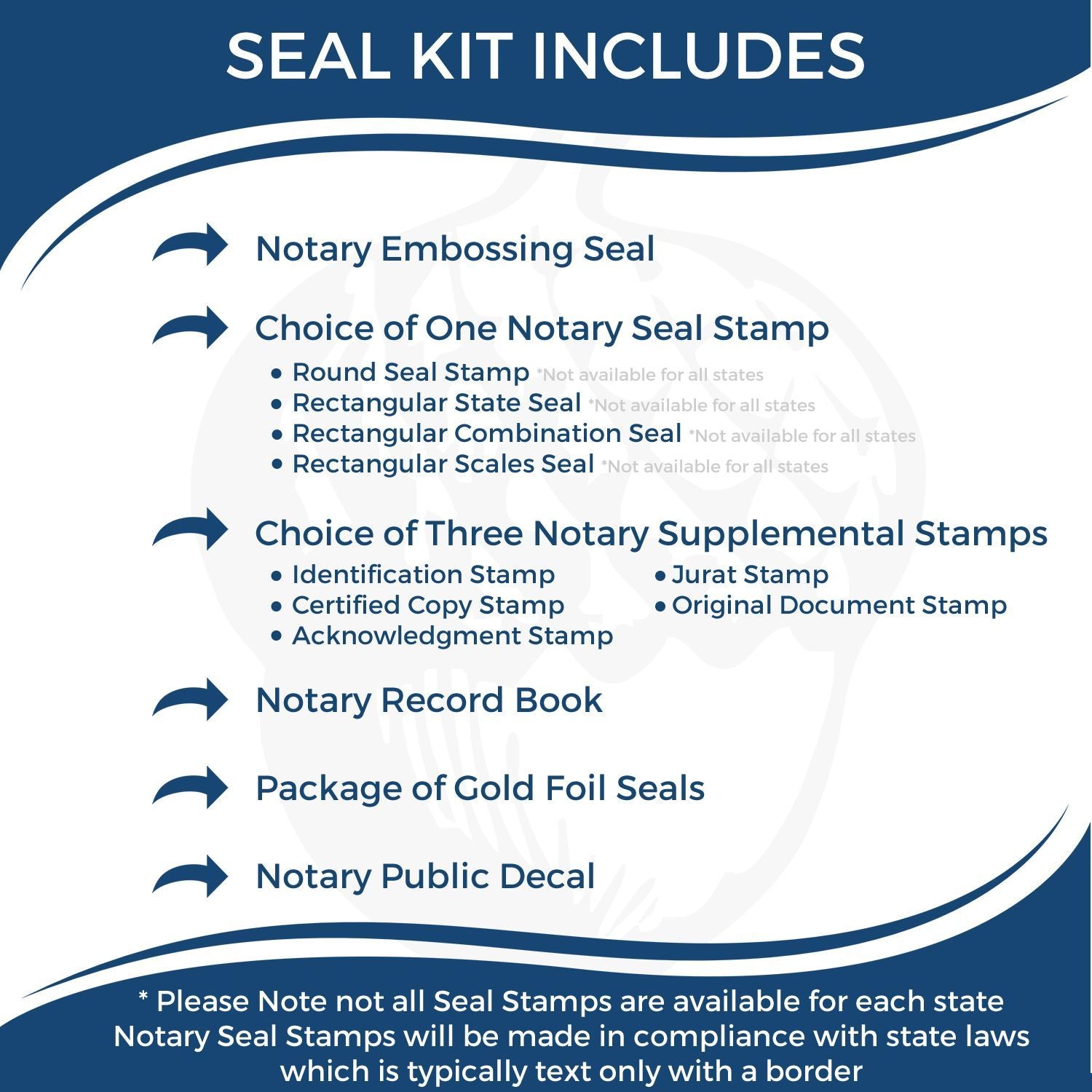
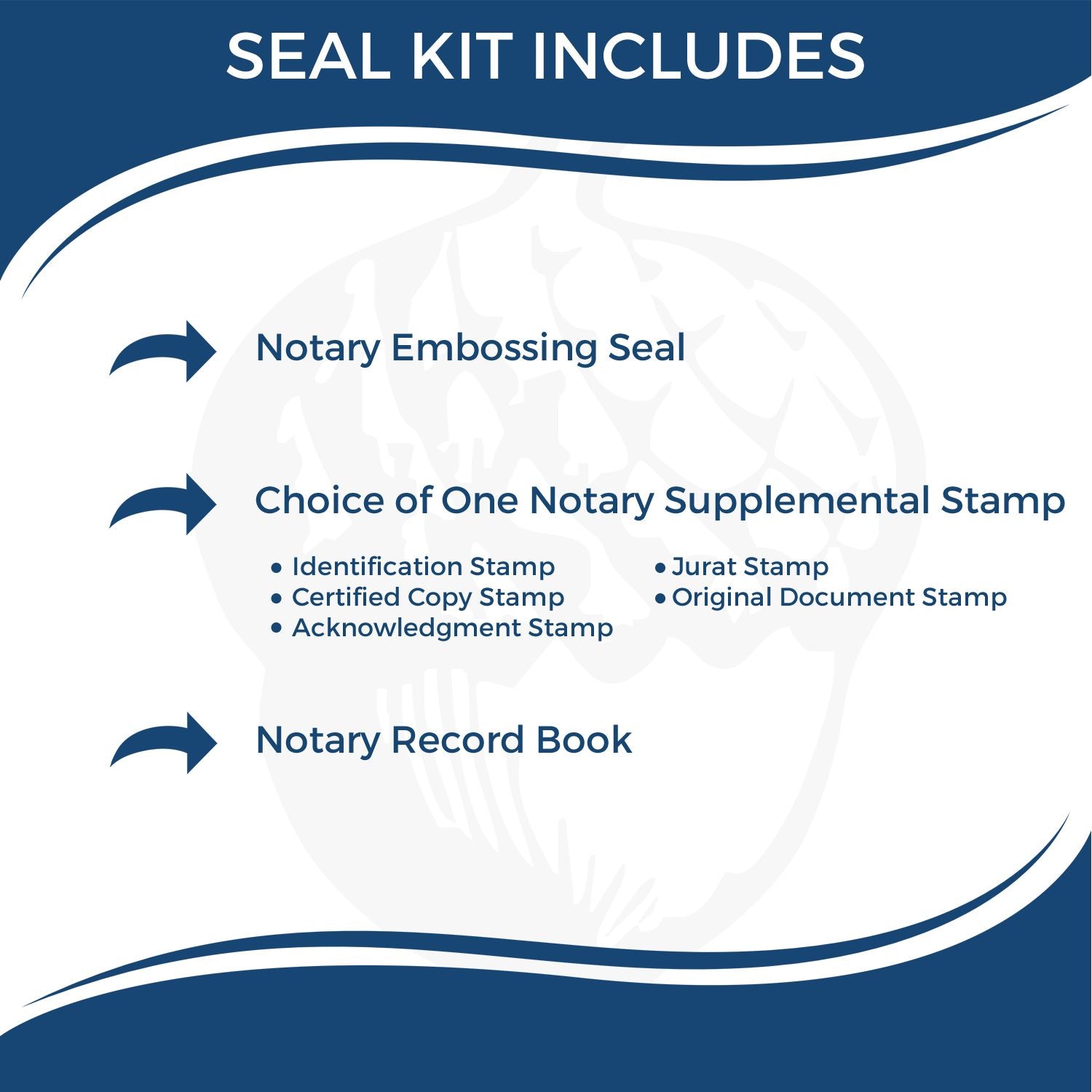
Notary embossing seal kits and inked stamp kits cover both formats. See also notary stamp vs. embosser.
Black ink is prohibited, and the seal mandate is not in the seal section
Start with color, because Tennessee is the mirror image of the states that demand black. Section 8-16-114(a): “Such stamp shall imprint the seal of office in any color other than black or yellow, provided the color used to imprint the seal shall be clearly legible and appear as black when photocopied on a non-color copier.” Blue, purple, green and red all qualify. Black and yellow are the two forbidden colors.
Then read to the end of the same subsection, which takes the teeth straight back out: “No person shall incur any civil or criminal liability for failure to imprint the seal of office in a color required by this subsection (a) nor shall any document or title imprinted with a seal of the wrong color be invalid because of such failure.” Both errors are in circulation, so say both things. Tennessee has a color rule, and it has no sanction. A title company can still insist on it, and they do.
The mandate itself is somewhere else again. Section 8-16-114 is the one titled “Seal of notary public”, but the words “the notary public’s seal shall be affixed” are in § 8-16-112(a), titled “Scope of authority”. And every element on the face of the seal, including the circular shape, comes from administrative rule 1360-07-02-.01 rather than the statute, which just tells the Secretary of State to design one.
Last, the duty hardly anyone performs. Section 8-16-114(c) requires you to surrender the seal to the county legislative body when you resign or when your term ends, and requires your representatives to surrender it after your death, “to be cancelled”. That, rather than anything printed on the face of it, is why a renewing Tennessee notary needs a new seal. If you would rather not shop for one, § 8-16-114(d) lets your county clerk obtain a seal or any part of it for you, for a fee capped at twenty percent of the cost.
Do I need a new stamp when my commission is renewed or my name changes?
Terms run four years, beginning on the date the Governor issues the commission. Renewal is a fresh election: apply through the county clerk, pay the fee, be elected by the county legislative body, post a new $10,000 surety bond with the clerk, and the clerk certifies to the Secretary of State, who returns the Governor’s commission to the clerk for pickup. A new stamp is a practical near-certainty, though not because the wording changes: the wording (name, county, “Tennessee Notary Public”) stays the same and carries no expiration date. It is the surrender duty that forces the reorder, since § 8-16-114(c) says the old seal goes to the county legislative body to be cancelled. Online notaries must replace the electronic seal every term regardless, because the rule puts the commission expiration date on it. Acting after expiry is a Class C misdemeanor.
Report a surname change, or a move of your residence or principal place of business to another Tennessee county, to the county clerk of the county that elected you, not to the Secretary of State, with a $7 fee; the clerk then notifies the Secretary of State and forwards $2 of the fee. No deadline is stated, and the statute says surname, so a first-name change is not literally covered. Because the county of election is a required seal element, a move to another Tennessee county means a new seal in practice even though § 8-16-109 does not say so. Moving out of Tennessee is different: you are no longer qualified, you “shall surrender such notary’s commission”, and acting afterwards is a Class C misdemeanor.





What do I do if my Tennessee notary stamp is lost or stolen?
Not addressed for the paper seal. There is no reporting duty, deadline or recipient in §§ 8-16-101 to 8-16-121, §§ 8-16-201 to 8-16-204, Rule 1360-07-02-.01, or the Secretary of State’s FAQ. Section 8-16-313 criminalizes wrongful possession of an online notary’s software or hardware but puts no reporting duty on the notary. Report a theft to local law enforcement, and tell the county clerk who holds your bond.
How do I dispose of an expired Tennessee notary stamp?
Tennessee has a real surrender duty, and it goes to an unusual recipient: “Every notary public shall, at such notary’s own expense, procure a seal of office, which the notary shall surrender to the county legislative body when the notary resigns, or at the expiration of such notary public’s term of office, and which such notary’s representatives, in case of such notary’s death, shall likewise surrender, to be cancelled.” No deadline is stated. This is not the destroy-it-yourself rule most states use, and almost nobody complies with it. An online notary separately destroys the electronic signature and seal materials on termination and certifies the destruction to the Secretary of State.
More on retiring an old device in how to dispose of an expired notary stamp.
Can I notarize electronically or remotely in Tennessee?
Two separate things. Electronic signature generally is covered by § 8-16-112(b): the ink-signature-and-seal requirement is satisfied electronically, and “A physical or electronic image of a stamp, impression, or seal need not accompany an electronic signature.” Online notarization is a separate commission from the Secretary of State under the Online Notary Public Act, effective 1 July 2019: an already-commissioned notary applies with legal name as in the county records, a Tennessee physical address, email, telephone, the county and dates of the underlying commission, and a certification of compliance with the Secretary’s standards. The electronic seal is specified by rule and differs from the paper one: circular, square or rectangular, name at the top, “State of Tennessee Notary Public” in the center, county of election at the bottom, “Online Notary Public” below the center text, plus the commission expiration date. Signature and seal attach in a manner capable of independent verification that renders later change evident, a third-party provider must show X.509-compliant public key infrastructure, credentials stay under your exclusive control, and any change of technology or vendor requires notice to the Department of State. Records are kept at least five years, the shortest period of the four states. Paper notaries keep no journal at all: we checked §§ 8-16-101 to 8-16-121 and §§ 8-16-201 to 8-16-204 and found no journal duty. On termination of an online commission you destroy the coding, disk, certificate, card, software or password and certify the destruction to the Secretary of State, unless you are re-commissioned with the same signature and seal within three months.
If you need your seal as an image file for electronic work, see electronic notary seal images.
Related Tennessee guides
- Learn About The Required Tennessee Notary Supplies
- How to Select the Right Tennessee Notary Seal for You
Next step
Have your commission details in front of you before you order, because they go on the stamp and a wrong line means a reorder. Then browse notary public stamps, or contact us and we will check your wording against the statute before we make it.
Frequently asked questions about Tennessee notary seals
Does Tennessee prohibit black ink on a notary seal?
Yes, and this catches almost everyone. The statute requires the stamp to imprint the seal in any color other than black or yellow, provided the color used appears black when photocopied. Dark blue is the usual choice. Tennessee is the only state we supply that bans black outright.
What happens if I use a black stamp in Tennessee?
Less than you would expect. The same subsection removes civil and criminal liability for using the wrong color and preserves the validity of the document. Note the limit of that: the statute addresses civil and criminal liability and document validity, and says nothing about administrative discipline by the Secretary of State. We make Tennessee seals to the statute regardless, because a receiving party who knows the rule may question the notarization.
What shape must a Tennessee notary seal be?
Circular. That requirement comes from Rule 1360-07-02-.01 rather than from the statute, on a substantially-conforms standard. No diameter is specified.
What has to appear on a Tennessee notary seal?
Your name as it appears on your commission printed at the top, your county of election at the bottom, and in the center either “State of Tennessee Notary Public” or “Tennessee Notary Public”. Both wordings are permitted. The standard is that your seal substantially conforms to the design. All of it comes from the administrative rule rather than the statute.
Do I need a new seal when my Tennessee commission is renewed?
Yes, in practice, and for an unusual reason. The wording on a Tennessee seal does not change at renewal, but Tennessee requires you to surrender the seal to the county legislative body to be cancelled when your term ends, when you resign, or on death. You hand the old one in and buy a new one.
What ink color should I actually order for Tennessee?
A dark color that is not black and not yellow, and that reproduces as black on a copier. Dark blue is the standard answer and the one we recommend.
Where does the Tennessee seal requirement come from?
The command is in the scope-of-authority section, which says the notary's seal shall be affixed in all such cases, rather than in the section titled “Seal”. If you read only the seal section you will find what the seal must look like but never learn that you have to use one.
Does my Tennessee seal show my commission expiration date?
No, and this catches people out. The expiration date is not one of the seal elements in the rule. It is a separate requirement on the certificate: every certificate of acknowledgement must include the true date your commission expires, though leaving it off does not invalidate the certificate. The online notary’s electronic seal is the exception and does carry the date.
Can anyone sell me a Tennessee notary seal?
Yes. Tennessee places no restriction on who may sell a notary seal, unlike Arizona, Illinois, Georgia, Missouri and North Carolina.








