
Written by Acorn Sales Company, manufacturing stamps and seals since 1964 · Reviewed by Holly R, VP of Sales and Marketing at Acorn Sales, against Acorn Sales address and return address stamp and embosser range (22,691 published SKUs, $8.95 to $329.95, median $26.95) on 21 September 2026 · Updated 25 September 2026
Acorn publishes 22,691 address and return address products, priced from $8.95 to $329.95 with a median of $26.95. For a plain name and home address on envelopes, the two usual answers sit close together: a 1-5/8″ square self-inking stamp at $26.95, rated up to 10,000 impressions, or a Slim or PSI pre-inked stamp at $29.95, rated up to 25,000 impressions on the Slim and 15,000 on the PSI. The same 1-5/8″ die on a wood handle costs less, $21.95 on the Shiny Duo hand stamp and $24.95 to $29.95 on Acorn’s own wood handle stamps, but most of those listings say the ink pad is sold separately. Smaller package and business name stamps, sold at 1/2″ x 1-1/2″ and 3/4″ x 2-1/4″, start at $12.95.What these are for
These are bought by people who write the same address over and over. The largest group is households stamping return addresses on envelopes, invitations, thank-you cards and holiday mail, and the listings name new homeowners, renters, engaged couples and wedding planners by name. The second group is small business, and the catalog is specific about it: Etsy sellers, handmade shops, home bakers, craft fair and pop-up sellers stamping packaging, tissue, labels, receipts and packing slips. Offices make up the rest, stamping invoices, outgoing mail and paperwork with a business name and address. The wording on the die is the only thing that separates a wedding return address stamp from a business return address stamp; the hardware is identical.
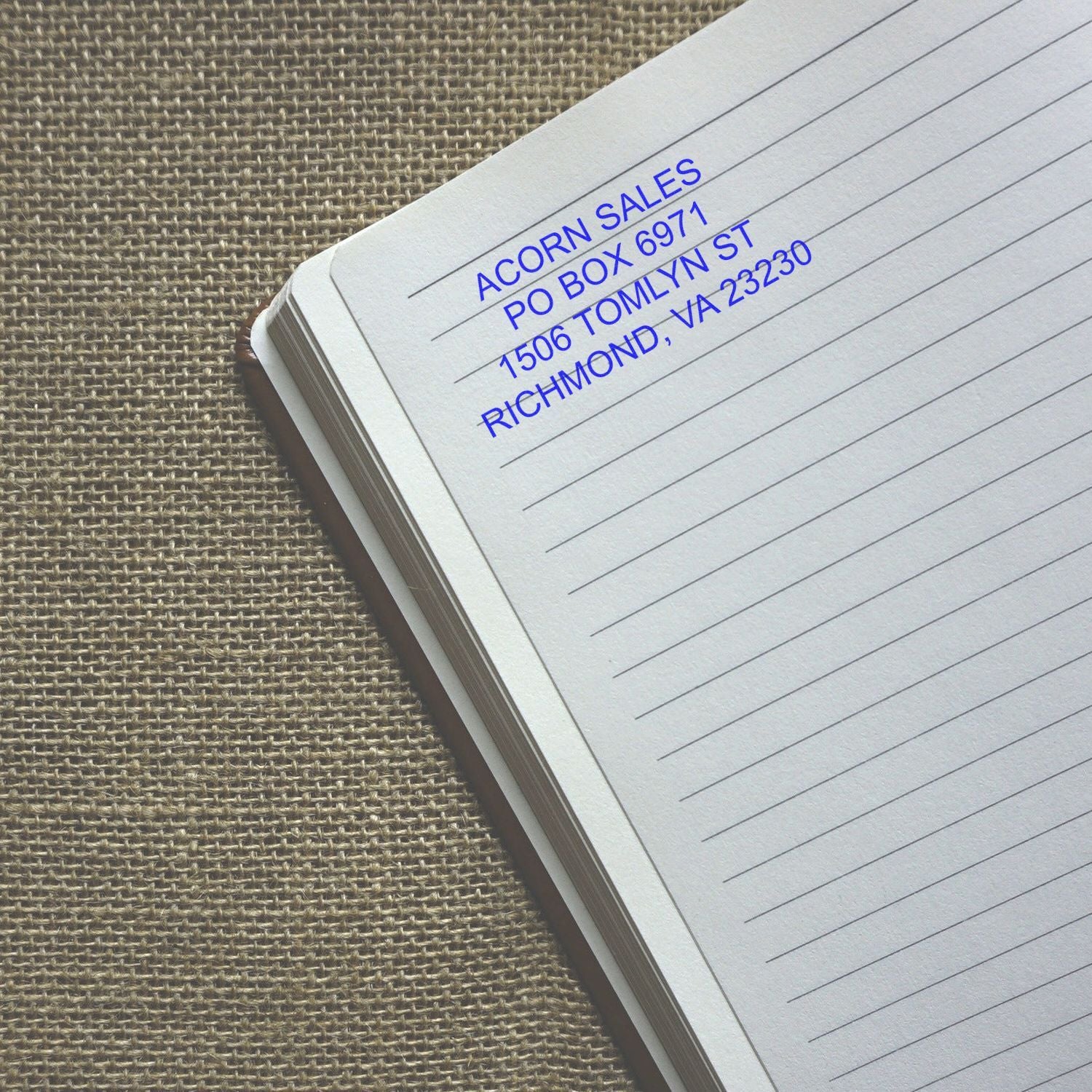
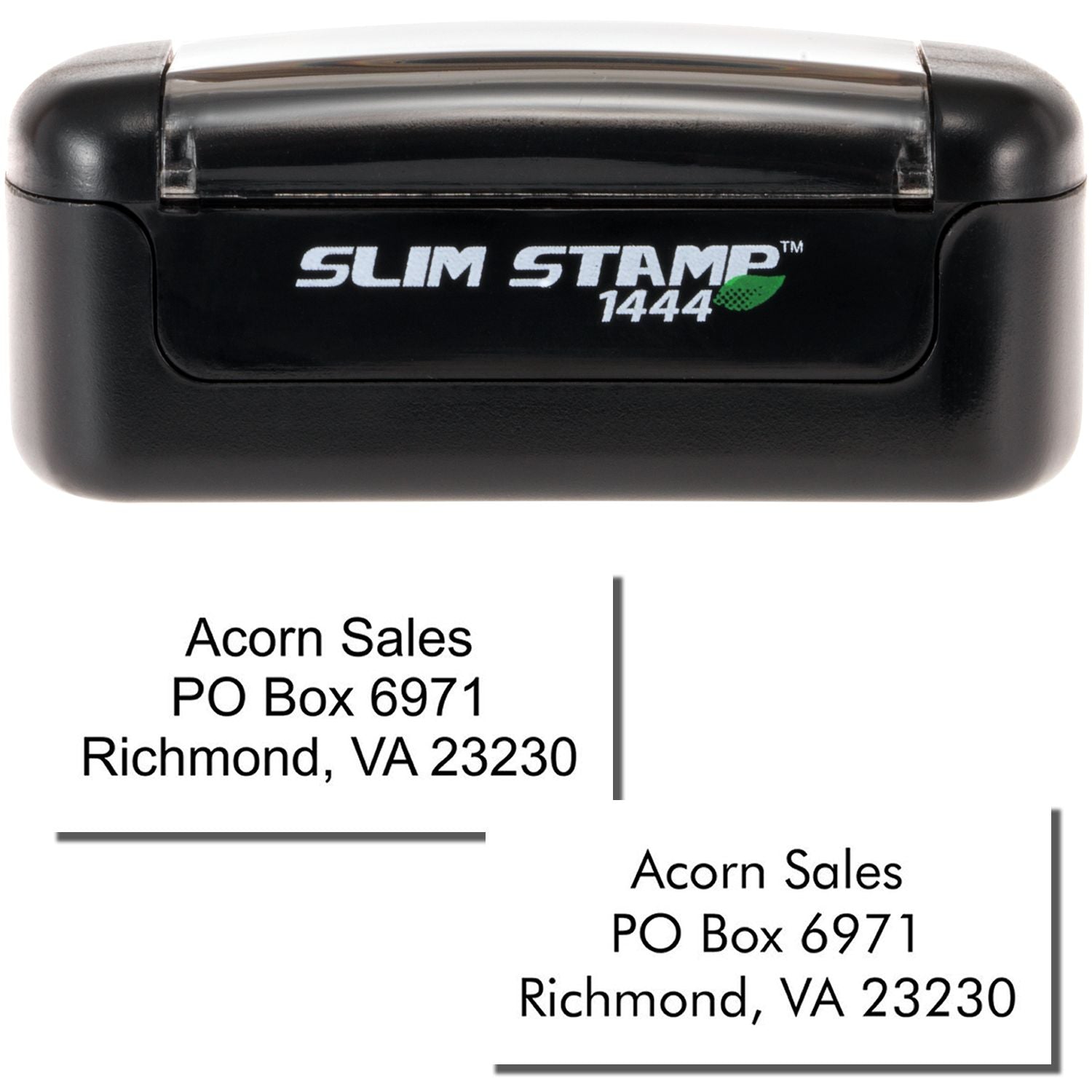
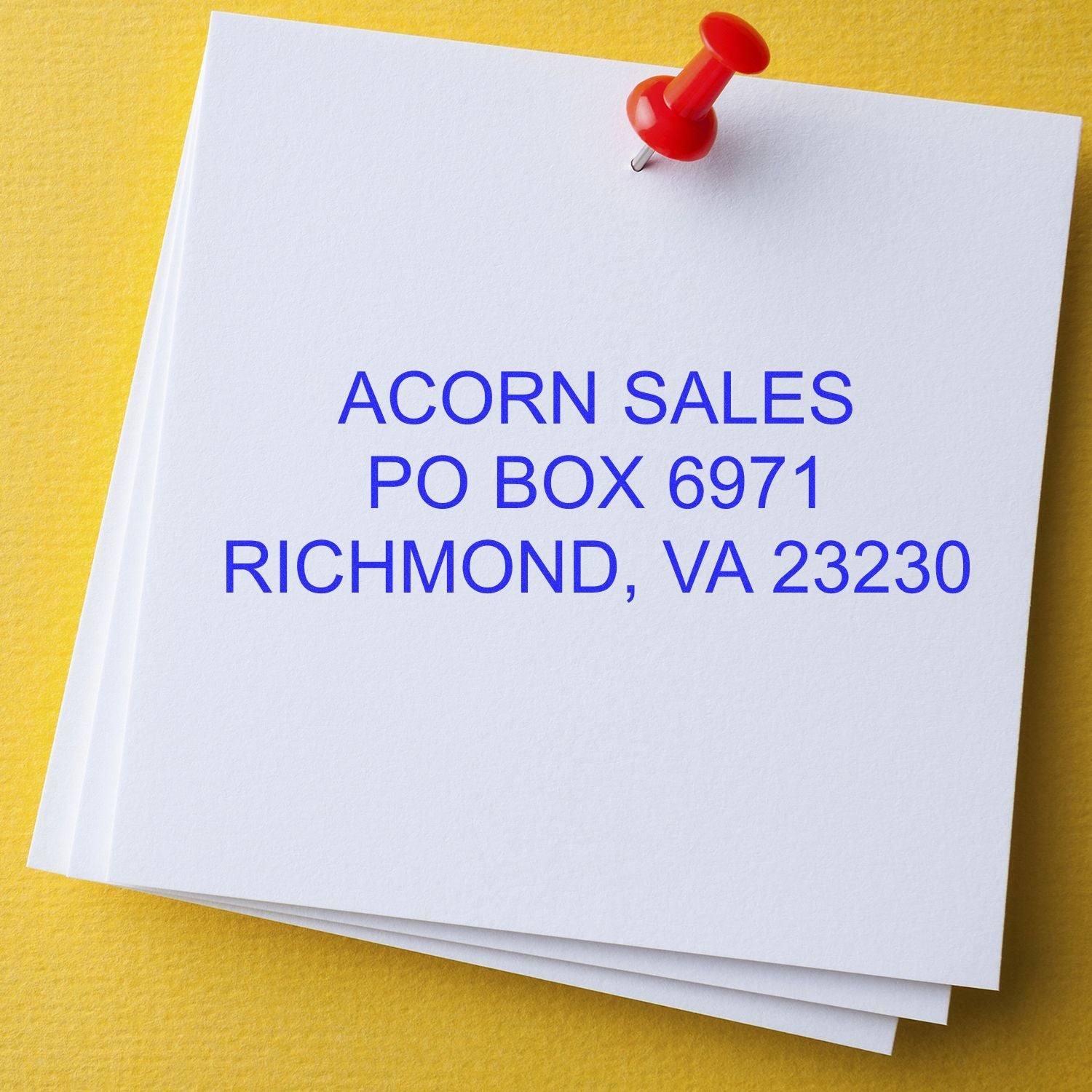


The ranges we stock
Self-inking address stamps
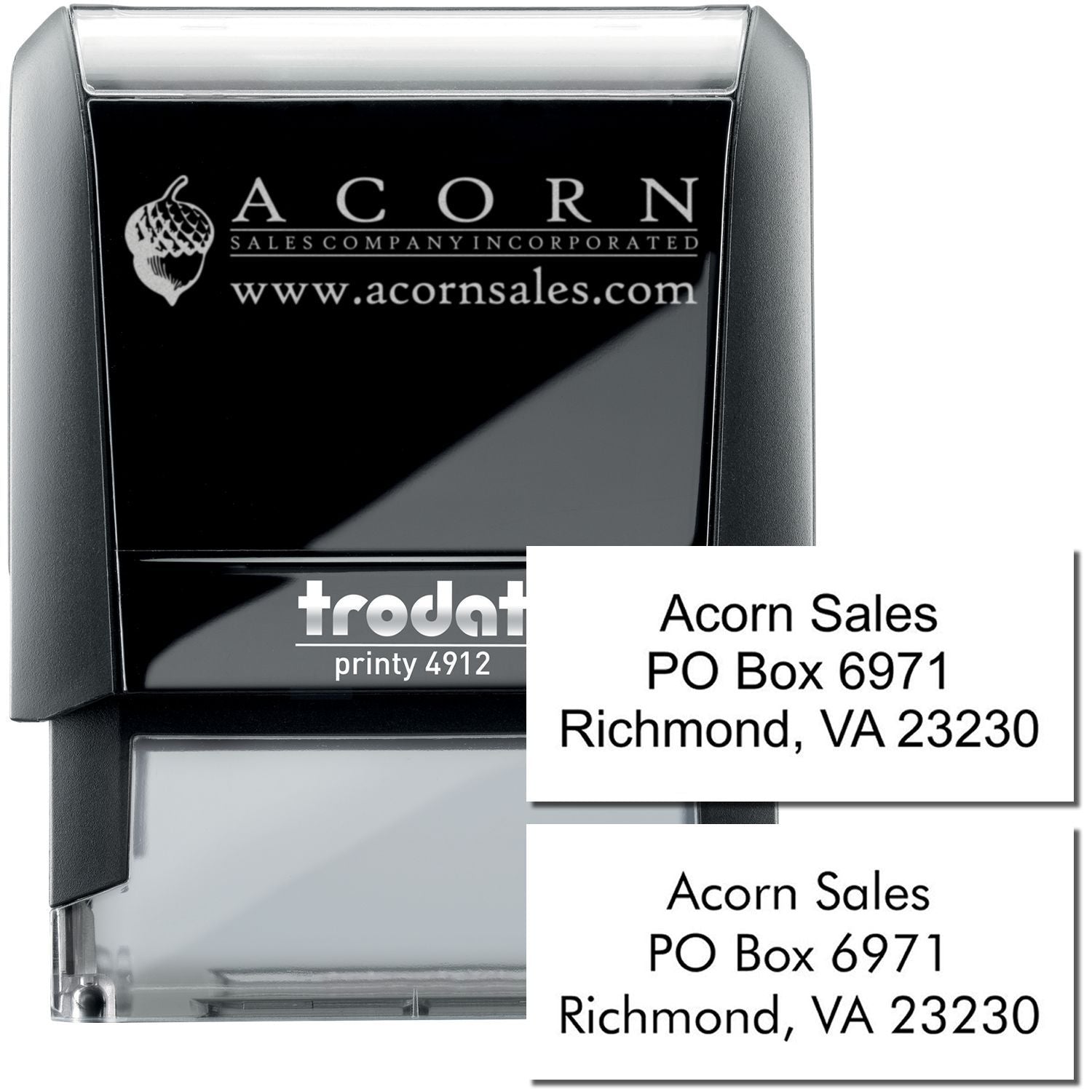
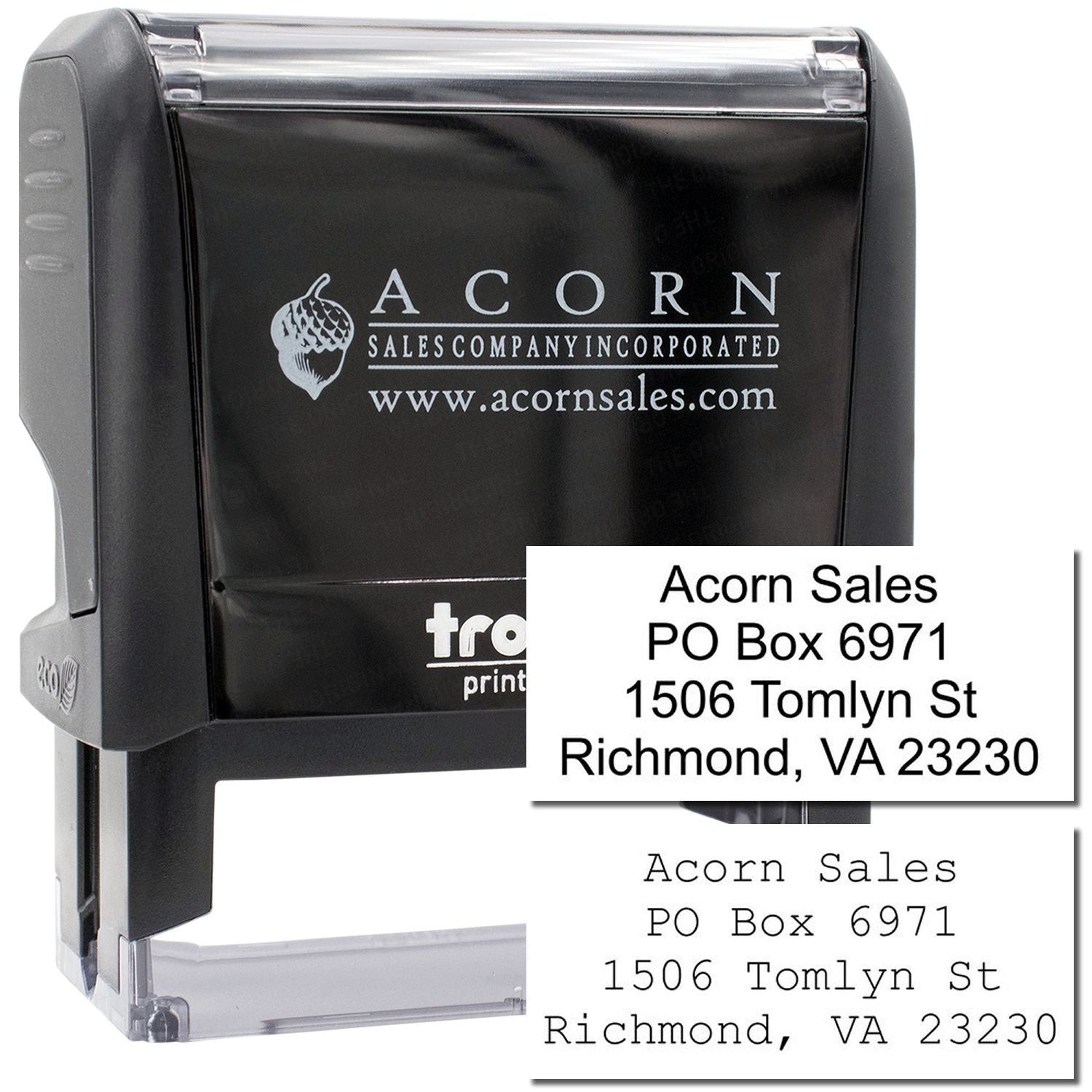
A built-in pad inks the die after every press, so there is nothing separate to buy. In the sample these are Trodat and Acorn self-inking models, $26.95 for a 1-5/8″ square custom address stamp, $24.95 for the Acorn self-inker with a 7/8″ x 2-1/4″ imprint, and $15.95 for the small stock designs. The listings state 11 ink colors and up to 10,000 impressions. Trodat cases are listed in Light Pink, Purple, Midnight Black and Fuchsia.
Slim pre-inked address stamps
The Slim is the flat, pocket-shaped pre-inked body, and it is the single most common address stamp in the sample: 80 of the 160 listings. A custom 1-5/8″ Slim address stamp is $29.95, and the small business name and packaging versions are $16.95. The ink is held in the die itself rather than on a pad, so there is no pad to carry and nothing to spill. Listings state up to 25,000 impressions, five ink colors, and quiet operation. The catalog repeatedly notes the body is thin enough for a purse, pocket, desk drawer or travel bag, which is why it turns up on market stall and pop-up listings.
PSI pre-inked address stamps
PSI is the other pre-inked platform Acorn stocks, 40 listings in the sample, at the same prices as the Slim: $29.95 for a custom 1-5/8″ address stamp and $16.95 for the small package and logo sizes. The listings describe a rich oil-based ink driven by flash technology, up to 15,000 impressions, five ink colors and smooth, quiet operation. Choosing between Slim and PSI at $29.95 is a choice of body shape, supplier and impression count, not of color range; the Slim is quoted at up to 25,000 impressions against 15,000 on the PSI, and both come in five colors.
Shiny Duo hand stamps
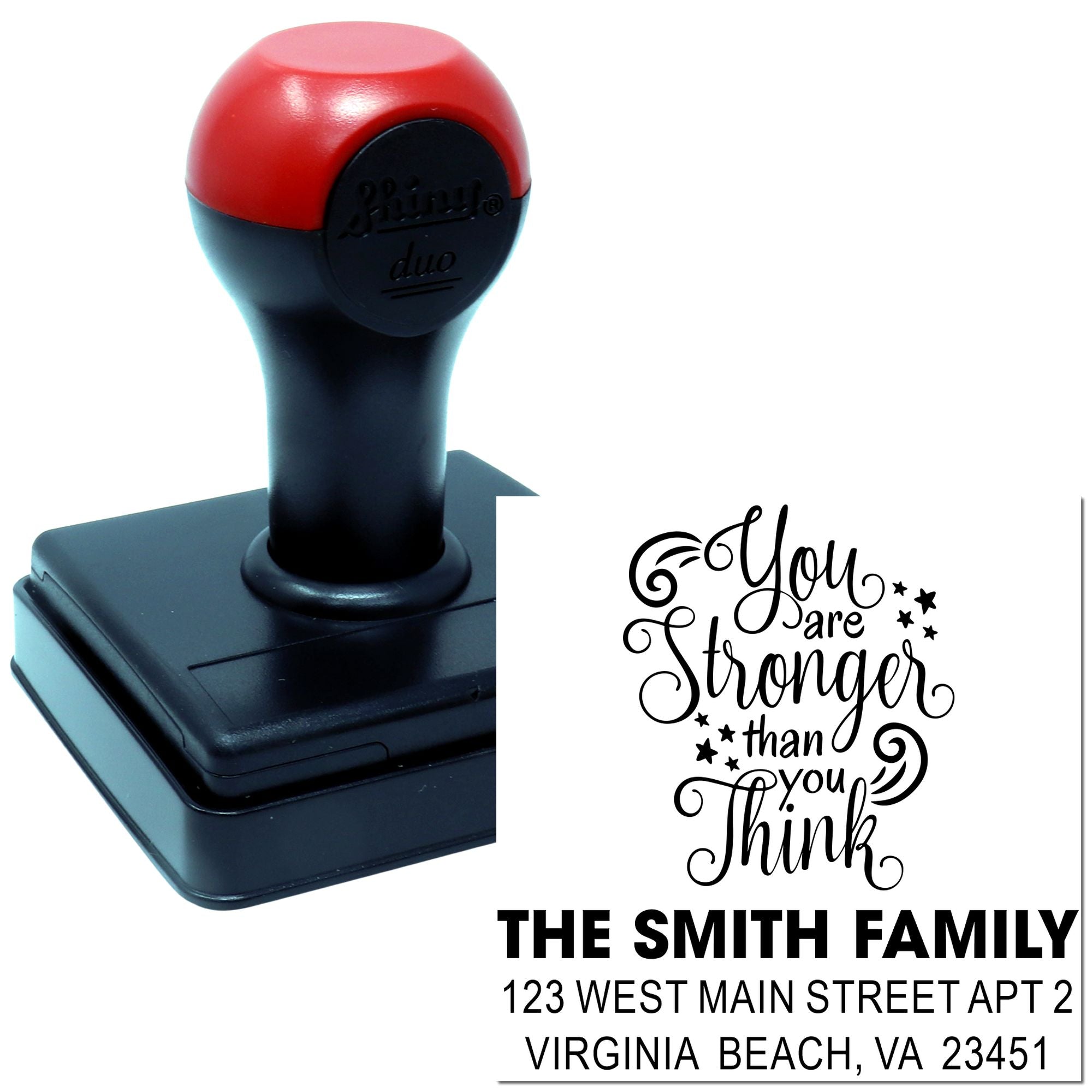
The Duo is a wood handle hand stamp on a modular body, and it is the cheapest way into a full 1-5/8″ custom address die: $21.95 for a personalized 3-line address stamp, $12.95 for a small stock office design. The listings describe a snap-on dust cover, a grip with built-in antimicrobial protection and a laser-engraved rubber die that takes both water-soluble and permanent inks. The catch is stated plainly on most Duo listings: the ink pad is sold separately.
Traditional wood handle stamps
Acorn’s own wood handle stamps run $24.95 for the craft designs and $29.95 for a custom 3-line address die, all at 1-5/8″. These listings sell the handle as the feature, a black wooden handle shaped for long stamping sessions, and they sell ink flexibility as the reason to choose one: a separate pad means you can change ink color whenever you like, and the die is described as working with standard inks and with special inks for fabric, glossy materials and other non-porous surfaces. Quick-change pads and industrial-grade inks are named on the craft listings. No impression count is quoted, because a hand stamp gives as many impressions as the pad you feed it.
Small package, logo and business name stamps
A separate family runs at $12.95 to $16.95 and is sized for parcels and labels rather than envelopes. These come in two stated sizes, Small at 1/2″ x 1-1/2″ and Large at 3/4″ x 2-1/4″, and the listings recommend the small one for tags and tight spaces and the large one for boxes, cartons and mailers. They are sold as pre-inked at $16.95, self-inking at $15.95 and Duo hand stamps at $12.95. A business name and address fits these, but at that size the catalog frames them as branding and labeling marks rather than full return address stamps.
Address embossers
An embosser presses a raised, inkless impression into the paper rather than printing onto it, and it is the formal option for wedding and personal stationery. The 160-product sample Acorn pulled for this page is drawn entirely from the stamp side of the cluster and contains no embosser listing, so this page quotes no embosser size, plate diameter or price. The cluster as a whole reaches $329.95 at the top, well above the $29.95 ceiling of the stamp sample, and the embosser specifications are on the individual product pages. Embossing seals carry a two year warranty; rubber stamps carry six months.
Sizes and dimensions
One size dominates. 1-5/8″ square is the stated size on essentially every custom address listing in the sample, across all four platforms: Slim, PSI, self-inking and wood handle. That is the size the three-line layouts are built around, and the listings describe it as the fit for envelopes, thank-you cards, invitations, invoices and small packaging. Below it sit the two package sizes, Small at 1/2″ x 1-1/2″ and Large at 3/4″ x 2-1/4″, which the catalog pitches at tags and cartons rather than envelopes. One self-inking listing in the sample quotes a wider, shallower imprint of 7/8″ x 2-1/4″ at $24.95, shaped for an address set beside a small illustration. On line count the catalog is consistent: three lines is the standard custom address layout, and the wording used is personalize up to 3 lines. It is an upper limit, not a requirement.
How many impressions you get
Three figures cover the whole stamp range, and they split by mount. Slim pre-inked stamps are stated at up to 25,000 impressions and PSI pre-inked stamps at up to 15,000. Self-inking stamps are stated at up to 10,000 impressions, on both the $26.95 custom address stamps and the $15.95 stock designs. No other impression count appears anywhere in the sample. Wood handle stamps, Duo and traditional, carry no impression figure at all, and the reason is mechanical rather than an omission: a hand stamp draws from a loose pad, so the count depends on the pad.


Ink and colors
Color choice is set by the mechanism. Self-inking address stamps are listed with 11 ink colors. Pre-inked Slim and PSI stamps are listed with five, and the listings name them: red, blue, green, purple and black. The pre-inked ink is described as a rich oil-based ink, smudge-resistant and long lasting. Wood handle stamps carry no color list at all, because they carry no ink; the die is described as taking water-soluble, permanent and industrial inks, and the pad is bought separately and changed whenever you want a different color. That flexibility is the one real argument for a hand stamp over a self-inker. On kraft, the catalog says little: one craft listing names kraft envelopes among the surfaces its 1-5/8″ die suits, and the wood handle listings name glossy and non-porous materials as a job for special inks. On dark or colored envelopes the catalog in this cluster is silent. No white, metallic or opaque ink is listed on any address stamp here, so if the envelope is dark, contact us before ordering rather than assuming a stock color will show.
What you can customize
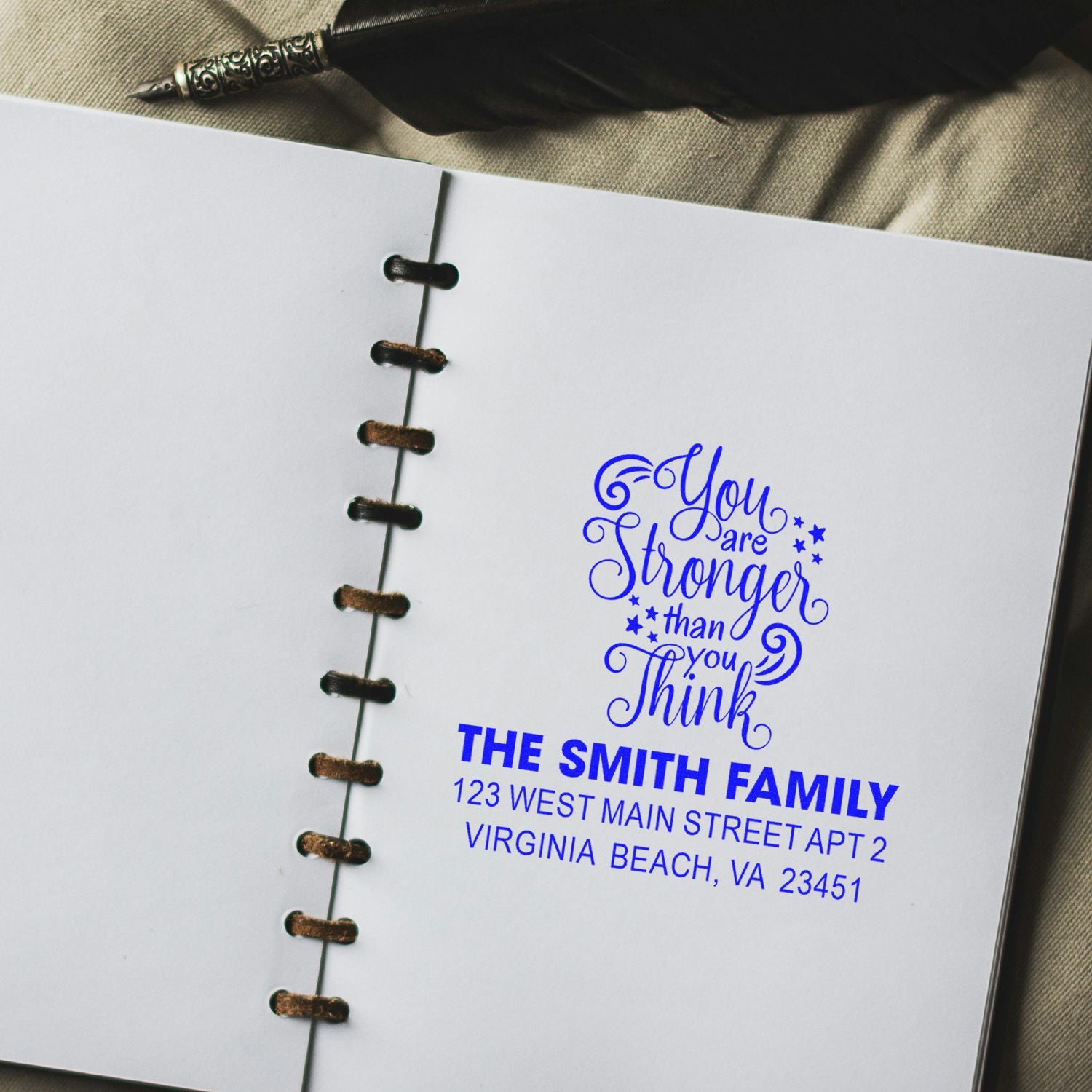
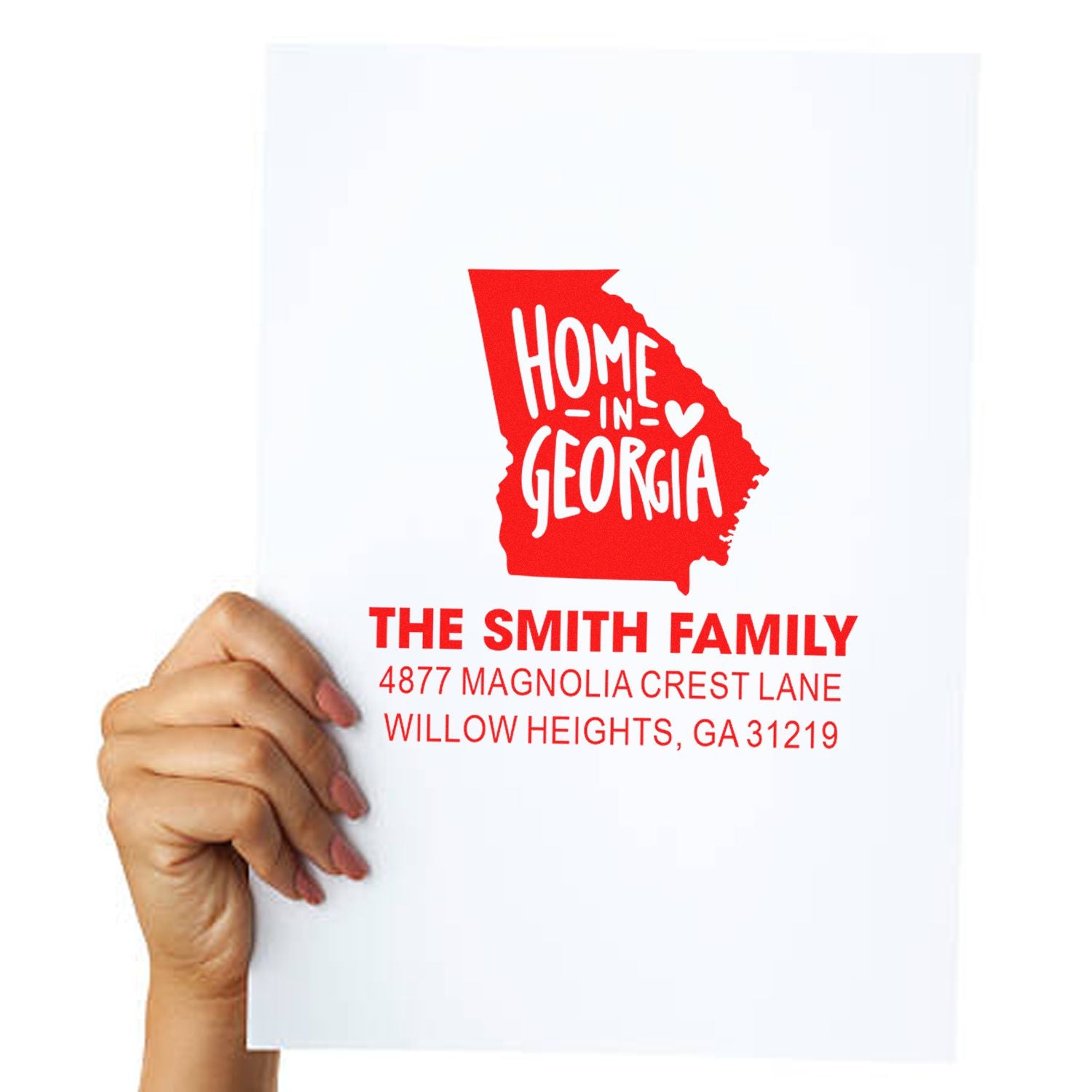
An address stamp carries whatever text you supply, laid out over up to three lines, and the catalog’s standard phrasing is personalize up to 3 lines with your return address, family name, short message or special details. Three is the ceiling, not a quota. A plain name and home address with no other wording is a normal order and one of the most common ones placed. The usual shape of it is the name on line one, the street address on line two and the city, state and ZIP on line three, which is exactly three lines with nothing added. If you want only the address and no name, or only a name, order two lines or one and leave the rest blank; nothing has to be filled. You do not have to take a graphic. Most of the 160 listings in the sample pair the text with an illustration, a state silhouette, a monogram, birds, a skyline, because that is how the designs are merchandised, but the artwork is part of the listing you choose, not a requirement of the product. If you want a plain text-only slim stamp with your name and home address and nothing else on it, say so in the personalization notes when you order, or contact us with the exact three lines and we will set them as typed. The catalog does not publish a font menu or a character limit per line, so if your street address is long, send the wording and we will confirm the fit before the die is cut.
The last word in the product URL tells you what you are buying
Acorn’s address stamps are merchandised by artwork, which makes the range look enormous and the differences look cosmetic. They are not. The mount is encoded in the final segment of every product handle, and it is the one field that sets the price. In the 160-product sample the suffix -slim appears 80 times, -psi 40 times, -duo 17 times, -si 17 times and -r 6 times. Those are Slim pre-inked, PSI pre-inked, Shiny Duo hand stamp, self-inking and wood handle respectively.
Price follows the suffix with no exceptions in the sample. Every -slim and -psi custom address stamp is $29.95 and every small one is $16.95. Every -si custom address stamp is $26.95 apart from one Acorn model at $24.95, and the -si stock designs are $15.95. Every -duo custom address stamp is $21.95 and the -duo stock designs are $12.95. The -r wood handles are $24.95 for craft designs and $29.95 for custom address dies. Artwork never moves the price. That means the practical way to shop this range is to pick the mechanism first and the picture second, and it also means two listings that look almost identical at $21.95 and $29.95 are not competing on design; one is a hand stamp that needs a pad and the other is a pre-inked stamp good for 15,000 impressions on a PSI or 25,000 on a Slim, out of the box.




Ordering, proofs and delivery
Production is 1 business day. There is no minimum order and no setup fee. Orders ship from Richmond, Virginia, and transit runs 3 to 10 business days depending on method and carrier. Order the mechanism you want rather than the picture: the listing title and the last segment of the product URL both name it, so a Slim listing gives you a Slim body and a wood handle listing gives you a handle and no ink. Check that detail before you check out, because most wood handle and Duo listings state that the ink pad is sold separately, while the pre-inked and self-inking listings arrive ready to stamp. Supply your wording exactly as you want it set, line by line, and if anything about the layout is uncertain, contact us before ordering.
Care and longevity
A faint impression is almost always the ink, not the stamp. On a Slim or PSI pre-inked stamp there is no pad; the ink is in the die, and the listings quote up to 25,000 impressions on a Slim and up to 15,000 on a PSI. On a wood handle stamp, keep the pad closed between uses. Press once and firmly; the pre-inked and self-inking listings both describe a single gentle press as the intended action, and repeated pressing smears rather than darkens. Duo stamps come with a snap-on dust cover, which is worth using, and every die in this range is laser engraved, so grit left on the face is what blurs fine script. Rubber stamps carry a six month warranty; embossing seals carry two years.
Products in this range
Browse the full range: Address Stamps, Address Embossers, Custom Self Inking Stamps, Slim Pre-Inked Designer Stamps.
Related guides
- Self-Inking, Pre-Inked and Traditional Rubber Stamps Compared
- Embossers: Complete Guide to Types, Uses and Ordering
- Stamp Ink and Pads: Which Ink Fits Which Stamp
- Return Address Stamp Wording: Examples That Fit on Three Lines
- Where a Return Address Goes, and Which Stamp Fits Your Envelope
- Personalized Holiday Stamps: A Gift Guide and When to Order
Frequently asked questions
I just want a name and home address slim stamp with no other wording. Can I order that?
Yes, and it is one of the most common orders in this range. A custom Slim pre-inked address stamp is $29.95 at 1-5/8″ square and takes up to three lines. Name on line one, street on line two, city, state and ZIP on line three is a complete order with nothing else on the die. The three lines are a maximum, not a minimum, so two lines or one is fine as well. The artwork you see on most listings belongs to that listing, not to the product, so if you want text only, state that in the personalization notes or contact us with the exact lines.
How many lines fit on an address stamp?
Three. The catalog’s standard wording across the custom address range is personalize up to 3 lines with your return address, family name, short message or special details, and the layouts on the 1-5/8″ square dies are built for that. There is no published character limit per line, so if a street address runs long, send the wording and we will confirm it fits before the die is cut.
What is the cheapest custom address stamp you sell?
In this sample, a Shiny Duo wood handle address stamp at $21.95 with a full 1-5/8″ custom 3-line die. The ink pad is sold separately on most Duo listings, so budget for that. Small stock office and package stamps start lower, at $12.95, but those are sized 1/2″ x 1-1/2″ or 3/4″ x 2-1/4″ and are intended for parcels and labels. Across the whole address cluster of 22,691 products, prices start at $8.95.
Should I get self-inking or pre-inked?
Pre-inked lasts longer and self-inking gives you more colors. A Slim pre-inked stamp at $29.95 is rated up to 25,000 impressions and a PSI up to 15,000, and both come in five colors: red, blue, green, purple and black. A self-inking stamp at $26.95 is rated up to 10,000 impressions and comes in 11 ink colors. If you mail in volume, take the pre-inked. If you want a specific color, check the 11-color self-inking range first.
How many envelopes can I stamp before the ink runs out?
Up to 25,000 impressions on a pre-inked Slim stamp, up to 15,000 on a PSI, and up to 10,000 on a self-inking stamp. Those are the only three impression figures quoted anywhere in the address range. Wood handle stamps carry no figure because they draw from a separate pad.
What size is a standard return address stamp?
1-5/8″ square. That is the stated size on the custom address listings across every platform, Slim, PSI, self-inking and wood handle. The smaller package and business name stamps are 1/2″ x 1-1/2″ or 3/4″ x 2-1/4″, and one self-inking model in the sample uses a wider 7/8″ x 2-1/4″ imprint at $24.95.
What ink colors can I get?
Eleven on self-inking stamps. Five on pre-inked Slim and PSI stamps, named in the listings as red, blue, green, purple and black. Wood handle stamps have no color list because the pad is bought separately, which means you can put any pad color you like on the same die.
Will it stamp a kraft or dark colored envelope?
Kraft is mentioned once in this range, on a craft listing that names kraft envelopes among the surfaces its 1-5/8″ die suits. On dark or colored envelopes the address stamp listings say nothing, and no white, metallic or opaque ink is listed on any of them. The 11 self-inking colors and the five pre-inked colors are all standard dark inks. If the envelope is dark, contact us before ordering. For glossy or non-porous stock, the wood handle listings are the ones that name special inks, because the pad is separate and can be chosen to match the surface.
Does the stamp come with ink?
It depends on the mount, and this is the most common mix-up. Pre-inked Slim and PSI stamps at $29.95 and self-inking stamps at $26.95 arrive inked and ready. Wood handle and Shiny Duo stamps mostly do not: those listings state the ink pad is sold separately. A few wood handle listings are sold as a set with ink included, such as the $21.95 Colorado Mountain Roots stamp with wood handle and ink set, so read the individual listing rather than assuming.
What is the difference between an address stamp and an address embosser?
A stamp prints ink onto the envelope; an embosser presses a raised, inkless impression into it. The stamps in this range run $12.95 to $29.95, and the address cluster as a whole reaches $329.95 at the top. Embosser sizes and prices are on the individual embosser listings rather than quoted here. Embossing seals carry a two year warranty and rubber stamps carry six months.
How fast will I get it?
Production is 1 business day and there is no minimum order and no setup fee. Orders leave Richmond, Virginia, and transit runs 3 to 10 business days depending on method and carrier.








