

Written by Acorn Sales Company, manufacturing stamps and seals since 1964 · Reviewed by Holly R, VP of Sales and Marketing at Acorn Sales, against Ohio Revised Code Chapter 147, Ohio Adm. Code 111:6-1 and the Secretary of State’s notary guidance on 21 September 2026 · Updated 21 September 2026
Ohio requires a notary seal before you may perform any official duty, and Ohio is one of very few states that builds the seal around the state coat of arms. It sits inside a circle 3/4 to 1 inch in diameter, surrounded by the words “notary public” or “notarial seal”, the words “State of Ohio” and your name. Ohio permits an embosser outright as an alternative to an inked stamp. It sets no ink color in the notary law, though the county recorder's rules do.
Ohio notary stamp requirements at a glance
| Requirement | Ohio rule | Source |
|---|---|---|
| Stamp required | Yes | Ohio Rev. Code §§ 147.04, 147.542(F)(6) |
| Required wording | The coat of arms of the State of Ohio, inside a circle 3/4 to 1 inch in diameter; The words “notary public”, “notarial seal”, or words to that effect, surrounding it; The words “State of Ohio”; The name of the notary public | Ohio Rev. Code § 147.04 |
| Size and shape | A circle 3/4 inch to 1 inch in diameter containing the coat of arms. | Ohio Rev. Code §§ 147.04, 147.041 |
| Ink color | Nothing in Ohio notary law specifies a color. | Ohio Rev. Code § 147.04 (silent) |
| Embosser | Expressly permitted as a full alternative, which is unusual: “The seal may be of either a type that will stamp ink onto a document or one that will emboss it.” An embosser alone is legally valid in Ohio. | Ohio Rev. Code § 147.04 |
| Commission term | Terms run five years, except for Ohio attorneys in good standing, whose commissions do not expire. | Ohio Rev. Code §§ 147.03, 147.031(B), (C), (D), 147.05(B), 147.141(A)(6), 147.371(B) |
| Name or address change | Notify the Secretary of State within 30 days of a change of name or address. | Ohio Rev. Code §§ 147.03, 147.031(B), (C), (D), 147.05(B), 147.141(A)(6), 147.371(B) |
| Lost or stolen stamp | Not addressed for a physical seal. | Ohio Rev. Code ch. 147 generally (silent) |
| Commissioning authority | The Ohio Secretary of State, who since 2019 has handled applications, education, testing and records centrally rather than through the county courts | Ohio Revised Code Chapter 147, Ohio Adm. Code 111:6-1 |
Rules for other states are on notary stamp requirements by state.
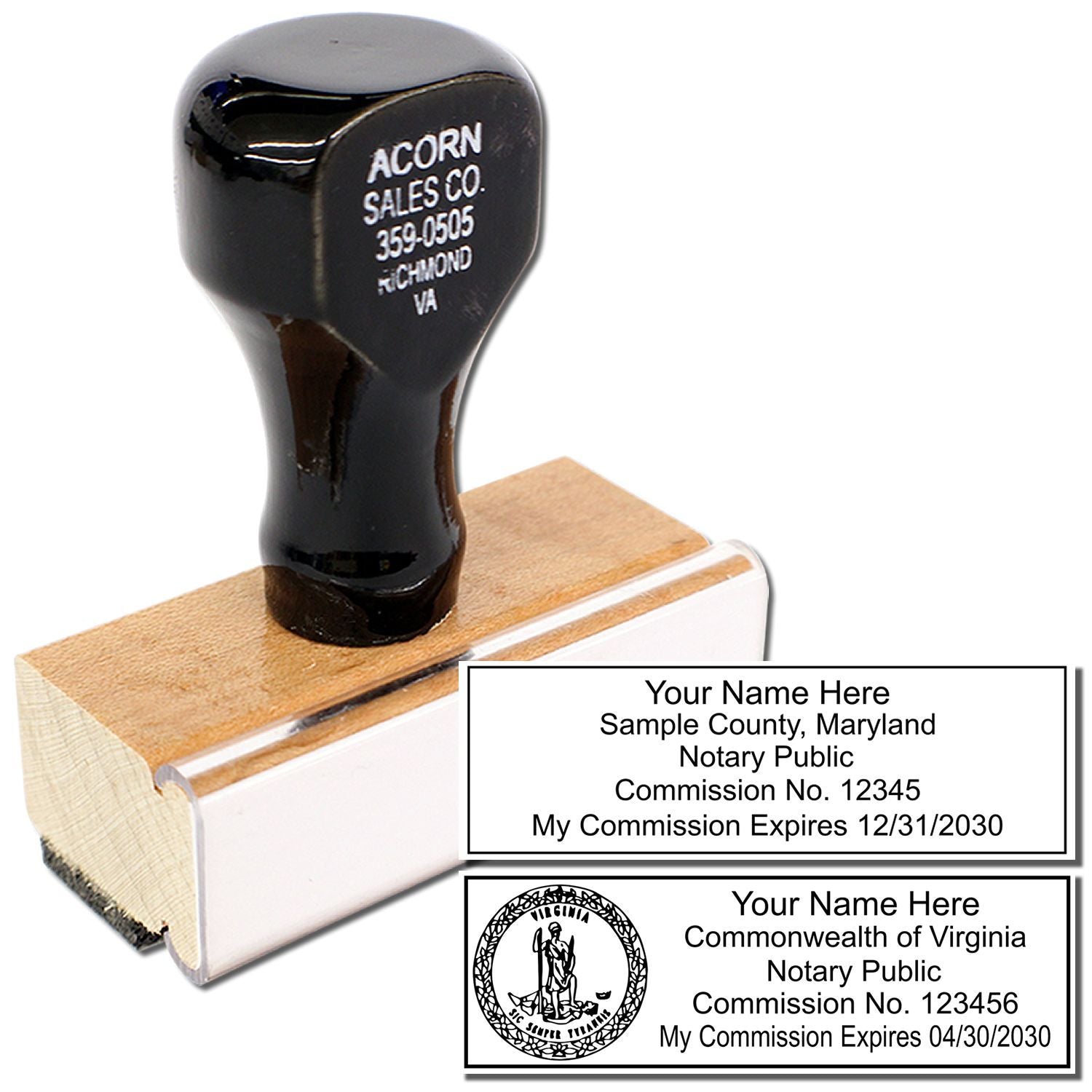



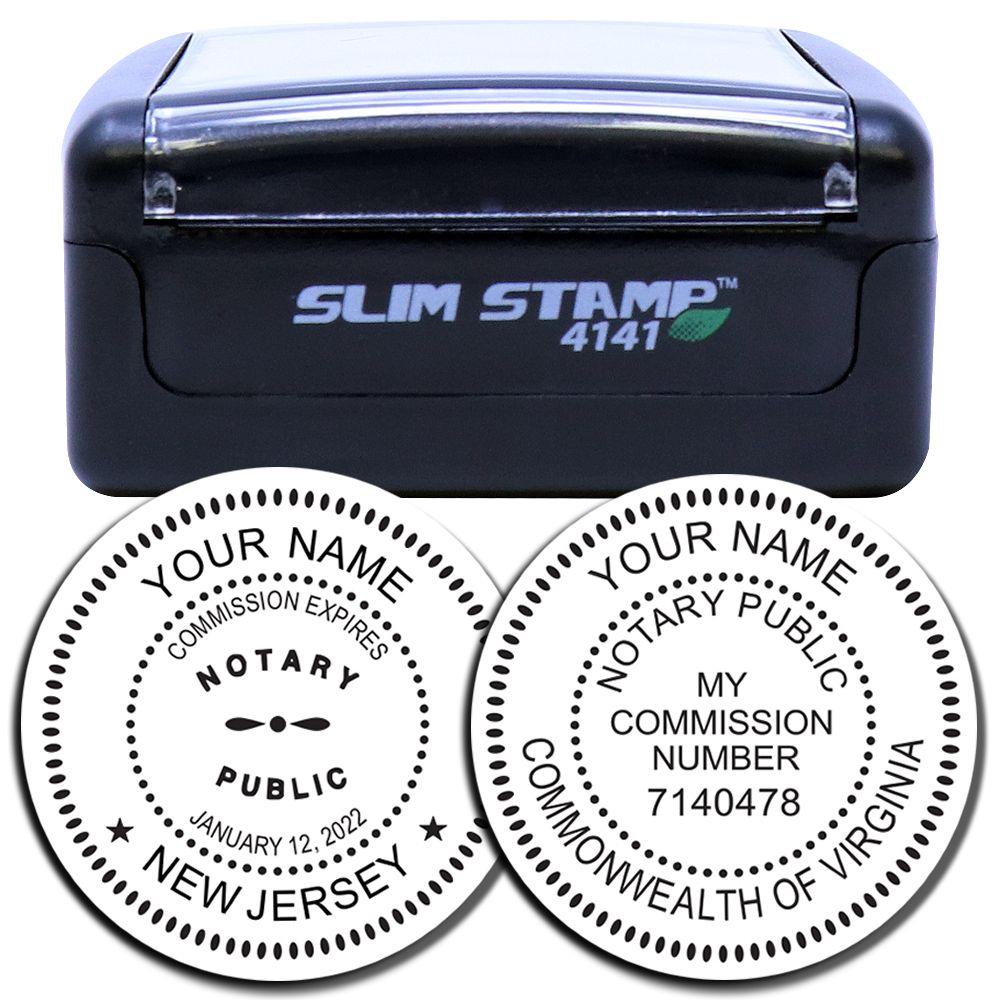



Is a notary stamp required in Ohio?
Yes, before you may act at all: “Before entering upon the discharge of official duties, a notary public shall obtain the seal of a notary public.” The certificate rules reinforce it, requiring every notarial certificate to show the seal and the commission expiration date.
The governing text is Ohio Rev. Code §§ 147.04, 147.542(F)(6).
What must appear on an Ohio notary stamp?
- The coat of arms of the State of Ohio, inside a circle 3/4 to 1 inch in diameter
- The words “notary public”, “notarial seal”, or words to that effect, surrounding it
- The words “State of Ohio”
- The name of the notary public
The name is the flexible one: it “may, instead of appearing on the seal, be printed, typewritten, or stamped in legible, printed letters near the notary public’s signature on each document”. It may move off the seal; it may not disappear. Note what is not required on an Ohio seal: neither the commission number nor the expiration date. The expiration date belongs on the certificate.
What size and shape must an Ohio notary stamp be?
A circle 3/4 inch to 1 inch in diameter containing the coat of arms. Ohio law names no other shape. Rectangular Ohio stamps are sold and used, and a rectangular die whose impression still contains a compliant coat-of-arms circle can be defended on the text as written. But the circle is the only form the statute names, so we will not describe a rectangle to you as a statutory alternative. A seal you already held before 20 September 2019 that met the older requirements may still be used.
Notary public stamps are made to these conventions, and we check your lines against the statutory wording before we make the stamp.


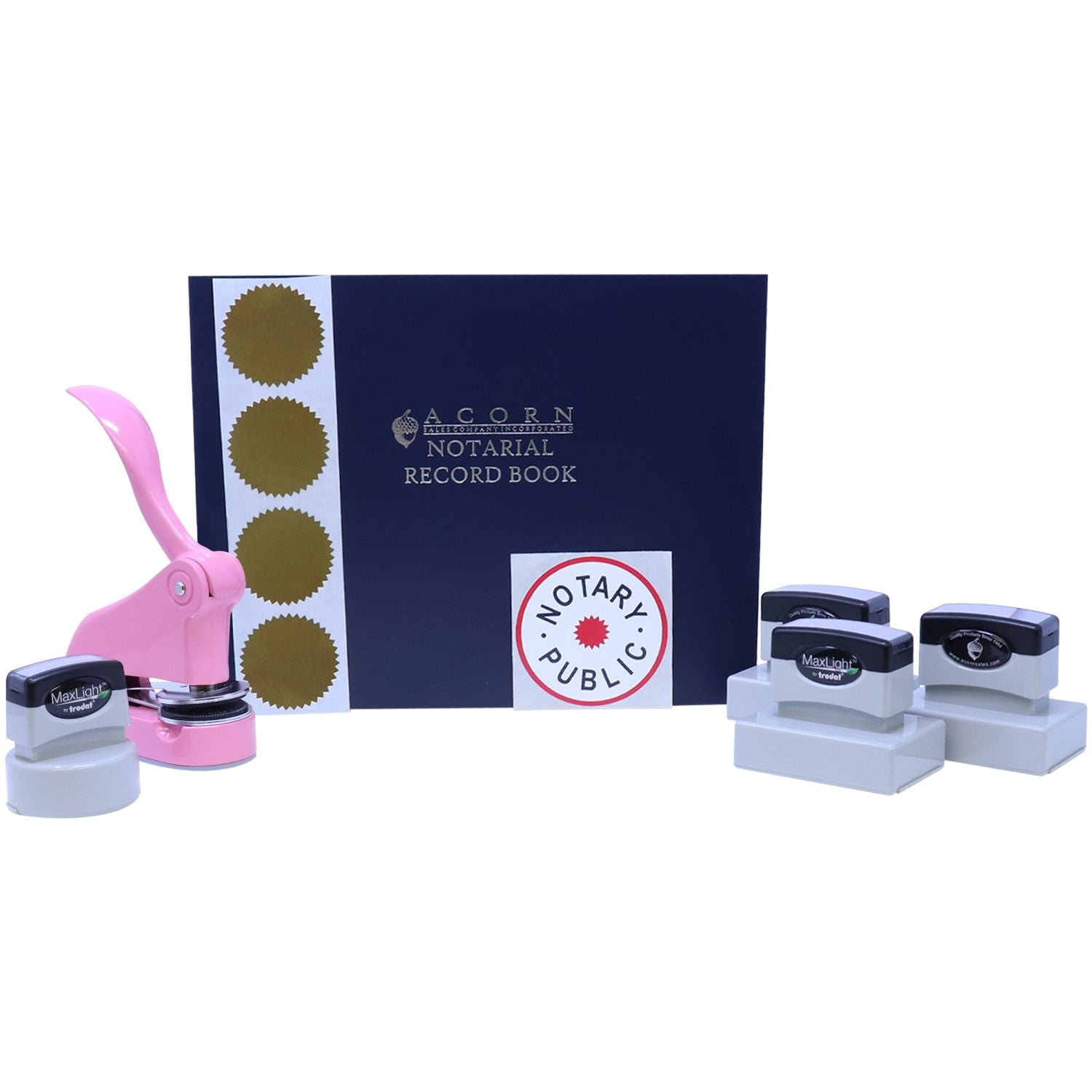

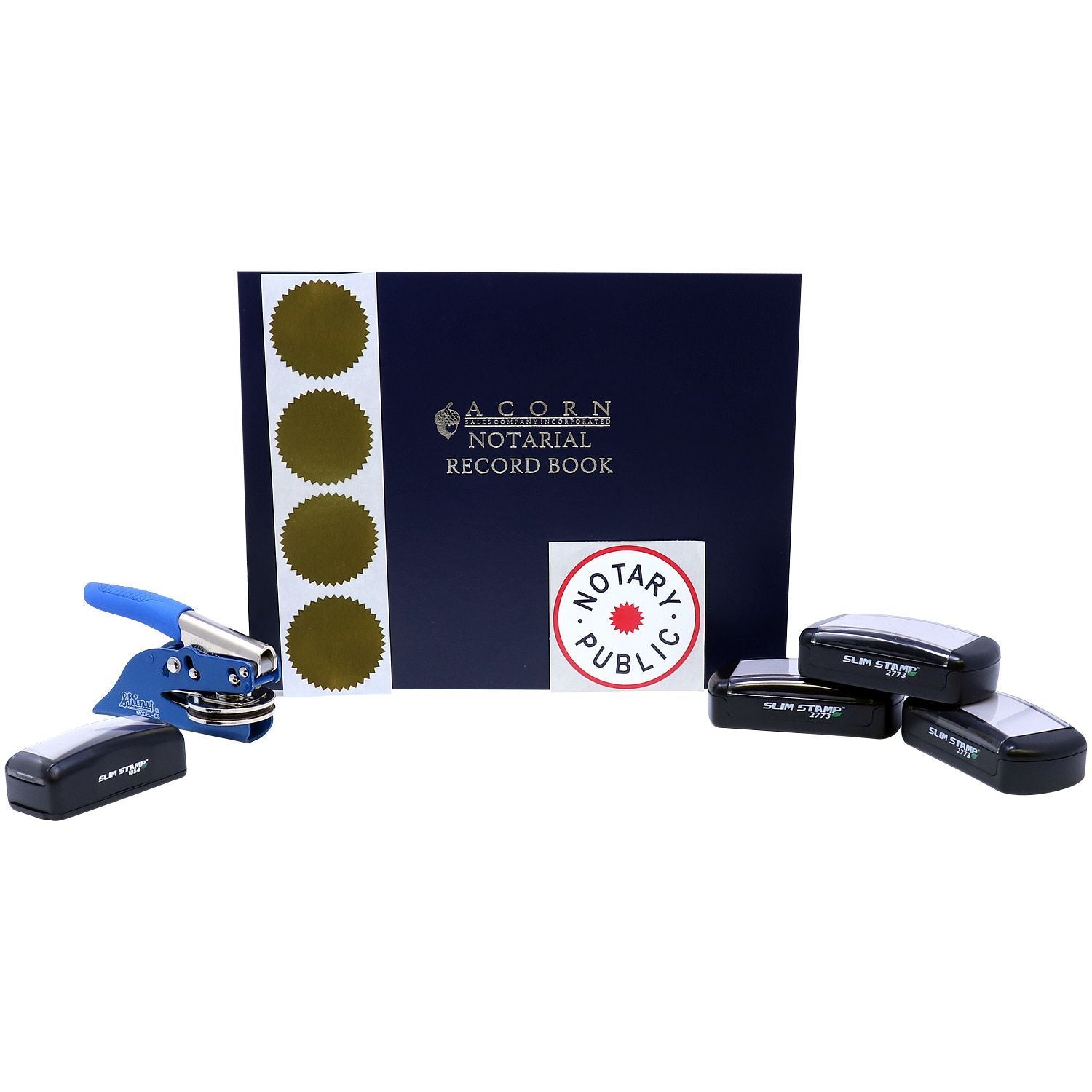



What ink color is required for an Ohio notary stamp?
Nothing in Ohio notary law specifies a color. The rule that catches Ohio notaries lives in a different chapter of the Revised Code altogether: anything presented to a county recorder must be in black or blue ink only, and the notary carve-out in that section exempts notary stamps from the font-size requirement, not from the ink rule. So a red or purple pad is lawful for a notarization in general and a problem for anything headed for recording. The recorder must still accept a non-conforming document, but charges the filer an extra fee for it.
More on the trade-off in stamp ink color rules.
Is a notary embosser required or optional in Ohio?
Expressly permitted as a full alternative, which is unusual: “The seal may be of either a type that will stamp ink onto a document or one that will emboss it.” An embosser alone is legally valid in Ohio. It is also a practical liability, because a raised uninked impression will not photocopy, scan or e-record, and recorded instruments must be legible. Our advice is an inked stamp for anything recordable, with an embosser alongside if you want one.
Notary embossing seal kits and inked stamp kits cover both formats. See also notary stamp vs. embosser.
The Ohio coat of arms, and the ink rule that is not in the notary law
Ohio is one of a very small number of states that puts the state coat of arms at the center of the notary seal. It is not decorative and it is not optional: the statute builds the seal around it, requiring a circle of three-quarters to one inch containing the coat of arms, surrounded by the required wording. This is why a generic notary stamp bought for another state is never convertible to Ohio.
The second Ohio surprise is about ink, and it is not in the notary law at all. Chapter 147 never mentions a color, so notaries reasonably conclude any color is fine. But the county recorder’s document standards require black or blue ink only, and the exemption those standards grant to notary stamps covers font size, not color. A purple impression on a deed does not void the notarization and the recorder must still accept the document, but it costs the filer a non-conformance fee and invites trouble with title companies.
One more that inverts what people expect: your paper seal does not carry your commission expiration date, so renewing does not force a new stamp. Your electronic seal does carry it, so that one has to be reissued every term.
Do I need a new stamp when my commission is renewed or my name changes?
Terms run five years, except for Ohio attorneys in good standing, whose commissions do not expire. Renewal opens three months before expiry and requires a fresh criminal-records check and a one-hour course. There is no grace period whatsoever: miss the date by a day and you cannot renew, you start over with the full three-hour course and the test. You do not need a new seal at renewal, because the Ohio paper seal carries neither the expiration date nor the commission number. Your electronic seal does carry the expiration date and must be reissued.
Notify the Secretary of State within 30 days of a change of name or address. A duplicate commission after a name change costs $2. A name change does mean a new seal, or a new printed name beside your signature, since you may not sign under any name other than the one you are commissioned in.





What do I do if my Ohio notary stamp is lost or stolen?
Not addressed for a physical seal. There is no statutory duty to report one lost or stolen, and no deadline, which makes Ohio one of the few states with no rule at all here. Report a theft to local law enforcement regardless. For an electronic seal or journal the standard is “immediately, upon discovery”, to law enforcement and the Secretary of State.
How do I dispose of an expired Ohio notary stamp?
Not addressed. Ohio imposes no duty to destroy, deface or surrender a physical seal when a commission expires, is resigned or is revoked. The sources here are all 46 sections of Chapter 147 and the Secretary of State’s rules in Ohio Adm. Code 111:6-1. Destroying the die anyway is the sensible course. For an electronic seal there is a duty: notify the Secretary immediately on discovering loss or unauthorized use.
More on retiring an old device in how to dispose of an expired notary stamp.
Can I notarize electronically or remotely in Ohio?
Two different things, and Ohio notaries mix them up constantly. In-person electronic notarization needs no extra authorization at all: any active notary may obtain an electronic seal and signature. Remote online notarization is a separate application to the Secretary of State, with a course and an exam, and you must be an Ohio resident physically located in Ohio when you perform one. The electronic seal must confirm your name, jurisdiction and commission expiration date, and generally correspond to your paper seal. Online acts are recorded, and the journal is transmitted to the Secretary or an approved repository when your authorization ends, to be held there for ten years.
If you need your seal as an image file for electronic work, see electronic notary seal images.
Related Ohio guides
Next step
Have your commission details in front of you before you order, because they go on the stamp and a wrong line means a reorder. Then browse notary public stamps, or contact us and we will check your wording against the statute before we make it.
Frequently asked questions about Ohio notary seals
Is a notary seal required in Ohio?
Yes, and before you may act at all: “Before entering upon the discharge of official duties, a notary public shall obtain the seal of a notary public.” The certificate rules reinforce it, requiring every notarial certificate to show the seal and the commission expiration date.
What has to appear on an Ohio notary seal?
The coat of arms of the State of Ohio inside a circle 3/4 to 1 inch in diameter, surrounded by the words “notary public”, “notarial seal” or words to that effect, plus the words “State of Ohio” and your name. Your commission number and expiration date are not required on the seal.
Can my name be left off an Ohio notary seal?
It can be moved off, not left off. The statute allows your name to be printed, typewritten or stamped in legible printed letters near your signature on each document instead of appearing on the seal. Either way your printed name has to be on the document.
Can I use a rectangular notary stamp in Ohio?
Ohio law specifies a circular seal 3/4 to 1 inch in diameter containing the state coat of arms, and names no other shape. Rectangular Ohio stamps are sold and widely used, but Ohio has no statutory rectangular option, so we would not describe one as a statutory alternative.
What ink color is required for an Ohio notary seal?
Ohio notary law specifies none. The rule that catches Ohio notaries lives in a different chapter entirely: anything presented to a county recorder must be in black or blue ink only, and the exemption that chapter gives notary stamps covers font size, not ink color. A red or purple pad is lawful for a notarization generally and a problem for anything being recorded.
Can I use an embosser instead of a stamp in Ohio?
Yes. Ohio says the seal “may be of either a type that will stamp ink onto a document or one that will emboss it”, which makes an embosser a fully permitted standalone seal. It is also a practical liability, because a raised uninked impression will not photocopy, scan or e-record. Use an inked stamp for anything recordable.
Do I need a new seal when my Ohio commission is renewed?
No, because the Ohio paper seal carries neither your commission number nor your expiration date. Your electronic seal does carry the expiration date and must be reissued at renewal. Notaries invert this constantly. A legal name change does require a new seal.
What do I do with my Ohio seal when my commission ends?
Ohio imposes no duty to destroy, deface or surrender a physical seal on expiration, resignation or revocation, and no duty to report one lost or stolen. Destroying the die anyway is the sensible course. For an electronic seal there is a duty: notify the Secretary of State immediately on discovering loss or unauthorized use.
How long does an Ohio notary commission last?
Five years, except for Ohio attorneys in good standing, whose commissions do not expire. Renewal opens three months before expiry and there is no grace period at all: miss the date by a day and you cannot renew, you start over with the full course and test.








