

Written by Acorn Sales Company, manufacturing stamps and seals since 1964 · Reviewed by Holly R, VP of Sales and Marketing at Acorn Sales, against A.R.S. title 41 chapter 2, A.A.C. title 2 chapter 12 and the Arizona Secretary of State’s Notary Public Reference Manual on 21 September 2026 · Updated 21 September 2026
Arizona requires a notary stamp on every paper record, and it must carry the great seal of the State of Arizona along with the words “notary public”, your county, your name and your expiration date. Two more requirements are real but do not appear in the statute at all: your commission number and dark ink. Both come from the Secretary of State’s manual, which every Arizona notary is required by statute to keep. The commission number is also written into the rules, though only for electronic seals. Arizona also requires a new stamp at every renewal, and gives you ten days to report a lost one.
Arizona notary stamp requirements at a glance
| Requirement | Arizona rule | Source |
|---|---|---|
| Stamp required | Yes | A.R.S. § 41-264(B) |
| Required wording | The words “notary public”; The county in which you are commissioned; Your name as it appears on your commission; The commission expiration date; An image of the great seal of the State of Arizona; Your commission number | A.R.S. § 41-266(A)(1), (B) |
| Size and shape | Any shape you like, within a size cap: the physical impression must be no more than 1.5 inches high by 2.5 inches wide, and the manual adds 1.5 inches for a round seal. | A.R.S. § 41-266(B) |
| Ink color | Dark ink, and this one has no statute behind it. | AZ SOS Notary Public Reference Manual |
| Embosser | Permitted only alongside the stamp, never instead of it, and Arizona is blunt about the consequences. | A.R.S. § 41-267(C), (D) |
| Commission term | Terms run four years, and Arizona is one of the few states where a new stamp is required at every single renewal. | A.R.S. §§ 41-269(E), 41-323, 41-327 |
| Name or address change | Report a change of mailing, business or residential address to the Secretary of State within 30 days, or face a $25 civil penalty. | A.R.S. §§ 41-269(E), 41-323, 41-327 |
| Lost or stolen stamp | Ten days, and the penalty is steep: notify the Secretary of State within ten days after the loss, theft or compromise of an official journal or stamping device, or face a $1,000 civil penalty. | A.R.S. §§ 41-267(A), 41-317, 41-323 |
| Commissioning authority | The Arizona Secretary of State | A.R.S. title 41 chapter 2, A.A.C. title 2 chapter 12 |
Rules for other states are on notary stamp requirements by state.






Is a notary stamp required in Arizona?
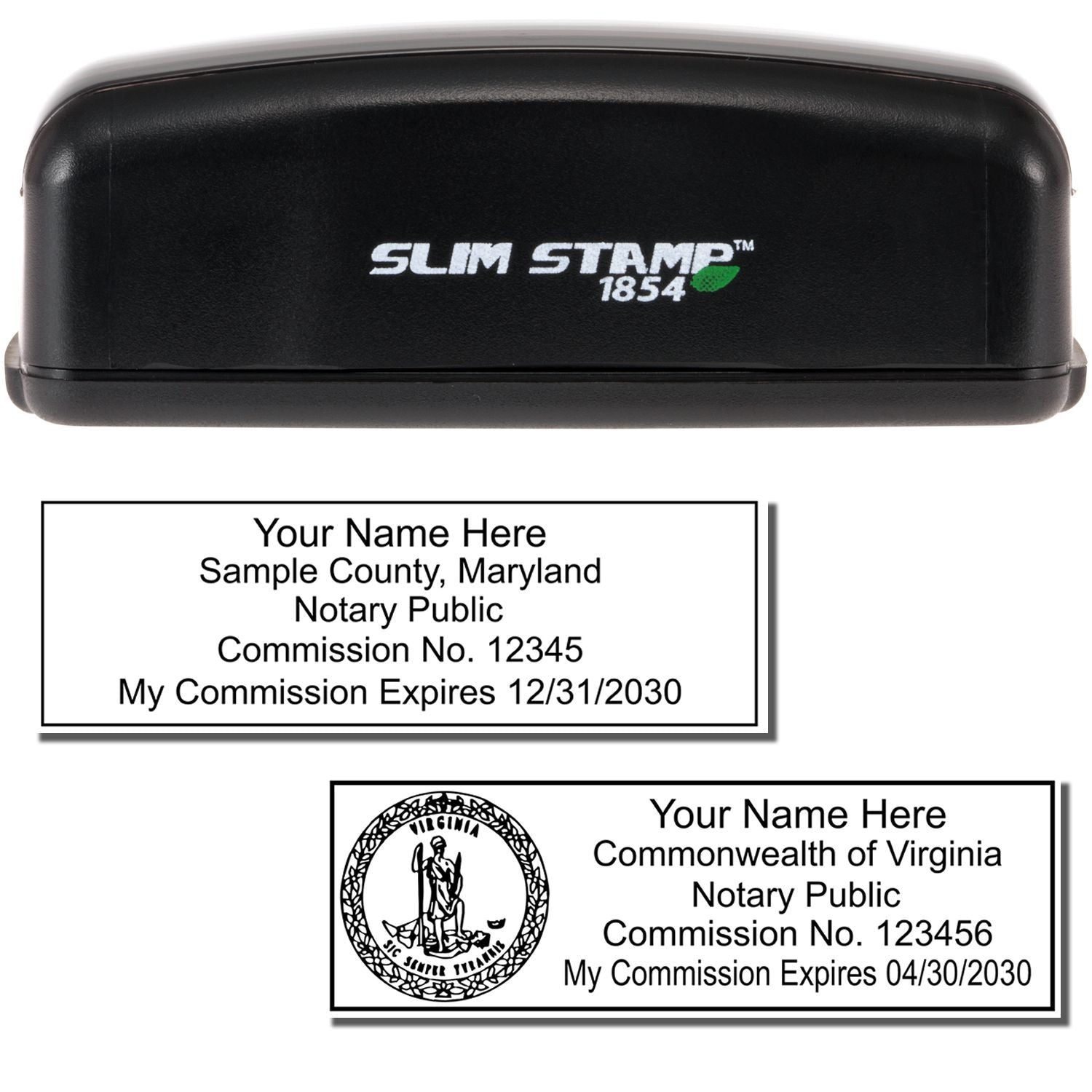
Yes, on every tangible record, and the sentence that says so is not in the section titled “Official stamp”. It sits in the certificate section: “If a notarial act regarding a tangible record is performed by a notary public, an official stamp must be affixed to the certificate.” Read the rest of that subsection too, because for an officer who is not a notary public, and for electronic records, the same provision says the stamp may be affixed rather than must.
The governing text is A.R.S. § 41-264(B); § 41-266(D).
What must appear on an Arizona notary stamp?
- The words “notary public”
- The county in which you are commissioned
- Your name as it appears on your commission
- The commission expiration date
- An image of the great seal of the State of Arizona
- Your commission number
The last item on that list deserves a flag, because where it comes from depends on which kind of seal you mean. For a physical stamp the commission number is required by the Secretary of State’s manual and by no statute and no rule. Its legal hook is the catch-all in § 41-266(A)(1), which requires “other information required by the secretary of state”. For an electronic seal it is required outright by rule, at A.A.C. R2-12-1205(B). The Legislature was asked to put it in the statute for physical stamps and declined: House Bill 2588 in 2024 would have inserted it into § 41-266(A)(1) and died. Order the stamp with your commission number on it either way, because Arizona will reject one without it. The stamp must also “be capable of being copied together with the record”.
What size and shape must an Arizona notary stamp be?
Any shape you like, within a size cap: the physical impression must be no more than 1.5 inches high by 2.5 inches wide, and the manual adds 1.5 inches for a round seal. The statute says plainly that “a notary public’s official stamp may be any shape”, so unlike Illinois or Ohio there is no mandated form. No border rule applies to a physical stamp. Watch the interaction with county recording standards, though: a full-size 1.5 by 2.5 inch impression dropped into a half-inch margin can make a document non-conforming.
Notary public stamps are made to these conventions, and we check your lines against the statutory wording before we make the stamp.





What ink color is required for an Arizona notary stamp?
Dark ink, and this one has no statute behind it. No Arizona statute and no administrative rule specifies a color. The requirement lives in the Secretary of State’s manual: dark ink, meaning “black, dark blue, dark purple, or dark brown”, while “red ink, green ink, or ink not viewable on all copy or fax machines or scanners is unacceptable”, and avoid inks containing glitter. Treat that as binding in practice for two reasons: the statute delegates “other information required by the secretary of state”, and every Arizona notary is required by § 41-269(B)(7) to keep the manual as a reference. Just do not let anyone cite you a statute number for the color, because there isn’t one.
More on the trade-off in stamp ink color rules.
Is a notary embosser required or optional in Arizona?
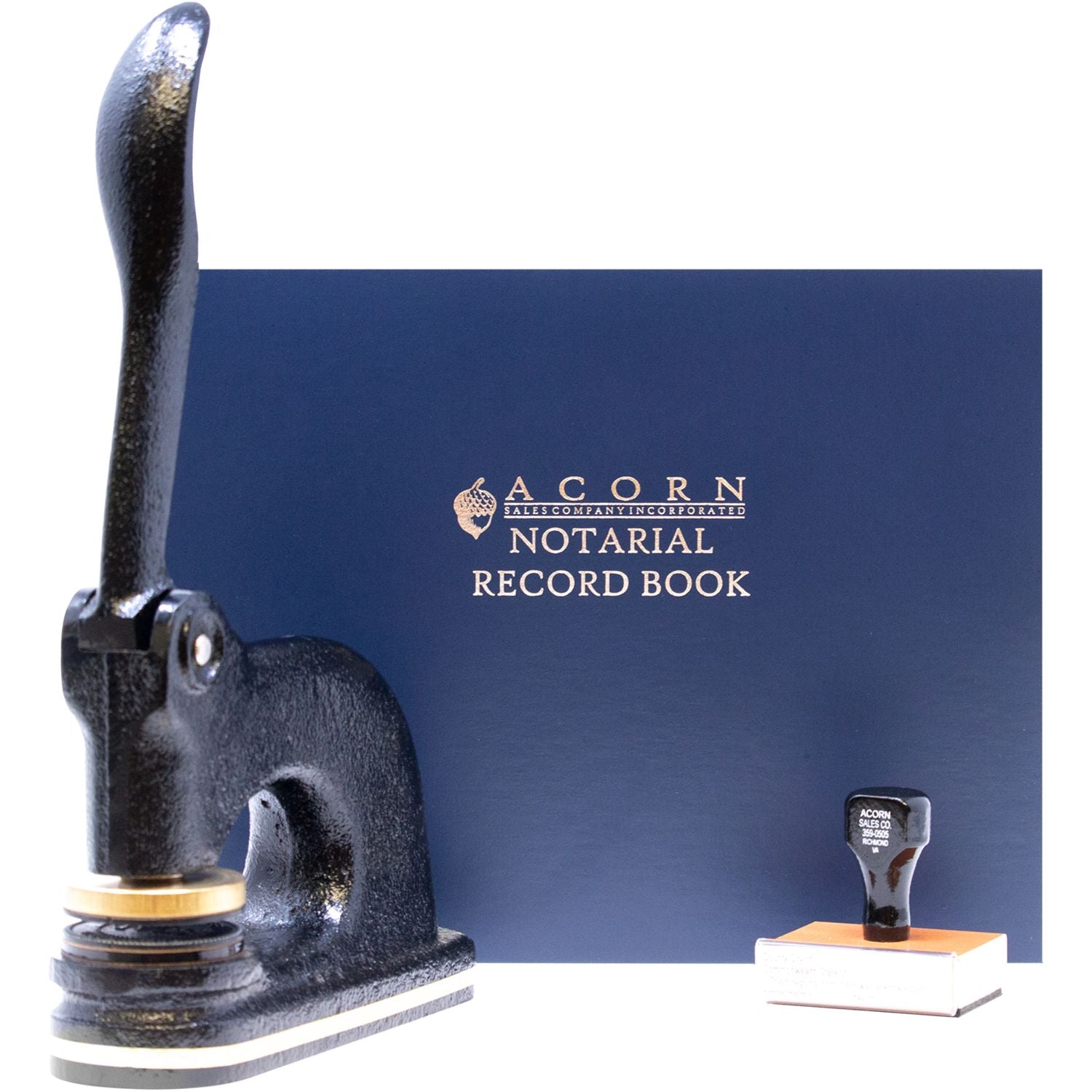
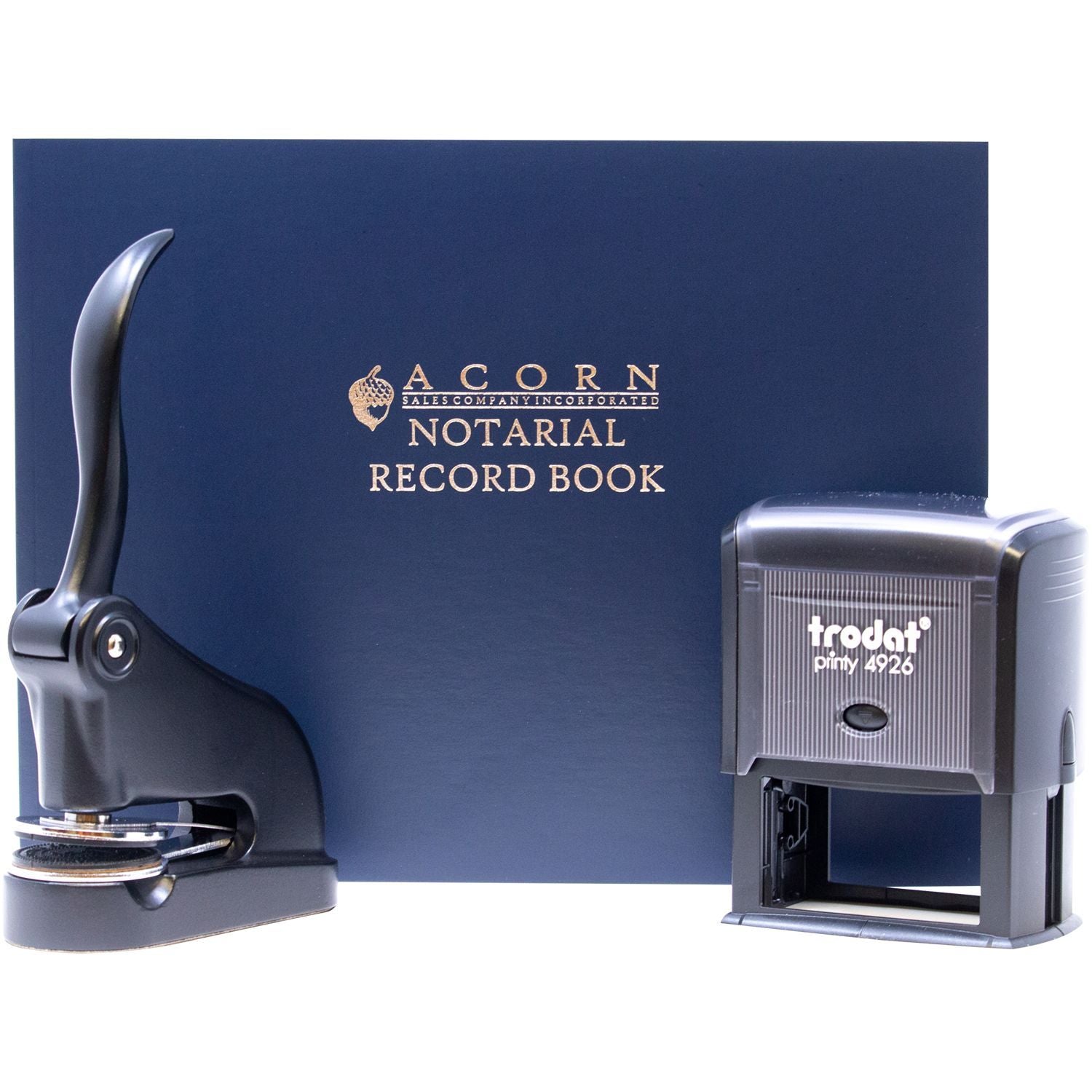
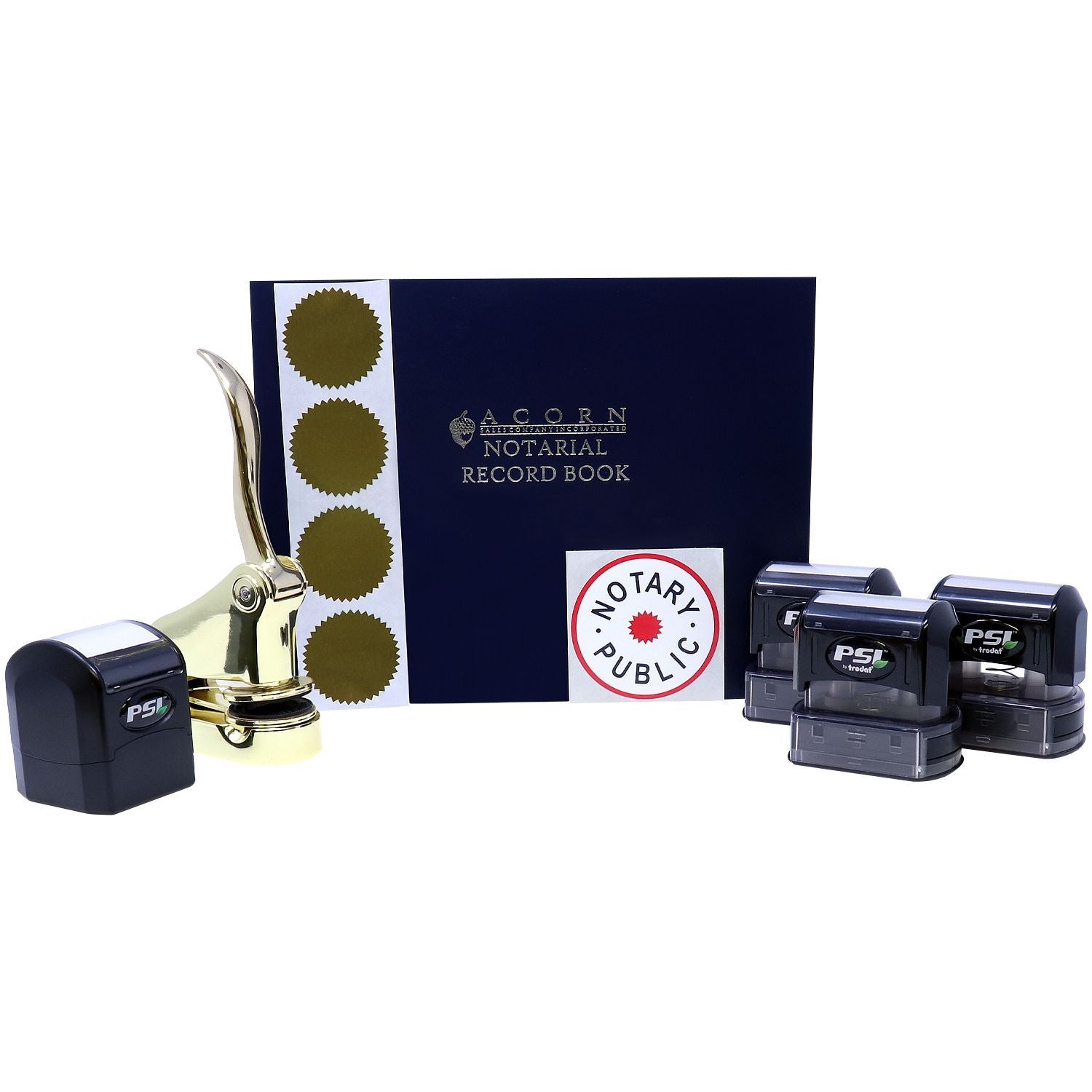
Permitted only alongside the stamp, never instead of it, and Arizona is blunt about the consequences. You may possess only one physical stamping device, an embosser may be used “only in conjunction with” that device, and an embosser “is not an official seal of office for the purposes of the laws of this state.” Breaking the one-device or embosser rule is a misdemeanor. An Arizona embosser is decoration with a legal warning attached.
Notary embossing seal kits and inked stamp kits cover both formats. See also notary stamp vs. embosser.
Arizona’s ink rule is real, and it is not in the statute
Search the Arizona Revised Statutes for a notary ink color and you will find nothing. Search the administrative rules and you will find nothing there either. Yet Arizona does have an ink rule, and notaries are held to it.
It lives in the Secretary of State’s Notary Public Reference Manual, which calls for dark ink, listing “black, dark blue, dark purple, or dark brown” and rejecting “red ink, green ink, or ink not viewable on all copy or fax machines or scanners”, along with glitter inks. Two things give it force. The seal statute requires “other information required by the secretary of state”, and § 41-269(B)(7) makes keeping that manual a condition of being commissioned in the first place. So it binds you in practice, and you should still never cite a statute number for it, because there is none to cite.
The same manual is where the commission number requirement comes from. The statute lists the words “notary public”, your county, your name, your expiration date and the great seal of Arizona. It does not mention your commission number. The manual does, and a stamp without it gets rejected.
Two more Arizona rules that carry teeth. You may never place the stamp over a signature, yours or anyone else’s, on the record being notarized. And you may possess exactly one physical stamping device: a spare is a misdemeanor, and an embosser used on its own is not a seal at all.
Do I need a new stamp when my commission is renewed or my name changes?
Terms run four years, and Arizona is one of the few states where a new stamp is required at every single renewal. The reason is structural: the commission expiration date is a mandatory seal element with no alternative placement, unlike South Carolina or Connecticut where the date may sit in the certificate. The manual states it directly, that on reappointment a notary “must obtain a new seal that contains the notary’s new commission expiration date before he or she performs any notarizations.” Plan on a four-year replacement cycle.
Report a change of mailing, business or residential address to the Secretary of State within 30 days, or face a $25 civil penalty. A surname change is also 30 days, but the stamp rule runs the other way from most states: you may “continue to use the official stamp and commission in the notary public’s prior name until that commission expires”, signing the new surname and printing the commissioned name immediately below it.




What do I do if my Arizona notary stamp is lost or stolen?
Ten days, and the penalty is steep: notify the Secretary of State within ten days after the loss, theft or compromise of an official journal or stamping device, or face a $1,000 civil penalty. There is a second cost too. The same section gives a presumption of the validity of the signer’s identity where the journal was lost and the notary complied, and expressly withdraws it where “the notary public failed to comply with this section”. Missing the deadline costs you the money and the evidentiary protection.
How do I dispose of an expired Arizona notary stamp?
Arizona imposes two duties here and you need both. First, the device must be disabled: destroyed, erased or otherwise rendered unusable on resignation, revocation, expiration, death or incompetency. Second, and the one almost everyone misses, on resignation or revocation or death the physical stamping device, the journal and the records must be delivered to the Secretary of State within three months, by certified mail or another receipted method. Failing to deposit them is a forfeiture of between $50 and $500. A departing Arizona notary mails the stamp in rather than simply cutting it up.
More on retiring an old device in how to dispose of an expired notary stamp.
Can I notarize electronically or remotely in Arizona?
Both electronic and remote notarization are authorized, and both require you to notify the Secretary of State and identify your technology before your first act. A remote certificate must state: “This notarial act involved the use of communication technology.” Here is the renewal trap, written into the rules: renewing your commission does not renew your electronic or remote authorization. You file a fresh application for that each time. A journal is required for every notarial act, paper or otherwise, and is kept at least five years. Audiovisual recordings are kept five years as a rule, but seven years where the remote act covered a deed, a deed of trust, other real property, or a power of attorney. Keep only five on one of those and you have silently voided the journal thumbprint exemption.
If you need your seal as an image file for electronic work, see electronic notary seal images.
Who is allowed to sell you a Arizona notary seal?
Arizona restricts who may sell you a stamping device, and the duty falls on the seller rather than on you. A vendor may not supply a stamping device to someone claiming to be a notary without a copy of that person’s commission certificate, and must keep that copy on file for four years. A knowing breach is a class 6 felony under § 41-267(D). One caution on that last point: we read § 41-267 through a reproduction of the code rather than from the Legislature’s own site, which would not load, though the Secretary of State’s manual independently confirms the duty, the four-year period and the section number. Have your commission certificate ready when you order an Arizona stamp, from us or from anyone else.
Related Arizona guides
Next step
Have your commission details in front of you before you order, because they go on the stamp and a wrong line means a reorder. Then browse notary public stamps, or contact us and we will check your wording against the statute before we make it.
Frequently asked questions about Arizona notary seals
Is a notary seal required in Arizona?
Yes for paper records, and the sentence that says so is not in the section titled “Official stamp”. It is in the certificate section: if a notarial act regarding a tangible record is performed by a notary public, an official stamp must be affixed to the certificate.
What has to appear on an Arizona notary stamp?
The words “notary public”, your county of commission, your name as commissioned, your commission expiration date, an image of the great seal of Arizona, and your commission number.
Is the commission number really required in Arizona?
Yes, but where the requirement comes from depends on the seal. For a physical stamp it is in the Secretary of State's manual and in no statute and no rule, hooked to the statutory catch-all requiring “other information required by the secretary of state”. For an electronic seal it is required outright by rule. The Legislature was asked in 2024 to write it into the statute for physical stamps and the bill died. Either way, order the stamp with your commission number on it.
What ink color does Arizona require?
Dark ink: black, dark blue, dark purple or dark brown. Red, green, glitter inks and anything that will not show on a copier or scanner are unacceptable. Like the commission number, this rule lives only in the Secretary of State's manual, which is mandatory equipment for every Arizona notary. There is no statute number to cite for it.
What size must an Arizona notary stamp be?
Any shape you like, up to 1.5 inches high by 2.5 inches wide, or 1.5 inches for a round seal. Arizona expressly says the official stamp may be any shape, unlike Illinois or Ohio which mandate a form.
Do I need a new stamp when my Arizona commission is renewed?
Yes, every time. The expiration date is a mandatory element with no alternative placement, so a four-year commission means a four-year stamp cycle. A surname change works the other way: you may keep using the old stamp until the commission expires.
What if my Arizona notary stamp is lost or stolen?
Notify the Secretary of State within ten days or face a $1,000 civil penalty. You also lose the statutory presumption about the signer's identity if you fail to report, so the cost of missing the deadline is more than the fine.
Can I use an embosser in Arizona?
Only alongside your stamp, never instead of it. An embosser is expressly not an official seal in Arizona, and you may possess only one physical stamping device. Breaching either rule is a misdemeanor.
Do I need to show my commission to buy an Arizona stamp?
Yes. Arizona requires the vendor to obtain a copy of your commission certificate before supplying a stamping device, and to keep it on file for four years. A knowing breach is a felony, so expect every legitimate Arizona supplier to ask. Have your certificate ready when you order.








