

Written by Acorn Sales Company, manufacturing stamps and seals since 1964 · Reviewed by Holly R, VP of Sales and Marketing at Acorn Sales, against Minnesota Statutes chapters 358 and 359 and §§ 507.093 and 507.24, read on the Office of the Revisor of Statutes, together with the Secretary of State’s Notary Commission Guide, Notary FAQ and Minnesota Notary Laws page on 21 September 2026 · Updated 21 September 2026
Minnesota requires a notary stamp on every paper notarization, and the command appears in two different chapters, so reading one of them gets you half the rule. The stamp carries the seal of the state of Minnesota, your name as commissioned, the words “Notary Public” and “My commission expires” with the date. That date is the Minnesota quirk: every commission expires on a January 31, never on your anniversary, which changes when you should be reordering.
Minnesota notary stamp requirements at a glance
| Requirement | Minnesota rule | Source |
|---|---|---|
| Stamp required | Yes | Minn. Stat. §§ 359.03, subd. 1, 2(b) |
| Required wording | The seal of the state of Minnesota, meaning the actual state seal device; Your name as it appears on the commission, or the name of the ex officio notary; The words “Notary Public”, or “Notarial Officer” for an ex officio notary under § 358.15; The words “My commission expires” with the expiration date shown, or “My term is indeterminate” where that applies; An impression able to be reproduced in any legibly reproducible manner | Minn. Stat. § 359.03, subd. 3(a) |
| Size and shape | Rectangular, no more than three-quarters of an inch high by 2.5 inches wide, with a serrated or milled edge border. | Minn. Stat. § 359.03, subd. 3(a), (b) |
| Ink color | Not specified by the notary act. | Minn. Stat. §§ 359.03, 358.65 to 358.69 (silent) |
| Embosser | Not permitted as your official stamp. | Minn. Stat. §§ 359.03, subd. 3(a) |
| Commission term | Every Minnesota commission expires on a January 31, specifically January 31 of the fifth year following the year of issuance, so the effective life of a commission runs anywhere from a full five years down to about four years and two months depending on the month it was granted. | Minn. Stat. §§ 359.02 |
| Name or address change | Notify the Secretary of State within 30 days of a change of name or address. | Minn. Stat. §§ 359.02 |
| Lost or stolen stamp | Not addressed, and no deadline exists. | Minn. Stat. §§ 358.68, 358.67, 358.70, 358.72, 359.03, 359.071, 359.08, 359.085 (silent on disposal and on lost or stolen) |
| Commissioning authority | The Governor, who appoints with the advice and consent of the Senate, with the Minnesota Secretary of State administering applications and the commission record. Discipline and revocation sit somewhere else again, with the commissioner of commerce | Minnesota Statutes chapters 358 |
Rules for other states are on notary stamp requirements by state.


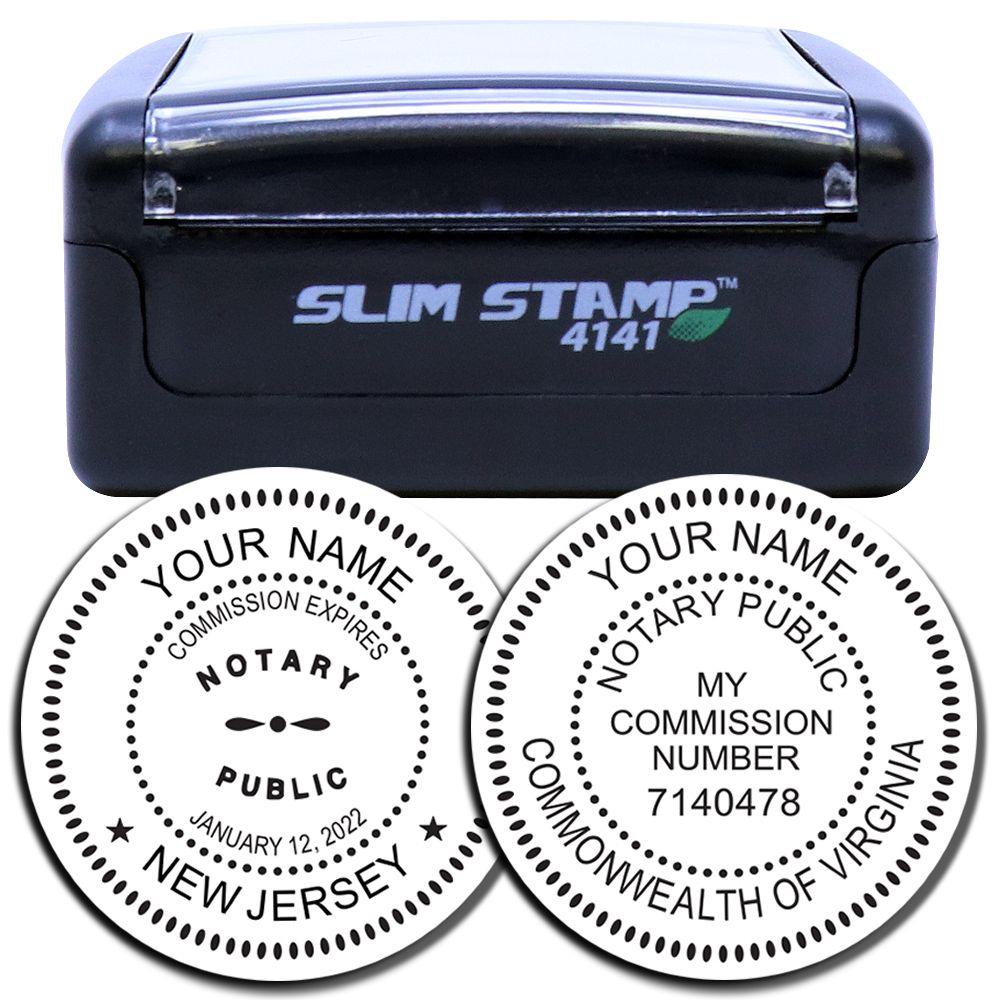



Is a notary stamp required in Minnesota?
Yes, on every paper notarization, and the command is stated twice, in two different chapters, which is why a notary who reads only one of them misses half the rule. The stamp section: “Every notary, including an ex officio notary under section 358.15, shall obtain an official notarial stamp as specified in subdivision 3, with which to authenticate official acts.” The certificate section says it again for every paper notarization: “If a notarial act regarding a tangible record is performed by a notary public, an official stamp must be affixed to the certificate.” That stamp, applied physically or electronically, is “deemed to be a ‘seal’ for purposes of the admission of a document in court”.
The governing text is Minn. Stat. §§ 359.03, subd. 1, 2(b); 358.65, subd. 2; 358.67.
What must appear on a Minnesota notary stamp?
- The seal of the state of Minnesota, meaning the actual state seal device
- Your name as it appears on the commission, or the name of the ex officio notary
- The words “Notary Public”, or “Notarial Officer” for an ex officio notary under § 358.15
- The words “My commission expires” with the expiration date shown, or “My term is indeterminate” where that applies
- An impression able to be reproduced in any legibly reproducible manner
Note the first item. Minnesota wants the state seal device on the stamp, not merely the word Minnesota, and a generic stamp bought for another state is never convertible here. Note also what is absent: a Minnesota stamp carries no address and no commission number. The remote online seal is the exception, since it must confirm your “name, jurisdiction, identifying number, and commission expiration date”, so your electronic seal carries an identifying number your physical stamp never does. There are no rule-only or handbook-only elements here, because Minnesota has no administrative rules for notaries at all, and the Secretary of State’s guide and FAQ restate the statute without adding to it. One correction worth making plainly: the word rubber appears nowhere in § 359.03. The statute prescribes a format, not a manufacturing material.
What size and shape must a Minnesota notary stamp be?
Rectangular, no more than three-quarters of an inch high by 2.5 inches wide, with a serrated or milled edge border. The statute: “The official notarial stamp shall be a rectangular form of not more than three-fourths of an inch vertically by 2-1/2 inches horizontally, with a serrated or milled edge border, and shall contain the information required by this subdivision.” Two things get missed. The measurement is a ceiling and no minimum is stated, so a smaller rectangle is fine. And the serrated or milled edge is a mandatory manufacturing spec rather than decoration, which makes it the most commonly botched element on a Minnesota stamp: a plain line border, or no border, does not comply. A stamp that complied when it was issued may be used for the remainder of the current term even if the format requirements change afterward.
Notary public stamps are made to these conventions, and we check your lines against the statutory wording before we make the stamp.





What ink color is required for a Minnesota notary stamp?
Not specified by the notary act. The sources here are § 359.03 and the rest of chapters 358 and 359 for the words ink, black and color, and they are absent from all of them. The only appearance standard the act imposes is reproducibility: the stamp must be “able to be reproduced in any legibly reproducible manner” and “capable of being copied together with the record”. Color enters through the recording statute, and that one repays a careful reading. § 507.093(2) says “the form of the document shall be printed, typewritten, or computer generated in black ink”, which on its face reaches the printed body of the instrument, and it is arguable whether a notary’s impression is part of the form of the document. The provision that unambiguously does reach your stamp is the legibility rule at § 507.093(7) together with § 507.24, subd. 1, which conditions recording on the whole instrument being legible and archivable. Our position: order black, because black is the only color that reliably satisfies a county recorder, and do not let anyone tell you the notary act imposes a black-ink mandate, because it does not.
More on the trade-off in stamp ink color rules.
Is a notary embosser required or optional in Minnesota?
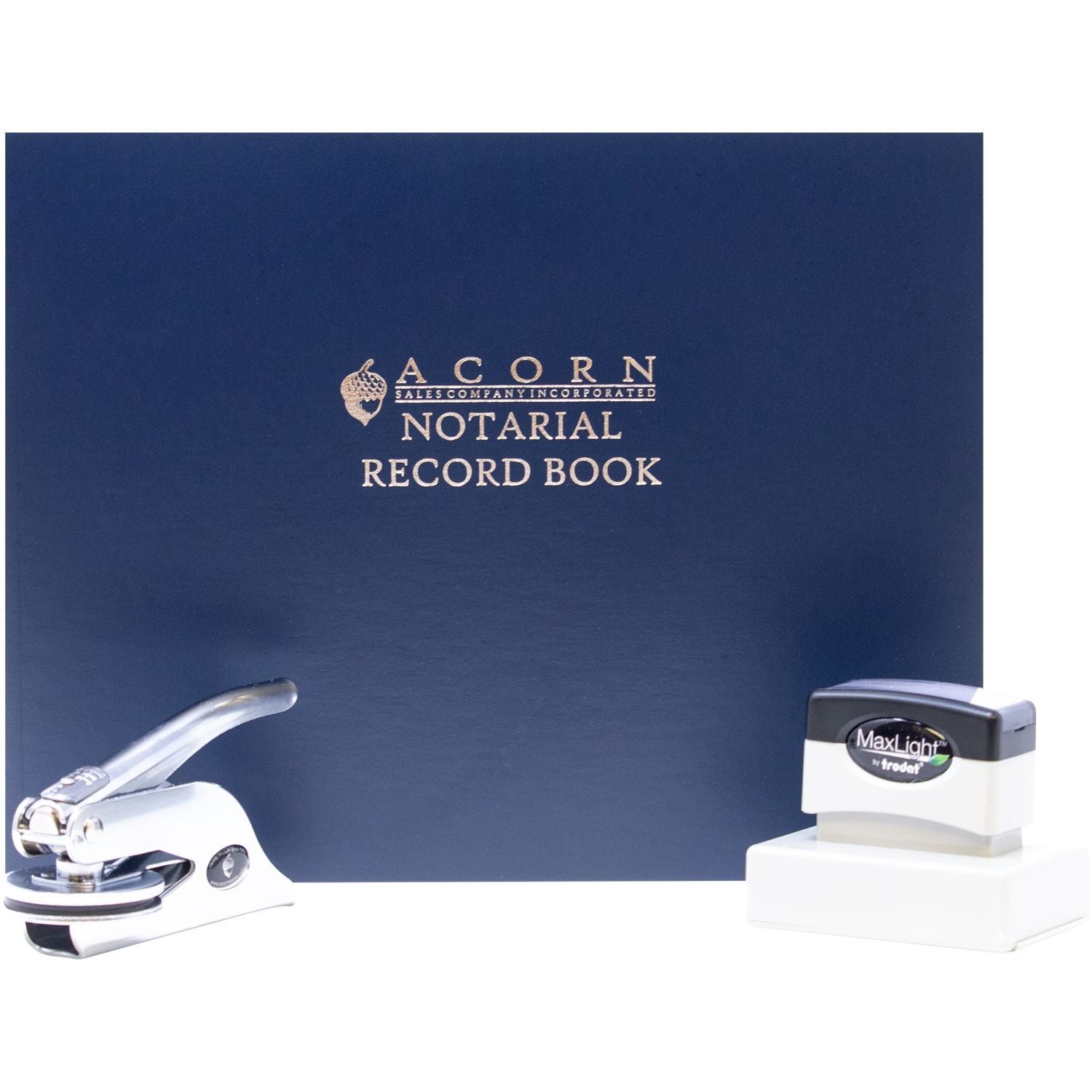
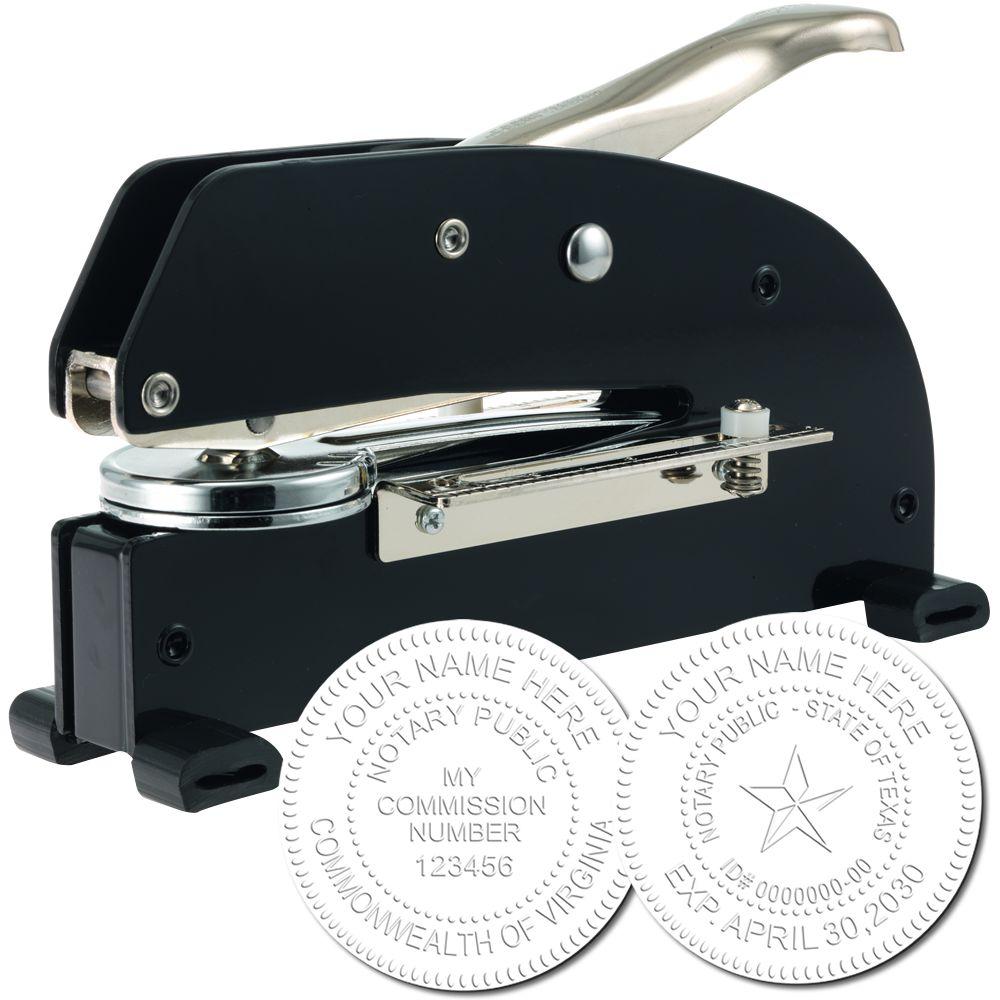
Not permitted as your official stamp. Three provisions point the same way. § 359.03, subd. 3(a) prescribes a rectangular bordered stamp bearing the state seal, which an embosser cannot produce. § 358.65, subd. 2 is the tell: for a notary public on a tangible record “an official stamp must be affixed to the certificate”, while for other notarial officers the very same subdivision allows a stamp “affixed to or embossed on” it. The drafters knew how to authorize embossing and withheld it from notaries public. And § 358.67(2) requires the stamp to be capable of being copied together with the record, which a dry raised impression is not. Nothing stops you owning a decorative embosser. It simply has no legal effect and cannot stand in for the stamp.
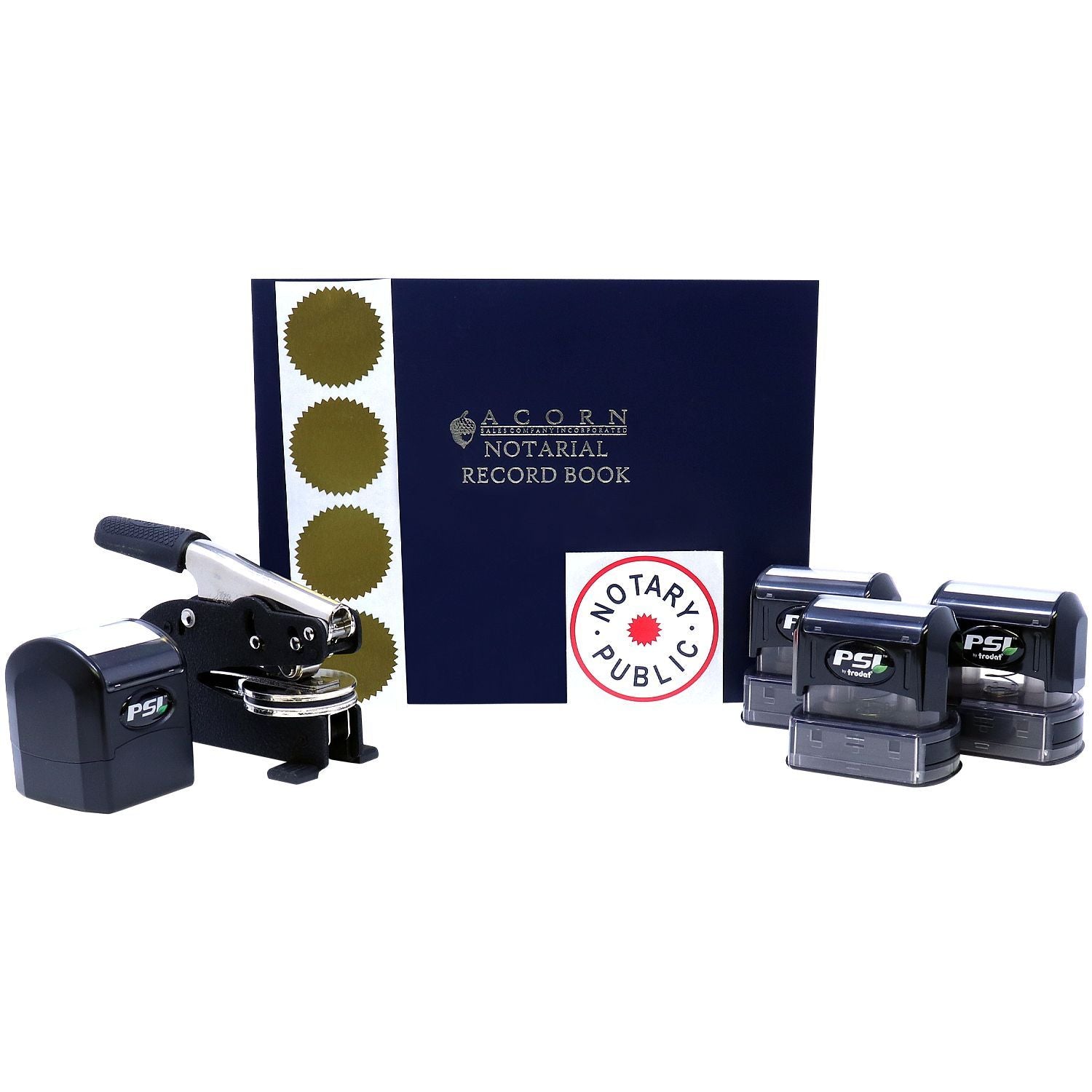
Notary embossing seal kits and inked stamp kits cover both formats. See also notary stamp vs. embosser.
Every Minnesota stamp reads a January 31 date, and that changes when you reorder
Minnesota does not run notary commissions on anniversaries. The statute fixes the end date for everyone: a notary “holds office until January 31 of the fifth year following the year the commission was issued”. A commission granted in January 2026 and a commission granted in December 2026 both expire on January 31, 2031. One notary gets the full five years and the other gets about four years and two months, for the same fee.
That single fact settles the stamp question. The expiration date is a required element on a Minnesota stamp, the new term carries a new January 31, and so the old die stops stating your actual commission expiration the moment the new term begins. A new stamp is required at every renewal. The grandfather clause in § 359.03, subd. 3(b) does not help, because it forgives only later changes to the format rules and only “during the remainder of the current term”. The Secretary of State confirms the handover: the old stamp is good through January 31 even if you have already renewed, and the new one starts on February 1.
The commercial consequence is the part suppliers get wrong. Minnesota is not a rolling market. The renewal window is August 1 to January 31, demand is concentrated in those six months, and it arrives in cohorts: everyone commissioned in 2021 reorders for a February 1, 2026 start, everyone commissioned in 2022 reorders for February 1, 2027. A reorder reminder set for one year after purchase is simply wrong here. Key it to the January 31 year printed on the customer’s own stamp and send it around August 1.
Two footnotes. Ex officio notaries use “My term is indeterminate” instead of a date and never need a date-driven reorder at all. And your stamp and journal are your personal property and are exempt from execution, so an employer who paid for the stamp cannot demand it back when you leave.
Do I need a new stamp when my commission is renewed or my name changes?
Every Minnesota commission expires on a January 31, specifically January 31 of the fifth year following the year of issuance, so the effective life of a commission runs anywhere from a full five years down to about four years and two months depending on the month it was granted. The renewal window is August 1 to January 31. A new stamp is required at renewal, and the reason is structural: the stamp must carry the words “My commission expires” with the expiration date shown, the new term carries a new January 31 date, and the old die therefore no longer states your actual expiration. The grandfather clause does not rescue it, because it excuses only later changes to the format rules and only for the remainder of the current term. Timing runs the way you would hope: the Secretary of State confirms that a stamp “may continue to be used until the date of expiration, even though the notary may have successfully renewed”, so the old stamp works through January 31 and the new one starts February 1.
Notify the Secretary of State within 30 days of a change of name or address. The statute is a single sentence: “A notary shall notify the secretary of state of any name or address change within 30 days of the change.” A name change forces a new stamp, because the stamp must bear your name as it appears on the commission, and the Secretary of State charges no fee for the change itself. An address change does not force a new stamp, because a Minnesota stamp carries no address.




What do I do if my Minnesota notary stamp is lost or stolen?
Not addressed, and no deadline exists. No Minnesota statute imposes a duty to report a lost or stolen physical stamp. The only guidance is administrative: the Secretary of State’s guide says to contact the notary division to cancel a commission or report a stamp lost or stolen, and states no time limit. Notaries and vendors who assume the familiar 30-day rule are importing another state’s law. Report a theft to local law enforcement regardless. For a remote online electronic journal, signature or seal the duty is real: notify law enforcement and the commissioner of commerce immediately of theft or vandalism.
How do I dispose of an expired Minnesota notary stamp?
Not addressed for the physical stamp. Minnesota enacted the uniform act in 2018 but did not take its stamping device provisions, so no statute requires you to destroy, deface or surrender a stamp on expiration, resignation or revocation. The sources here are §§ 358.67, 358.68, 358.70, 358.72, all subdivisions of 359.03, and §§ 359.071, 359.08 and 359.085. What does exist is one security sentence: “A notary public is responsible for the security of the notary public’s stamping device and may not allow another individual to use the device to perform a notarial act.” Destroying the die anyway is the sensible course. The electronic seal is different and does have rules: on termination of a remote registration you destroy the coding, disk, certificate, card, software or password that enables the electronic signature or seal and certify compliance to the Secretary of State, unless you re-register with the same signature and seal within three months.
More on retiring an old device in how to dispose of an expired notary stamp.
Can I notarize electronically or remotely in Minnesota?
Both are authorized, and they are two separate registrations, each free-standing from your commission. Before performing electronic notarial acts you register that capability with the Secretary of State, and the registration then runs as long as the commission does. Before performing a remote online notarization you register separately for that, and you may act “only while the remote online notary public is physically located in this state”. The electronic seal is defined as information confirming your “name, jurisdiction, identifying number, and commission expiration date”, and the physical stamp rules apply electronically too, since the required information “may be affixed electronically and shall be logically and securely affixed or associated with the electronic record”. Identity proofing for a remote act means credential analysis plus knowledge-based authentication of at least five questions at an 80 percent pass. The electronic journal and the audio-video recordings are kept ten years. Theft or vandalism of the electronic journal, signature or seal is reported immediately to law enforcement and to the commissioner of commerce, not to the Secretary of State. No paper journal is required for ordinary notarizations, though the Secretary of State calls keeping one prudent.
If you need your seal as an image file for electronic work, see electronic notary seal images.
Related Minnesota guides
Next step
Have your commission details in front of you before you order, because they go on the stamp and a wrong line means a reorder. Then browse notary public stamps, or contact us and we will check your wording against the statute before we make it.
Frequently asked questions about Minnesota notary seals
Is a notary stamp required in Minnesota?
Yes. The requirement is stated in two separate chapters of Minnesota law, which is why a notary who reads only one of them ends up with an incomplete picture of the rule.
When does a Minnesota notary commission expire?
On 31 January of the fifth year following the year your commission was issued. It is a fixed statewide date rather than an anniversary, so the effective life of a commission runs anywhere from a full five years down to about four depending on when in the year you were commissioned.
Does the January expiry change when I should reorder a stamp?
Yes, and it is the single most practical thing to know about Minnesota. Your expiration date is a required stamp element, so a new stamp is needed at every renewal. But a reminder set for one year after purchase is simply wrong in Minnesota, because the date on your stamp is a January 31 that has nothing to do with when you bought it. Set the reminder from the printed date.
What has to appear on a Minnesota notary stamp?
The seal of the state of Minnesota, your name as it appears on the commission, the words “Notary Public”, and the words “My commission expires” with the date. The impression must be reproducible.
Does Minnesota require a rubber stamp specifically?
No, and this is a small but real correction to what many sources say. The word “rubber” does not appear in the Minnesota seal statute. What the law requires is the content and a reproducible impression, not a particular device.
What ink color does Minnesota require?
None. The words ink, black and color are absent from the notary chapters. Black is worth choosing anyway because the recording statutes impose a legibility standard, but that is a practical recommendation rather than a Minnesota notary rule.
Who commissions notaries in Minnesota?
The Governor, with the advice and consent of the Senate, with the Secretary of State administering applications and the commission record. Residents of Wisconsin, Iowa, North Dakota and South Dakota may also be commissioned in Minnesota.
Do I need a new stamp when my Minnesota commission is renewed?
Yes, because the expiration date is a required element and it changes to a new January 31 at each renewal.








