
Written by Acorn Sales Company, manufacturing stamps and seals since 1964 · Reviewed by Holly R, VP of Sales and Marketing at Acorn Sales, against Virginia Department of Agriculture and Consumer Services on 22 September 2026 · Updated 22 September 2026
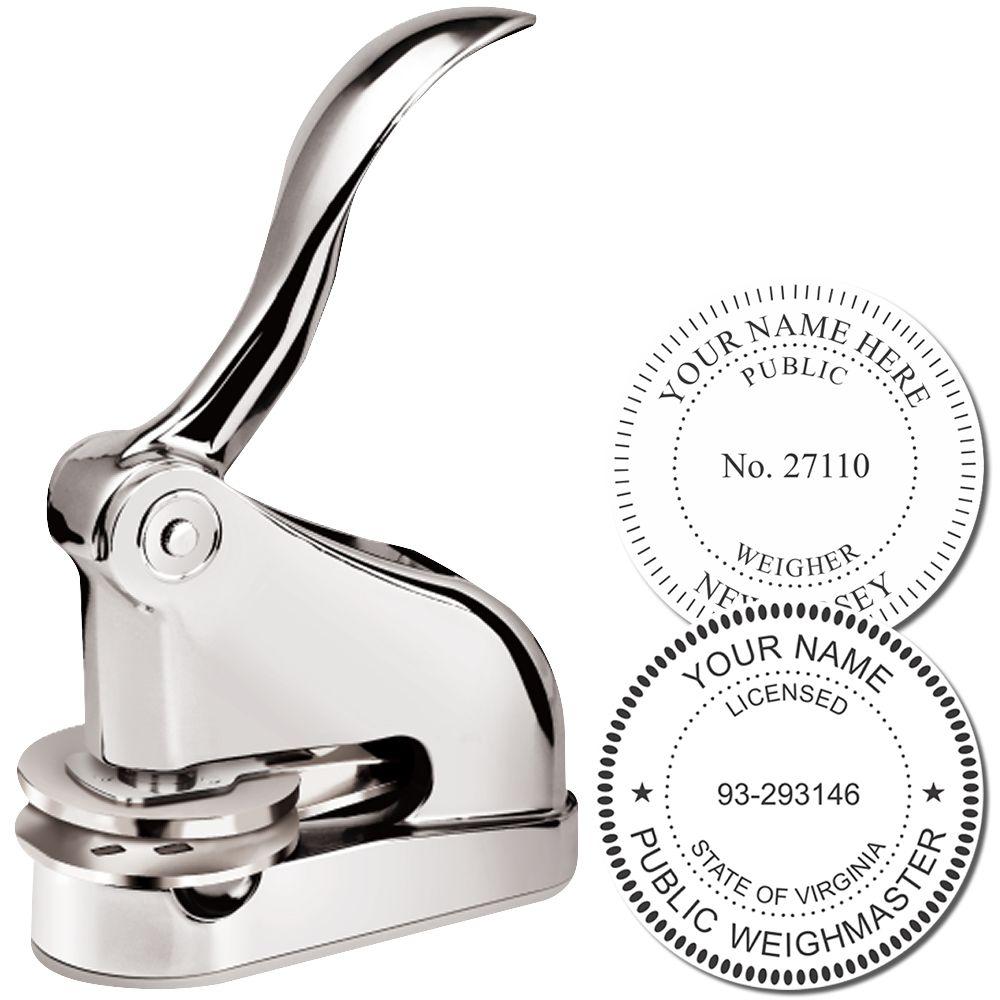
Virginia requires a licensed public weighmaster to have a seal, and it requires him to buy it himself. Va. Code 3.2-5808 says that each licensed public weighmaster shall, “at his own expense, provide himself with an impression seal”. The same sentence fixes what goes on it: the weighmaster’s name and the words “Commonwealth of Virginia” inscribed around the outer margin, and the words “licensed public weighmaster” in the center. The section closes by saying where it goes: “The seal shall be impressed upon each weight certificate issued by a licensed public weighmaster.”
That makes Virginia unusual in this trade. Several states make the seal a piece of government property that the agency cuts, numbers, lends and takes back at the end of the license. Virginia does none of that. The Commonwealth grants the license, takes the oath and prescribes the certificate form, and then leaves the device to you. Below is every word the law fixes, the one element VDACS says is optional, and the reason no honest supplier will quote you a diameter.
Virginia public weighmaster seal requirements at a glance
| Requirement | Virginia rule | Source |
|---|---|---|
| Seal required | Yes. Each licensed public weighmaster shall, at his own expense, provide himself with an impression seal. The verb is “shall” throughout 3.2-5808, with no permissive alternative anywhere in the section. | Va. Code 3.2-5808 |
| Required elements | Around the outer margin: the weighmaster’s name and the words “Commonwealth of Virginia”. In the center: the words “licensed public weighmaster”. VDACS adds one optional element, the license number in the inner circle, “if desired”. | Va. Code 3.2-5808; VDACS, Application for License as Public Weighmaster |
| Size and shape | No diameter is published. Neither the statute nor VDACS states a size, and none should be inferred. Shape is described only by arrangement: the statute speaks of an outer margin and a center, and the VDACS application speaks of the outer circle and the inner circle. | Va. Code 3.2-5808; VDACS, Application for License as Public Weighmaster |
| Device allowed | An impression seal, which is an embosser. That is the only instrument the statute names, and it names it twice: the weighmaster provides himself with an impression seal, and the seal “shall be impressed upon” each certificate. No ink stamp substitute is authorized anywhere in chapter 58. | Va. Code 3.2-5808 |
| Signature and date | A weight certificate “when so made and properly signed and sealed” is prima facie evidence of the accuracy of the weights shown, so signature and seal work together. The certificate states the date of issuance. Before entering upon his duties the weighmaster makes oath to execute them faithfully. | Va. Code 3.2-5809; Va. Code 3.2-5808 |
| What must be sealed | Each weight certificate issued by a licensed public weighmaster. The duty is not limited by commodity, by customer or by the value of the load. | Va. Code 3.2-5808 |
| Electronic seal | Not addressed. Chapter 58 contains no electronic or digital seal provision and no third party certificate requirement. Since the statute requires an impression seal that is impressed upon the certificate, an electronic substitute has no statutory basis in Virginia. | Va. Code tit. 3.2, ch. 58 (Public Weighmasters) |
| Renewal and lapse | Each license expires on December 31 of the calendar year issued, and stays valid through January 31 where a renewal application was filed by December 15. The statutory fee is $10; VDACS collects $25.00 in total, being a $10.00 application fee plus a $15.00 criminal history processing fee. Chapter 58 says nothing about the seal on lapse, suspension or revocation, and does not make it state property. | Va. Code 3.2-5805, 3.2-5807, 3.2-5817; VDACS, Application for License as Public Weighmaster |
| Firm requirements | None. The license and the seal are personal: the applicant is a citizen or lawfully admitted permanent resident, at least 18 years old, of good moral character. No firm license and no firm seal appear in the chapter. | Va. Code 3.2-5802, 3.2-5815 |
| Regulator | Virginia Department of Agriculture and Consumer Services, acting through the Commissioner of Agriculture and Consumer Services, who may adopt regulations he deems necessary to carry out the chapter. No current Virginia Administrative Code chapter governs public weighmasters. | Va. Code 3.2-5801 |


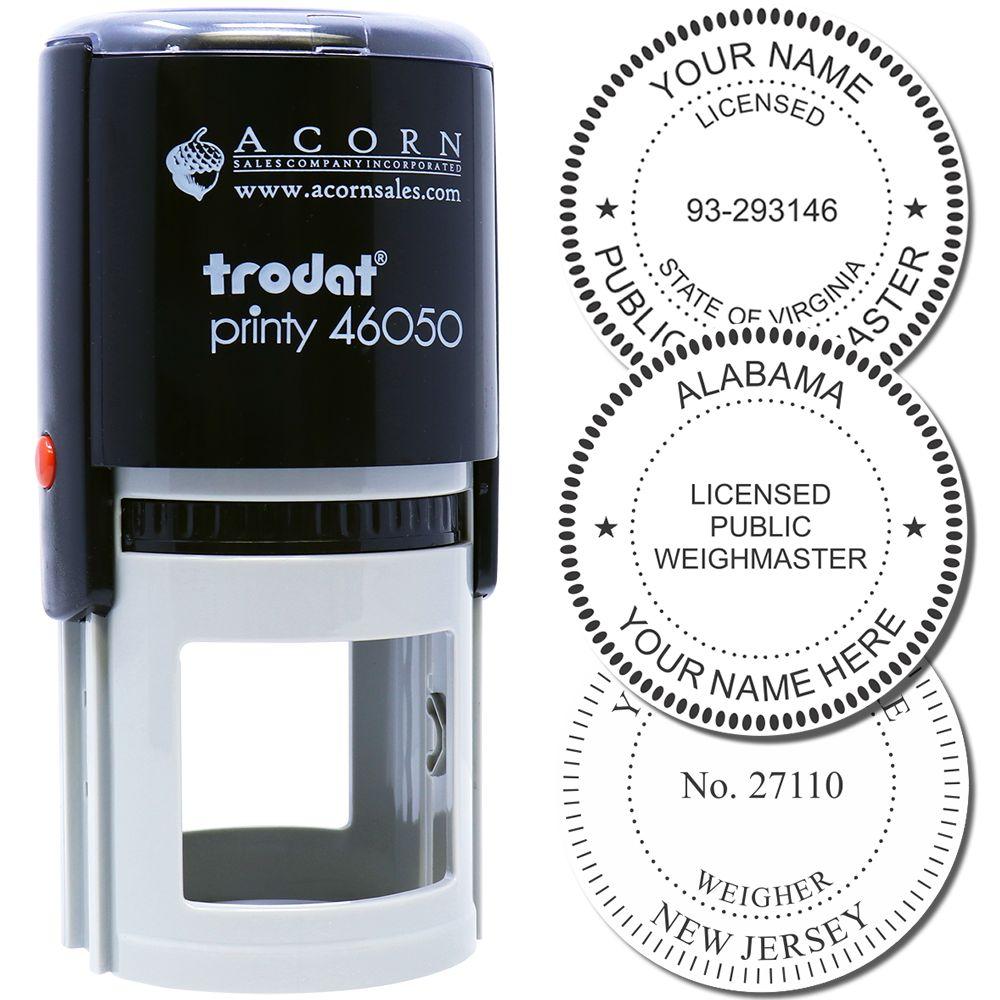

Does Virginia require a public weighmaster to have a seal?
Yes, and the section that does it is short enough to read in one sitting. Va. Code 3.2-5808 is captioned “Oath and seal of licensed public weighmaster”. It opens with the oath, notes that the license does not oblige the Commonwealth to pay the licensee anything for his services, and then says: “Each licensed public weighmaster shall, at his own expense, provide himself with an impression seal.”
Three things follow from that sentence. The duty is mandatory, because the verb is shall. The cost sits on the licensee, because the statute says so in as many words. And the instrument is named, because the statute does not say seal in the abstract, it says impression seal. Nothing in chapter 58 softens any of the three. There is no exemption for low volume weighing, none for a weighmaster who works for a single customer, and none for the limited licenses that 3.2-5806 lets the Commissioner issue without charge to qualified officers and employees of cities, counties and state agencies. A limited license is still a license as a licensed public weighmaster.
Exactly what the seal must say
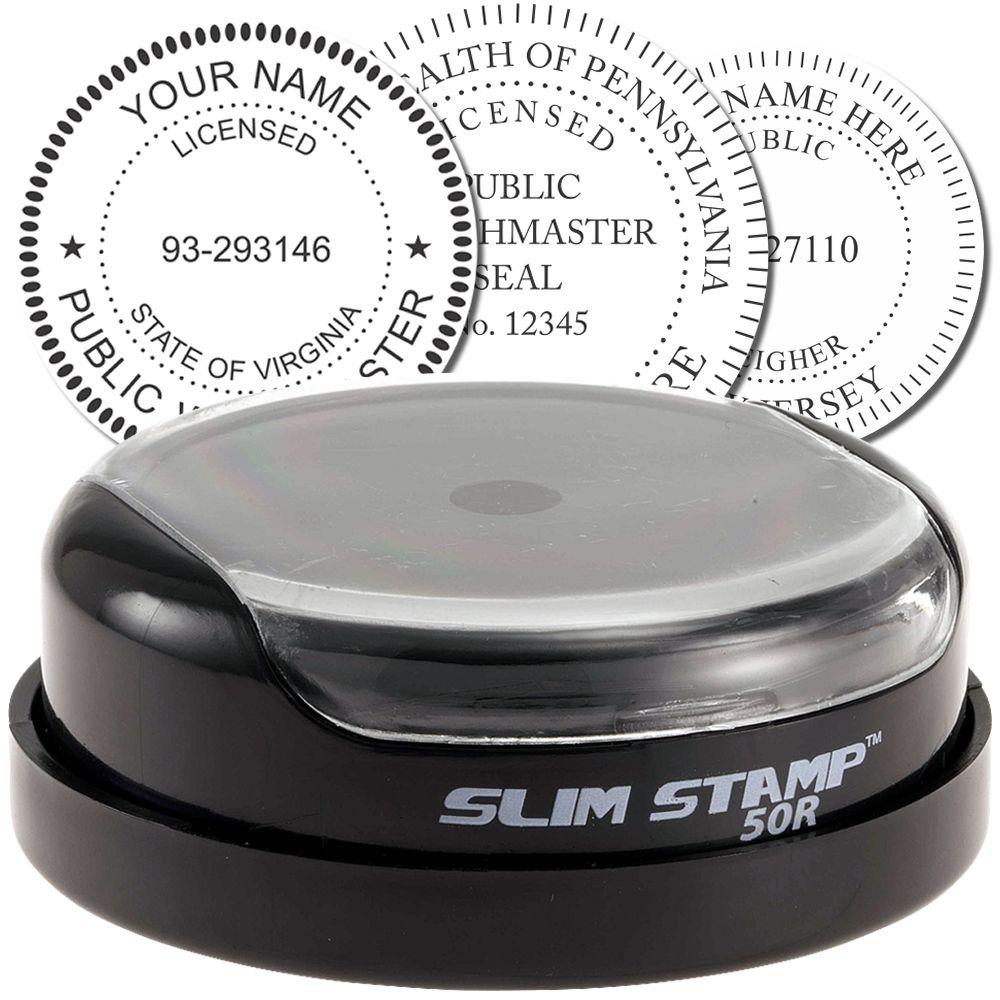
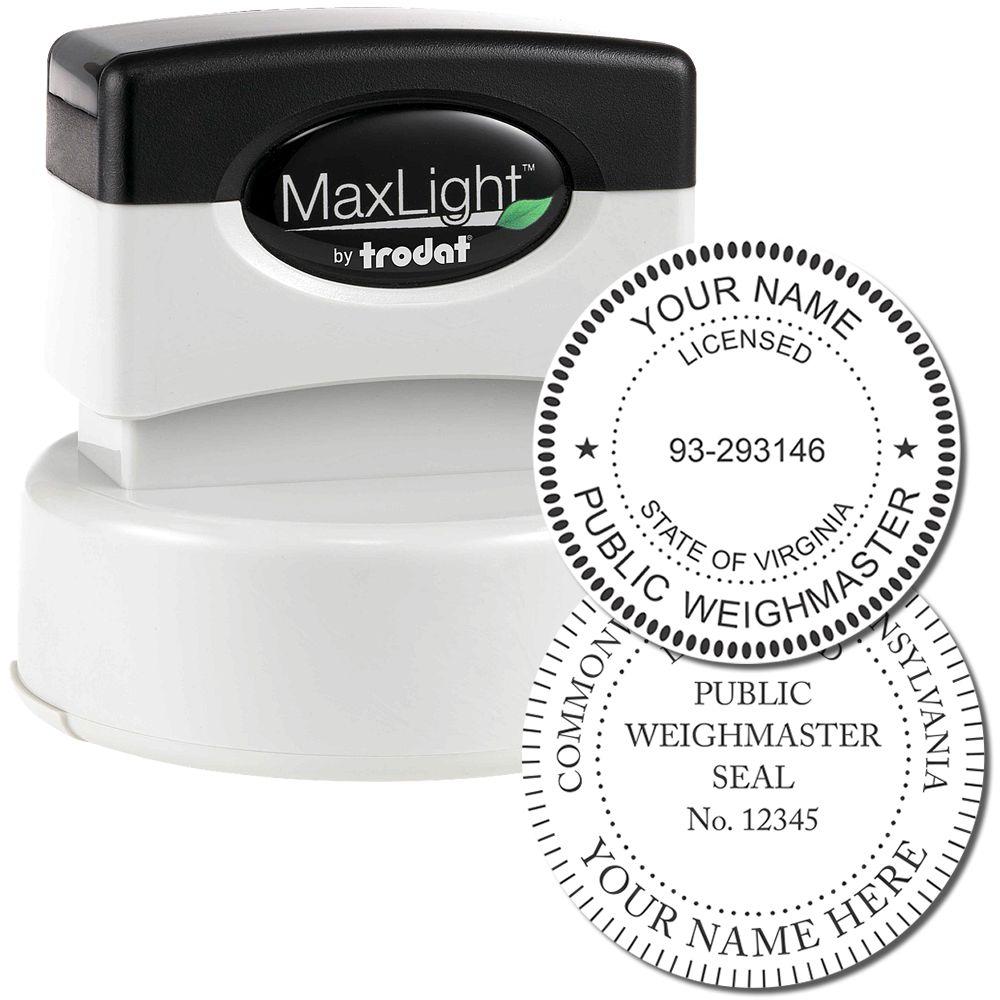
The element list is one sentence and it is worth quoting whole: “His name and the words ‘Commonwealth of Virginia’ shall be inscribed around the outer margin of the seal and the words ‘licensed public weighmaster’ shall appear in the center thereof.”
Read that as a layout instruction rather than a list, because that is how it is written. Two items go around the outside, the name and the Commonwealth. One phrase goes in the middle, and the statute spells it out: licensed public weighmaster. Not weighmaster on its own, not public weighmaster, not an abbreviation. The same three words are the protected title under 3.2-5816, which provides that no person shall assume the title licensed public weighmaster unless he holds a valid license, so the wording is not a stylistic choice by the legislature. It is the credential.
On the name, use the name on your license. The statute says “his name” and offers no further instruction, and a die that reads differently from the license and the signature invites the only question you do not want asked about a weight certificate.
The license number is optional, and here is where it goes
This is the one point where VDACS adds something the statute does not carry, and it adds it as a choice rather than a duty. The Department’s own Application for License as Public Weighmaster restates the statutory layout, that the seal must contain the weighmaster’s name and “Commonwealth of Virginia” in the outer circle with the wording “Licensed Public Weighmaster” in the center, and then says that the weighmaster “may also add his/her license number to the inner circle if desired”.
May, and if desired. That is permissive language from the regulator on its own form, so a Virginia seal without a license number is a correct seal and a Virginia seal with one is also a correct seal. We mention it because it is the single most common question on a Virginia order, and because the answer is not obvious from the statute alone. If you want the number on the die, say so when you order and tell us the number; if you would rather keep the die good across a license number change, leave it off. Either way the certificate itself is where the rest of the identifying detail lives.
Impression seal means an embosser, and there is no ink stamp option
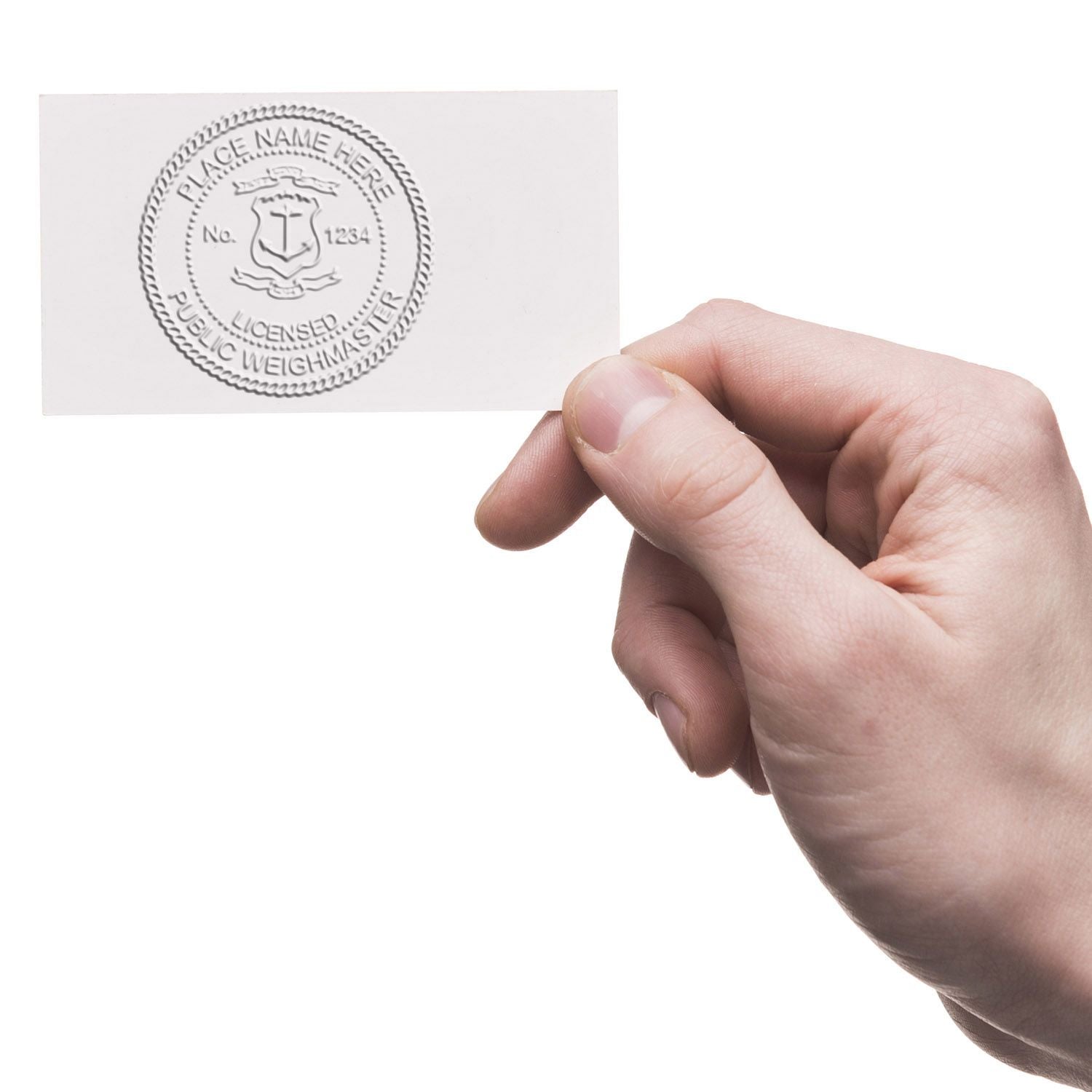
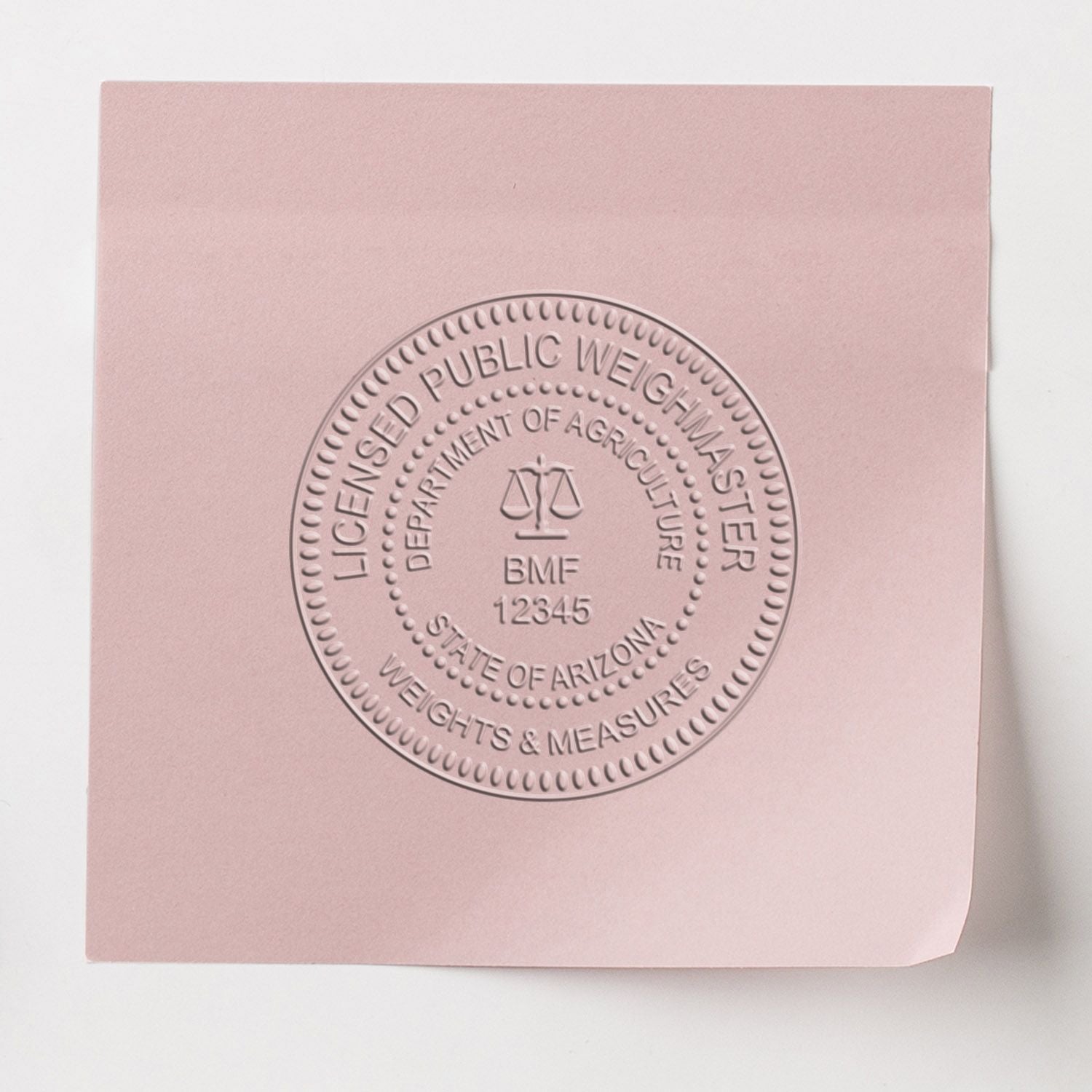
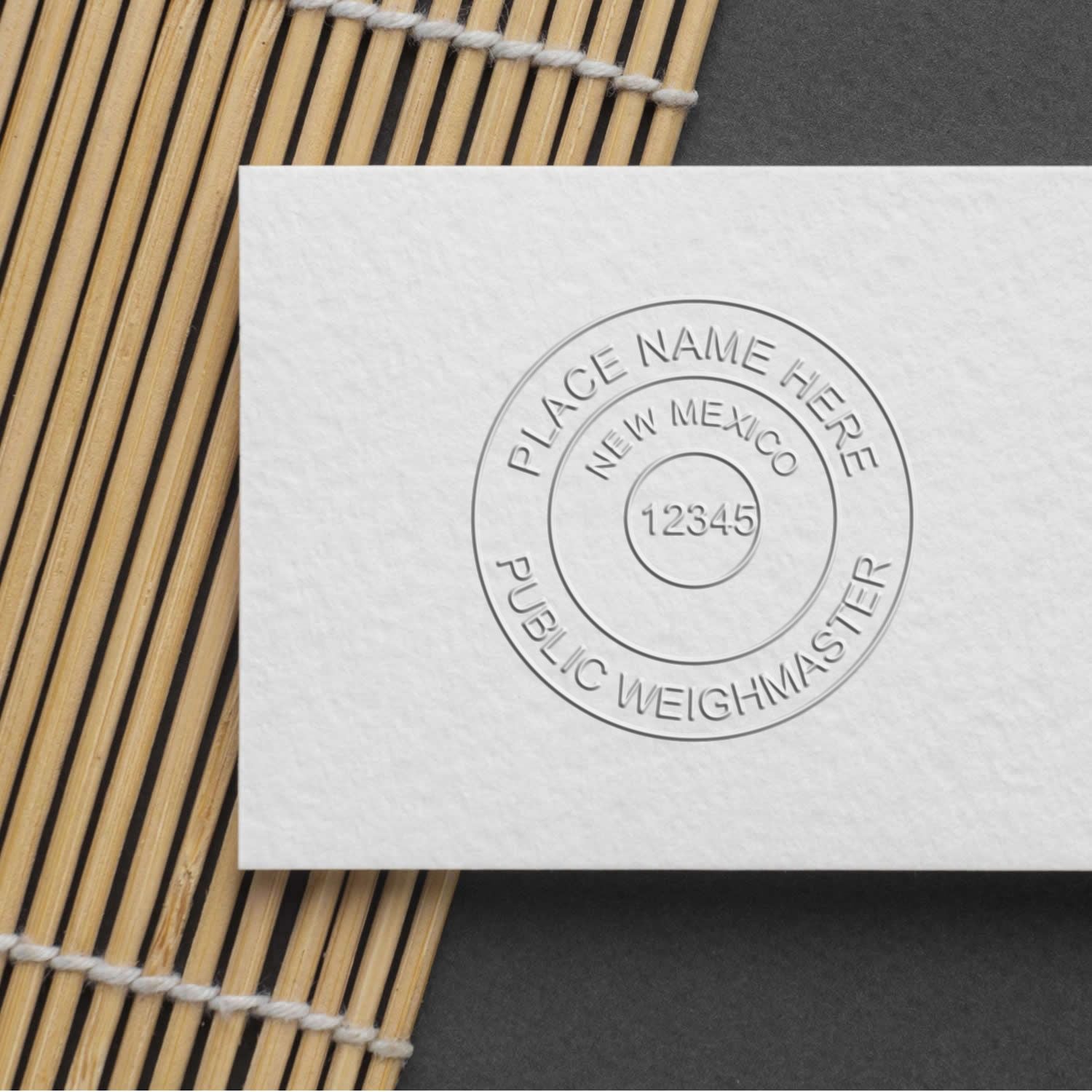
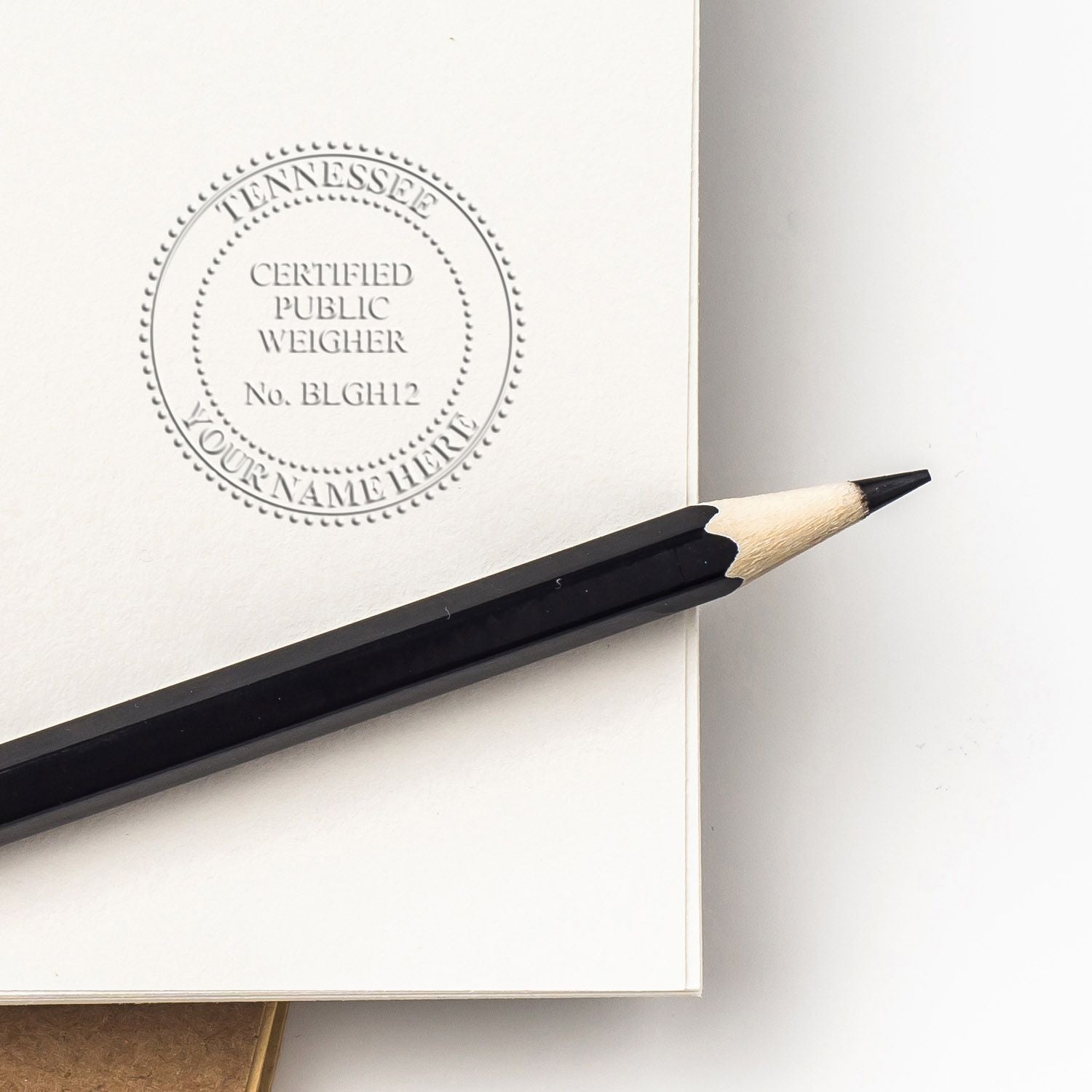
An impression seal is a device with two mating dies that squeeze the paper and leave a raised, uninked impression. That is what 3.2-5808 names, and the operative sentence confirms the method rather than just the object: the seal “shall be impressed upon each weight certificate”. Impressed, not printed and not applied.
So a rubber stamp is not a substitute here. We sell Public Weighmaster ink stamps and they are good stamps, but nothing in chapter 58 authorizes one in place of the impression seal, and a page that told you otherwise would be selling you the wrong thing. If you want an ink device as well, buy it as a second marking for internal copies, file sets or envelopes, and keep embossing the certificate that leaves your hands.
The same reasoning rules out a seal image dropped into a PDF as the Virginia seal. Chapter 58 has no electronic or digital seal provision at all, which means there is no standard an image could meet and no sentence that makes an image the equivalent of an impress. That is an absence in the law and not an oversight in our reading, and it is the answer we would give a Virginia licensee asking whether he can email a sealed certificate.
No published diameter, and what to do about it
Neither the Code of Virginia nor VDACS publishes a size for this seal. No diameter, no minimum, no maximum, no shape named in words. What both sources describe is an arrangement: an outer margin and a center in the statute, an outer circle and an inner circle on the VDACS application. Circular by description, unsized by anybody.
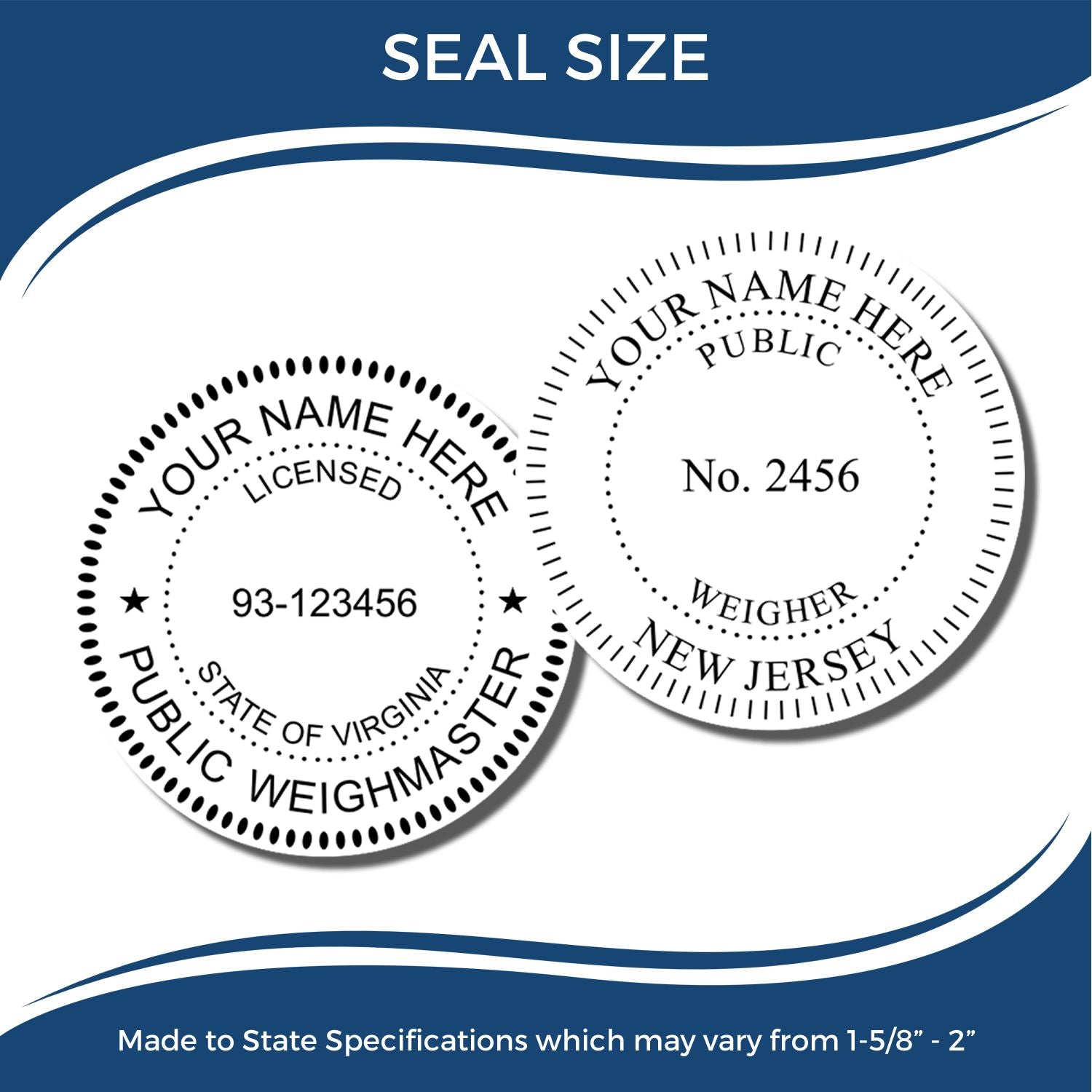
We will not invent one, and you should be wary of any supplier who quotes a Virginia weighmaster diameter as though it came from the state. It did not. What does exist is our own production record, which is a different kind of fact and belongs in a different sentence: Acorn cuts public weighmaster dies at approximately 1-5/8 inches to 2 inches in diameter depending on state specifications. That is what our own catalog says about our own tooling, not a Virginia rule, and it is offered only so you know what to expect in the box.
The practical constraint is legibility rather than law. Three items around a margin, one of which is the phrase Commonwealth of Virginia, plus a three word credential in the center, plus an optional number in the inner circle, is a lot of lettering for a small circle. We proof the layout at actual size before cutting so you can see whether the name reads cleanly at the size you picked.


Every weight certificate gets the seal
The last sentence of 3.2-5808 is the one that sets the working habit: “The seal shall be impressed upon each weight certificate issued by a licensed public weighmaster.” Each. There is no threshold and no category of certificate that escapes it.
Why it matters shows up one section later. Va. Code 3.2-5809 provides that a weight certificate “when so made and properly signed and sealed shall be prima facie evidence of the accuracy of the weights shown”. The seal is doing evidentiary work. A certificate that is signed but not sealed has not been made in the way the statute describes, which is exactly the sort of gap that surfaces months later when somebody disputes a load. Keep the embosser at the scale where the certificates are written, not in an office across the yard.
Virginia also keeps the weighing personal. Under 3.2-5810 a weighmaster shall not enter on a certificate any weight values but those he has personally determined, and the certificate is prepared so as to show clearly what weights were actually determined. Read with the sealing duty, the picture is one person, one determination, one signature and one impress.
What the weight certificate itself has to state
The seal is only half of a Virginia certificate. Va. Code 3.2-5809 gives the Commissioner power to prescribe the form, and then lists the content: the date of issuance, the kind of property, produce, commodity or article weighed, the name of the declared owner or agent of the owner or of the consignee of the material weighed, the accurate weight of the material weighed, the means by which the material was being transported at the time it was weighed, and such other available information as may be necessary to distinguish or identify the property from others of like kind.
Notice what is not on that list. The certificate content rule does not ask for the license number, which is part of why VDACS treats the number on the seal as optional rather than as the only place it could appear. Notice also that the Commissioner prescribes the form, so if you print your own certificate stock, start from what VDACS gives you rather than from a form designed for another state.
One more duty sits beside it. Under 3.2-5813 a weighmaster keeps and preserves for at least one year a legible copy of each weight certificate he issues. An embossed impression photocopies poorly, which is an argument for keeping your file copy as a carbon or a printed duplicate of the original rather than as a scan of the embossed sheet.
The oath, the fee and the December 31 expiration
Section 3.2-5808 opens with the oath, and the order of the sentence matters: each licensed public weighmaster shall, before entering upon his duties, make oath to execute faithfully his duties. VDACS carries that on the application itself as a Licensed Public Weighmaster Oath, signed by the applicant and a witness, swearing to faithfully perform all the duties and to correctly and honestly weigh and make a true record of all such weights.
On money, the statute and the form say different things because they are counting different things. Va. Code 3.2-5805 sets a $10 fee payable to the Commissioner before issuance. The VDACS application asks for $25.00 in total, being that $10.00 application fee plus a $15.00 criminal history processing fee, payable to the Treasurer of Virginia. Neither figure includes the seal, because the seal is the licensee’s own expense by statute.
Licenses run on the calendar, not on the anniversary. Under 3.2-5807 each license expires on December 31 of the calendar year issued, and a license remains valid through January 31 where the renewal application was filed by December 15. Under 3.2-5817 the Commissioner may suspend or revoke a license.
There is no regulation behind the statute
If you go looking for a Virginia Administrative Code chapter on public weighmasters, you will not find a current one. 2VAC5-340, the Rules and Regulations for the Enforcement of the Virginia Weights and Measures Law, is repealed. 2VAC5-240 exists but it is the Grain Handlers Law regulation and it is not a weighmaster regulation.
That leaves Va. Code 3.2-5801, which says the Commissioner may adopt regulations he deems necessary to carry out the chapter, sitting over an empty space. The consequence for you is simple and worth stating plainly: the seal requirement is entirely statutory. Everything binding about your Virginia seal is in 3.2-5808, supplemented by what VDACS chooses to say on its own application form. There is no rule text with a diameter hiding behind the statute, because there is no rule text.

Two things Virginia does not say, and one seal that is not yours
First, chapter 58 does not say what happens to the seal when a license lapses, is suspended or is revoked. That is a real absence in the law rather than a gap in our reading, and it distinguishes Virginia from states that declare the seal government property. North Carolina provides that all seals remain the property of the State and are returned to the Commissioner on termination of duties. Washington requires the weighmaster to surrender the impression seal to the director within ten days of expiration, suspension or revocation. Virginia has no equivalent sentence. Your Virginia seal was bought with your money and the Commonwealth does not claim it.
Second, chapter 58 does not address a name change. Since the statute puts your name on the outer margin, a legal name change means a new die; there is no correction procedure to use instead.
And one warning that costs people money in this trade. When a weights and measures official tests a scale and seals it, that is device sealing, a separate act by a separate person on a separate object. Va. Code 3.2-5811 requires a weighmaster to use only suitable, tested and approved weighing devices, which is where a sealed scale comes into your world. The scale seal is not your seal, it is not bought from a stamp company, and it never appears on your certificate in place of your impress.
Ordering a Virginia public weighmaster embosser
Send four things and the die can be laid out without another email: your name as it appears on your license, confirmation that the outer margin reads with “Commonwealth of Virginia”, the center line “Licensed Public Weighmaster”, and a yes or no on the optional license number in the inner circle with the number itself if yes.
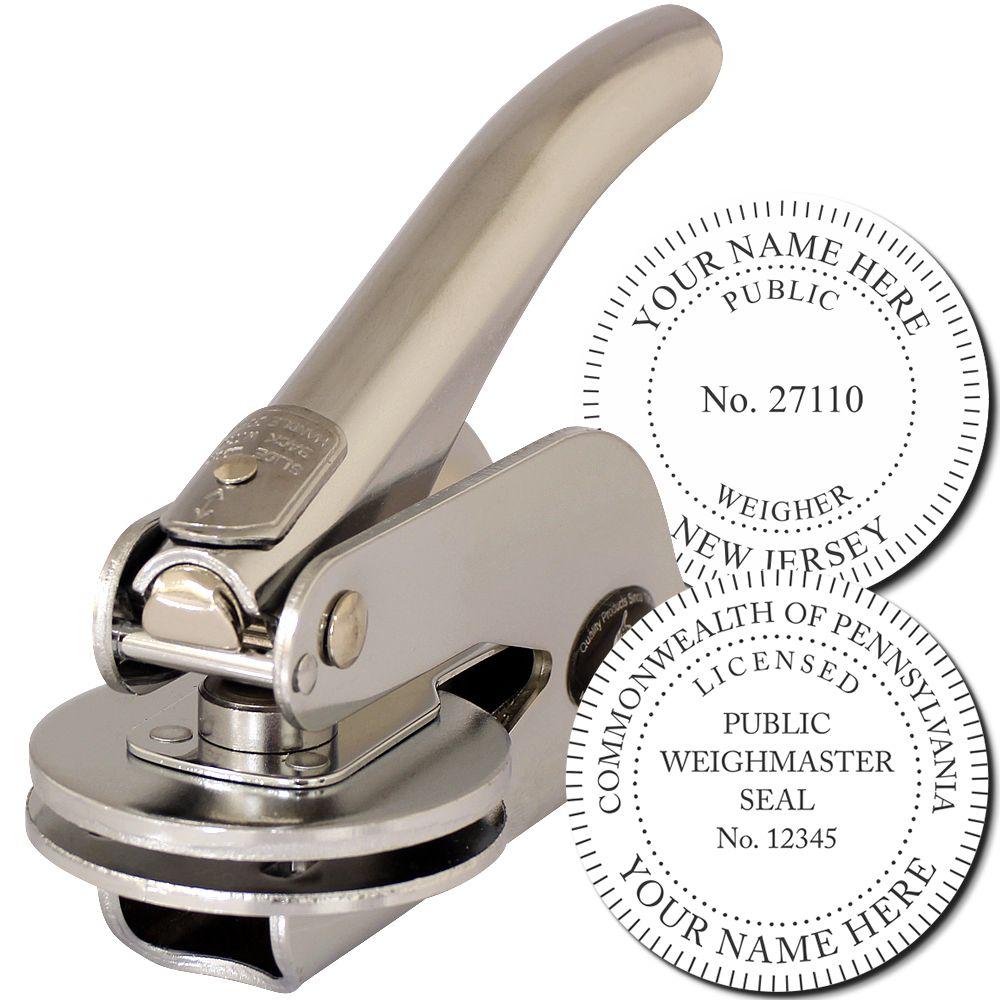
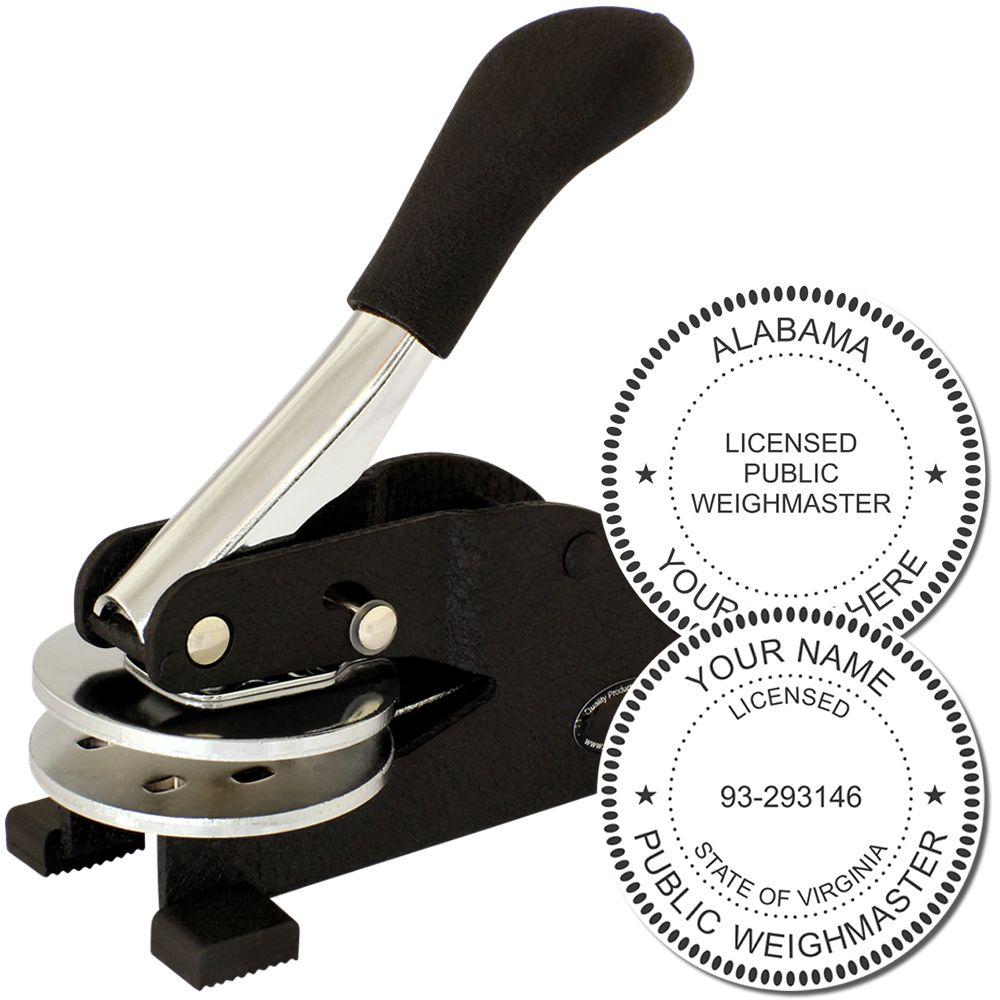
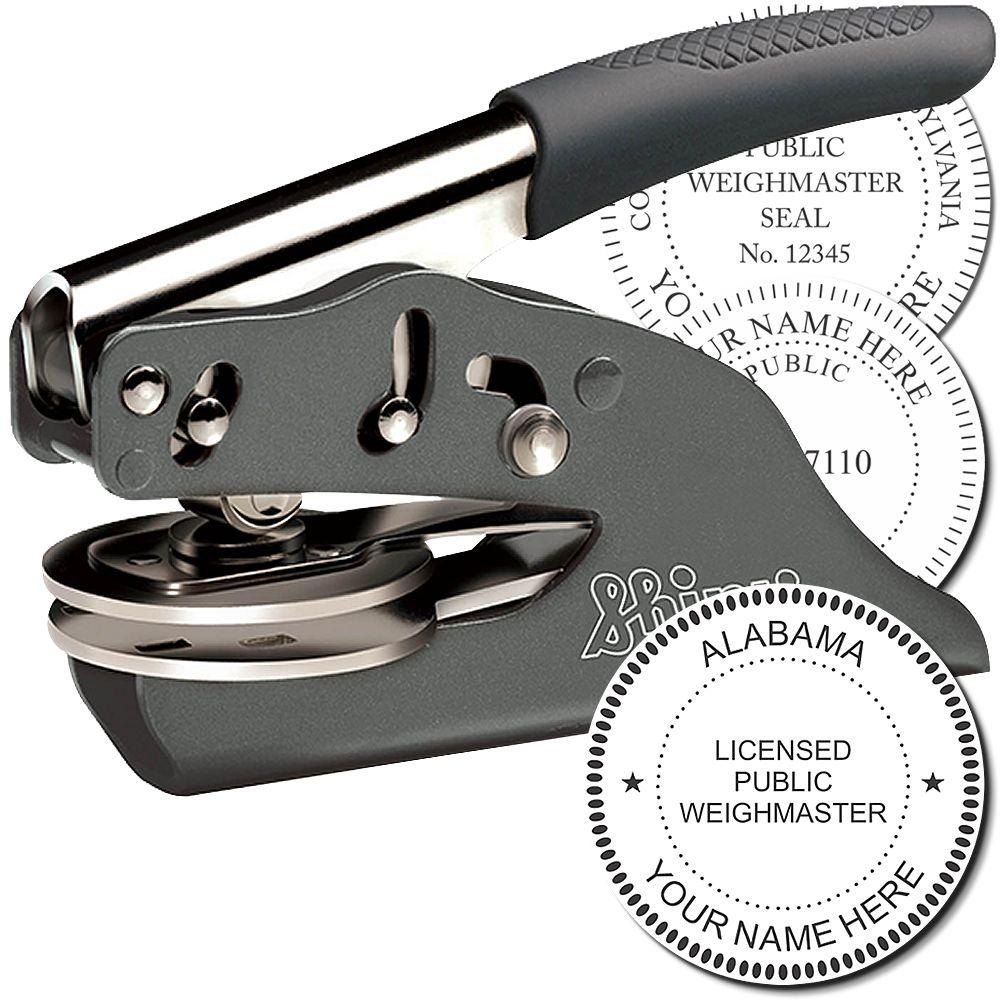
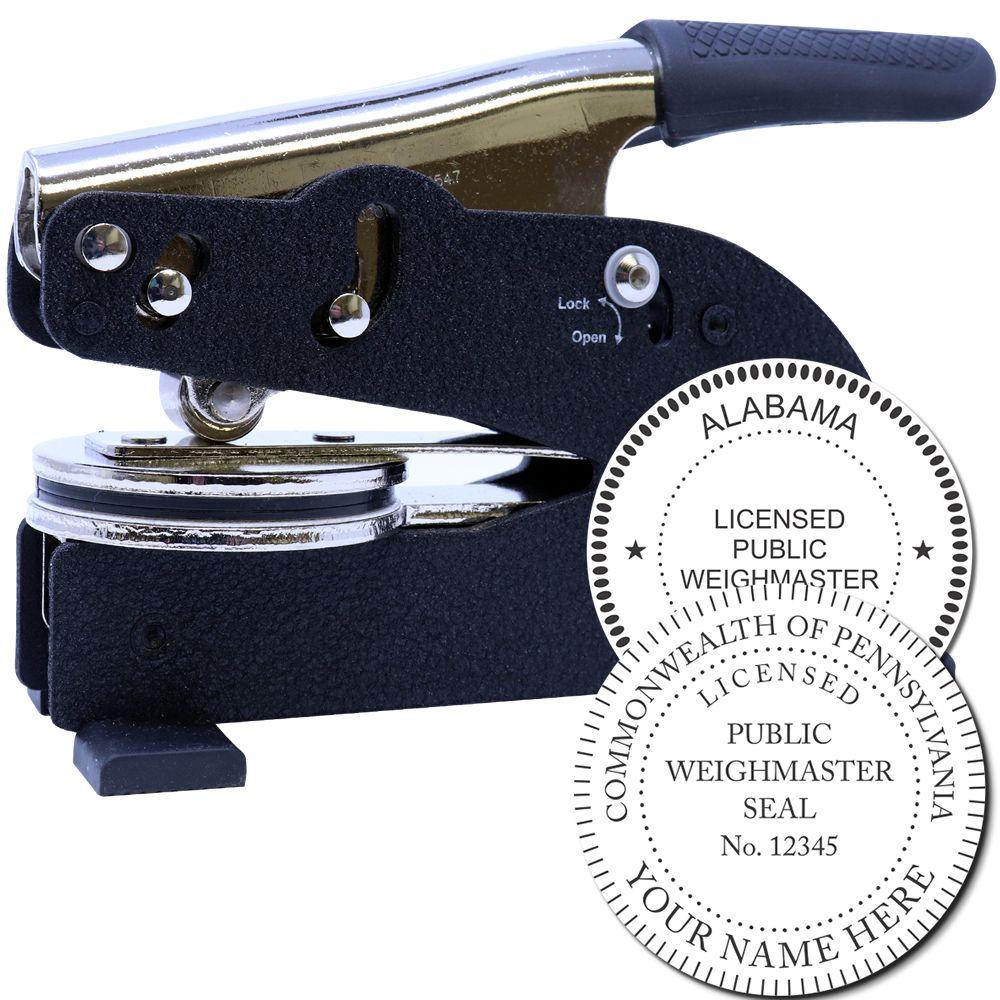
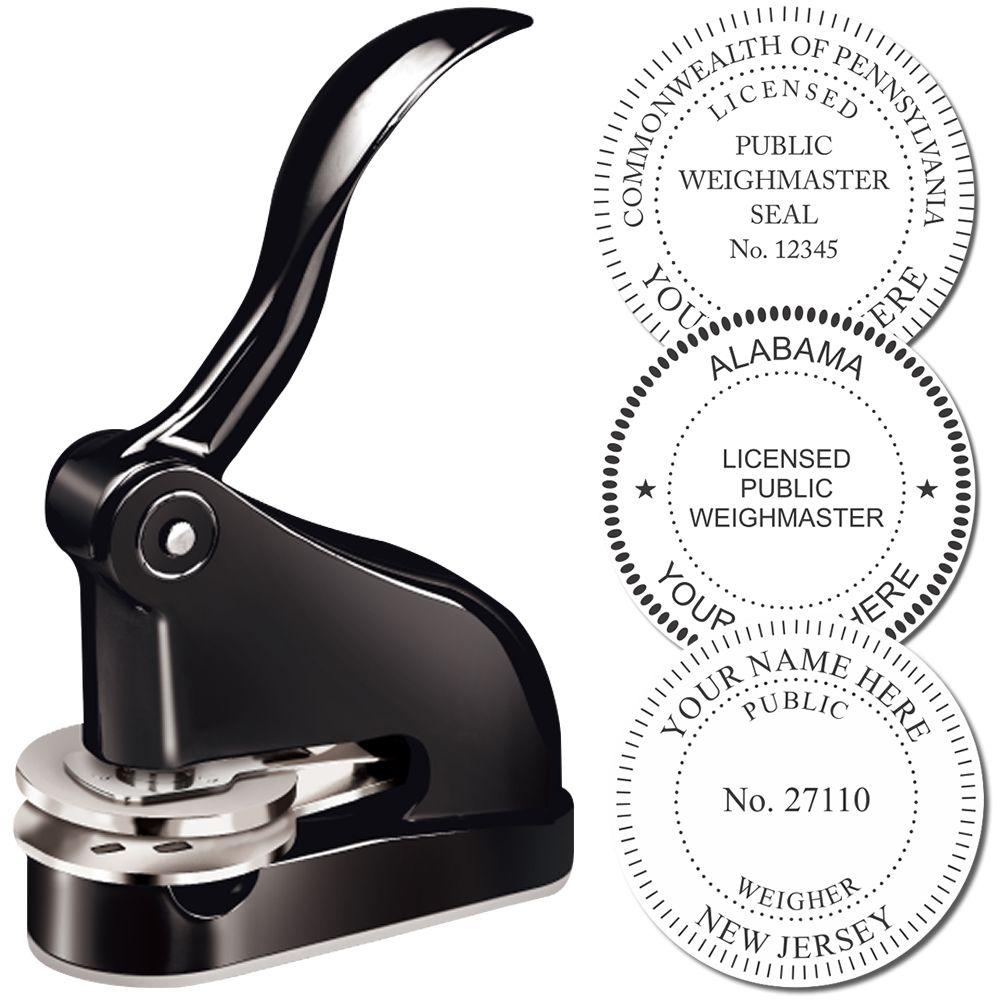
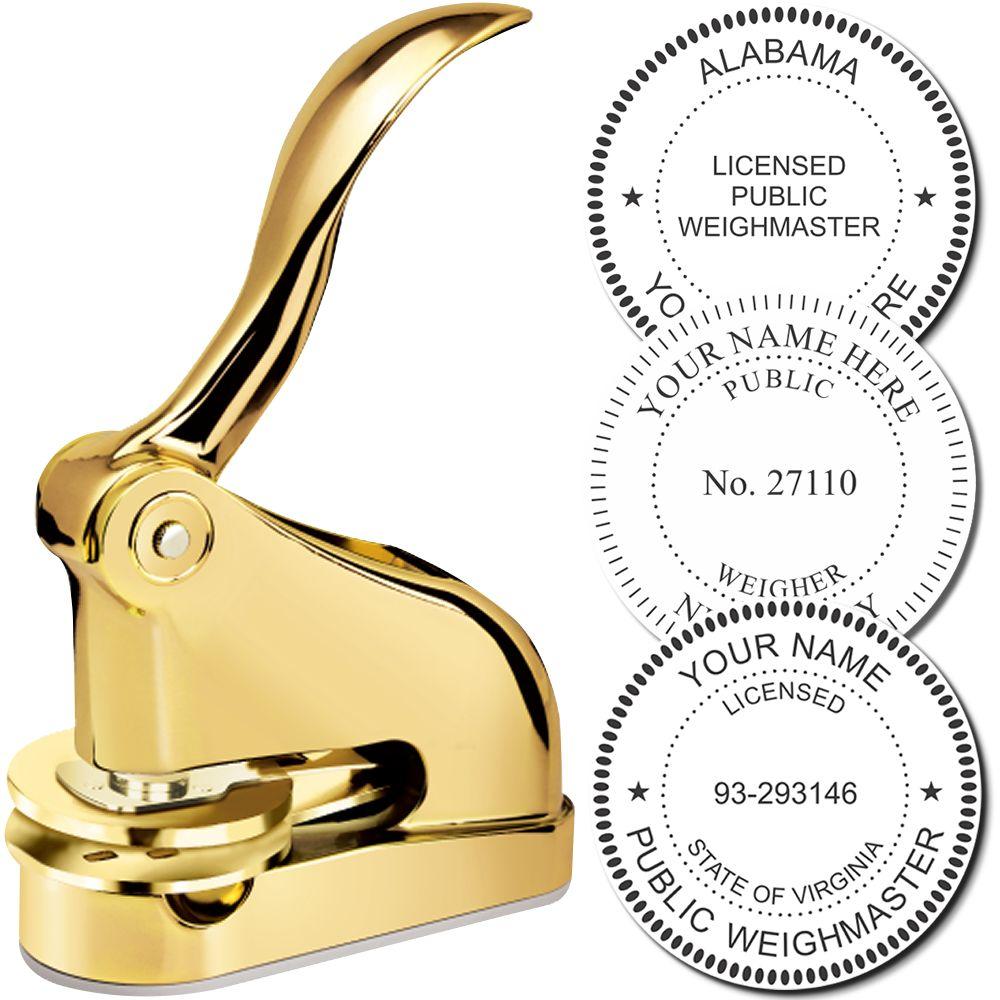
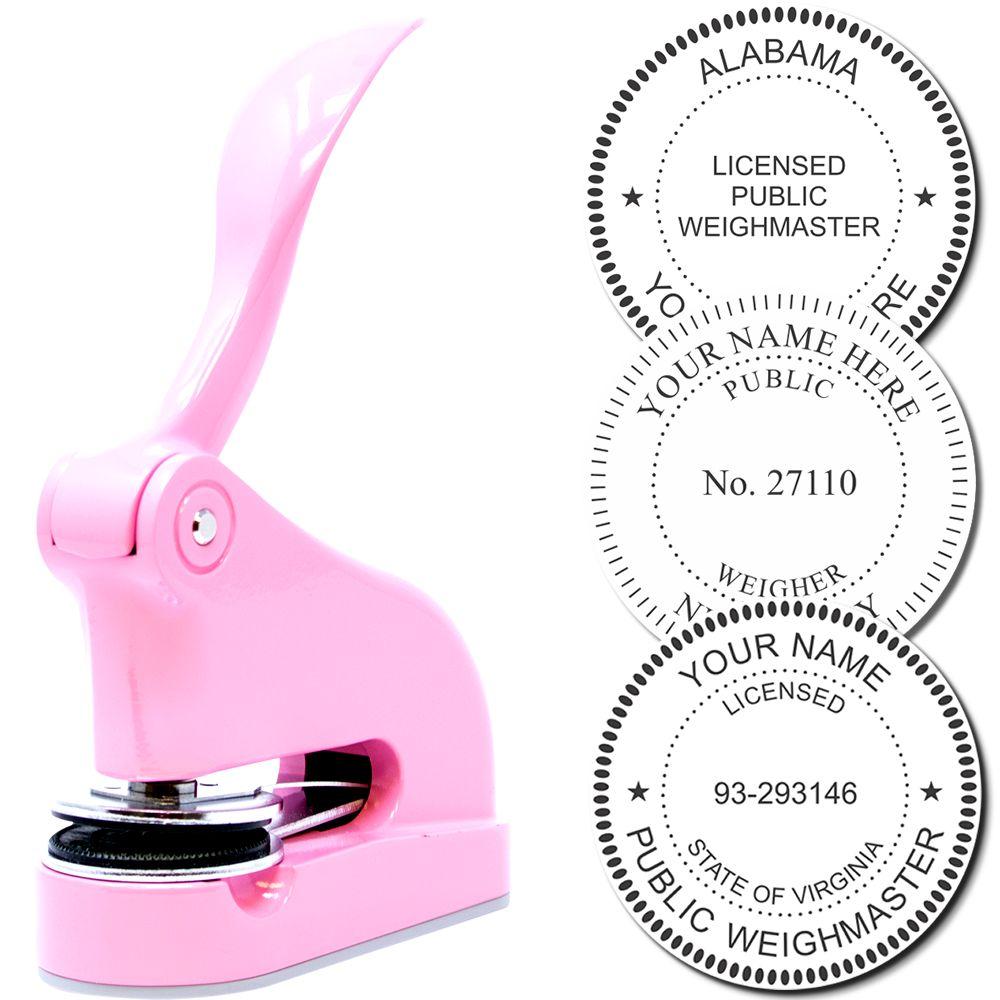
From the weighmaster range, the Public Weighmaster Handheld Seal Embosser at $46.95 is the device most Virginia licensees end up with, because it travels to the scale house and back. The Desk Seal Embosser at $44.95 sits where the certificates are written and takes less hand strength per impression. The Soft Seal Embosser at $44.95 squeezes more easily, which is worth having if you seal a stack at a time. Where certificates are bound or the impress has to land well in from the edge, the Long Reach Desk Seal Embosser at $129.95 and the Extended Long Reach Desk Seal Embosser at $169.95 reach further into the sheet. High volume yards that seal all day use the Heavy Duty Standard Reach Embosser at $1,795.00. Browse the public weighmaster stamps and seals collection, or contact us with your wording.
Looking after the embosser
An embosser is a mechanical device and it fails mechanically rather than by running out of anything. Keep grit off the die faces, because a fragment of sand between two dies marks both of them and the mark then shows on every certificate afterwards. Close the handle when it is not in use so the faces sit together rather than catching on whatever else is in the drawer. If the impression starts arriving faint on one side, the paper is being fed off square more often than the die is worn.
The annual check is short. Does the name on the die still match the name on your license. If you put the license number on the die, is that still your number. Is the center still reading Licensed Public Weighmaster, which is the wording 3.2-5808 fixes and 3.2-5816 protects. And is your license still current, since the December 31 expiry arrives in the middle of the busiest weighing season in much of the Commonwealth. This page is a research summary and not legal advice.
- Virginia Geologist Seal: Two Inches, Four Digits
- Virginia Appraiser Seal: The Board Repealed the Design
- Public Weighmaster Stamps and Seals
- Public weighmaster stamps and seals
- North Carolina Weighmaster Seal: the State Issues It
- Washington Weighmaster Seal: State Owned, and Optional
Frequently asked questions
Does Virginia require a public weighmaster to have a seal?
Yes. Va. Code 3.2-5808 requires each licensed public weighmaster to provide himself with an impression seal at his own expense, and to impress it upon each weight certificate he issues. The verb is shall, and there is no exemption in chapter 58.
What has to appear on a Virginia weighmaster seal?
Around the outer margin, the weighmaster’s name and the words “Commonwealth of Virginia”. In the center, the words “licensed public weighmaster”. VDACS adds that the weighmaster may also put his or her license number in the inner circle if desired, which makes the number optional rather than required.
How big does the seal have to be?
No size is published. The Code of Virginia states none and VDACS states none, so any diameter you see quoted as a Virginia requirement did not come from Virginia. The statute describes an outer margin and a center, and the VDACS application describes an outer circle and an inner circle, which together describe a circular layout and nothing more.
Can I use a rubber stamp instead of an embosser?
Not as the Virginia seal. The statute names an impression seal and says it shall be impressed upon each certificate, and chapter 58 authorizes no ink stamp substitute. An ink stamp is a reasonable second device for file copies and internal paperwork, but the certificate that leaves your hands takes the impress.
Does Virginia accept an electronic or digital weighmaster seal?
Chapter 58 does not address one. There is no electronic seal provision, no digital signature standard and no third party certificate requirement anywhere in the chapter, and since the statute requires an impression seal that is impressed on the certificate, an electronic substitute has no statutory basis in Virginia.
Who supplies the seal, and does Virginia take it back?
You supply it, from any manufacturer, because the statute puts the expense on you. Virginia does not declare the seal state property and chapter 58 says nothing about returning it on lapse, suspension or revocation. That is the opposite of North Carolina and Washington, where the state issues the seal and requires its return.
Which Virginia regulation governs the seal?
None. 2VAC5-340, the old weights and measures enforcement regulation, is repealed, and 2VAC5-240 is the Grain Handlers Law regulation rather than a weighmaster regulation. The seal requirement is entirely statutory, in Va. Code 3.2-5808, supplemented by what VDACS publishes on its own application form.
When does a Virginia weighmaster license expire?
On December 31 of the calendar year it was issued, and it remains valid through January 31 where a renewal application was filed by December 15. The statutory fee is $10, while the VDACS application collects $25.00 in total, being $10.00 plus a $15.00 criminal history processing fee.








