
Written by Acorn Sales Company, manufacturing stamps and seals since 1964 · Reviewed by Holly R, VP of Sales and Marketing at Acorn Sales, against Title 26 of the South Carolina Code, S.C. Regs. ch. 113 and the Secretary of State’s Notary Public Reference Manual on 21 September 2026 · Updated 21 September 2026
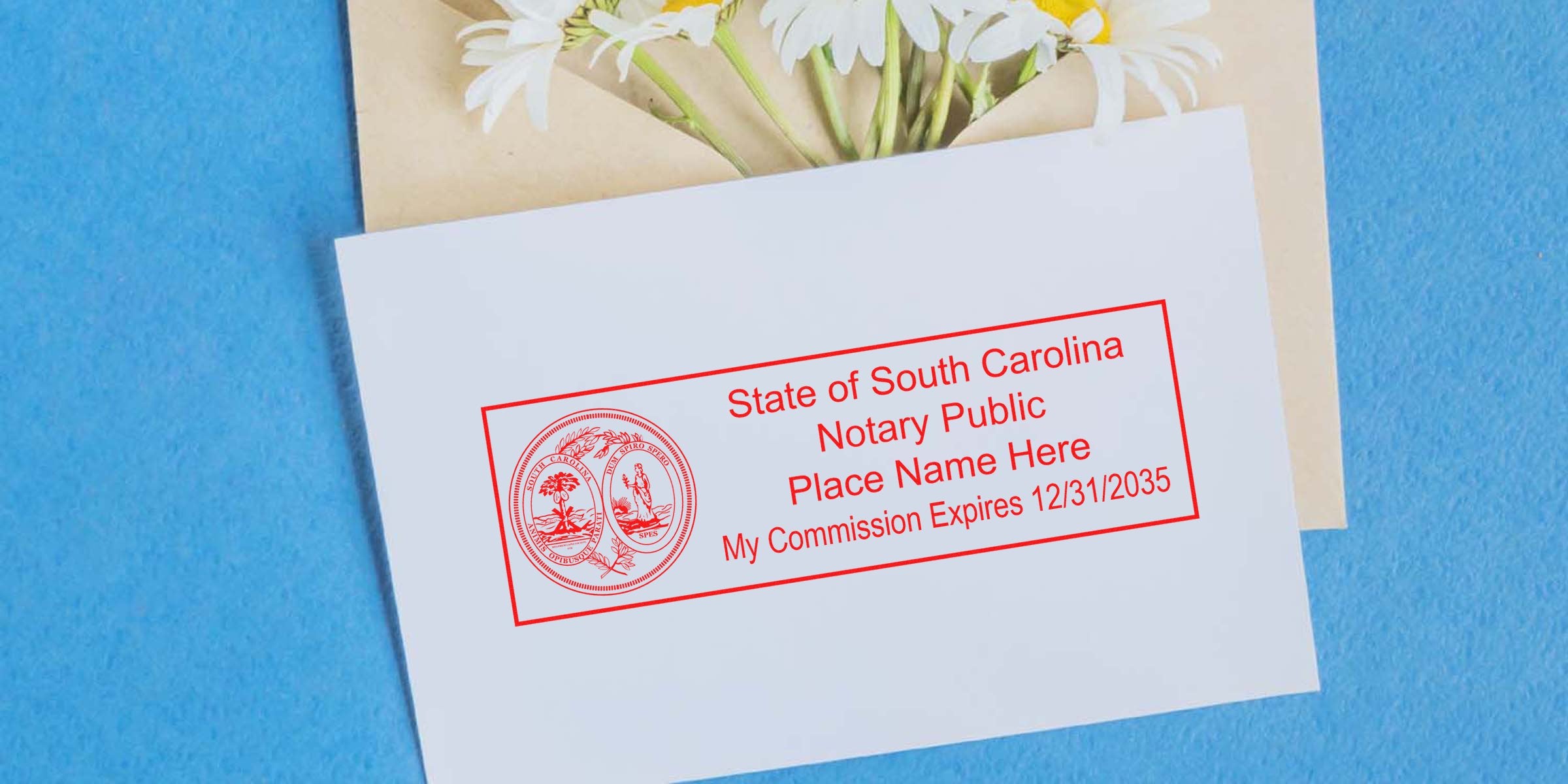
South Carolina requires a notary seal on your notarial acts, and asks for only three things on it: your name, the words “notary public”, and “State of South Carolina”. There is no county. The commission expiration date is optional on the seal and may sit in the certificate instead, which matters more here than anywhere else because South Carolina commissions run ten years, the longest in the country. One warning: despite having an Electronic Notary Public Act, South Carolina has no remote online notarization.
South Carolina notary stamp requirements at a glance
| Requirement | South Carolina rule | Source |
|---|---|---|
| Stamp required | Yes | S.C. Code § 26-1-60 |
| Required wording | The notary’s name, The words “notary public” and The words “State of South Carolina” | S.C. Code § 26-1-5(18) |
| Size and shape | Not specified. | S.C. Code Title 26 ch. 1 (silent) |
| Ink color | Not specified. | S.C. Code § 26-1-110 |
| Embosser | Permitted as a full alternative. | S.C. Code § 26-1-5(18) |
| Commission term | Terms run ten years, the longest in the country. | S.C. Code §§ 26-1-10, 26-1-90(B)(3), 26-1-130 |
| Name or address change | Notify the Secretary of State within 45 days on a Change in Status Form with a $10 fee, for a change of address, a change of name, or a move to another county. | S.C. Code §§ 26-1-10, 26-1-90(B)(3), 26-1-130 |
| Lost or stolen stamp | Not addressed for a paper seal. | S.C. Code §§ 26-1-130(A)(2), 26-1-140, 26-1-150(2) |
| Commissioning authority | The Governor, who appoints, with the South Carolina Secretary of State administering the commission | Title 26 of the South Carolina Code, S.C. Regs. ch. 113 |
Rules for other states are on notary stamp requirements by state.




Is a notary stamp required in South Carolina?
Yes, on its notarial acts: “A notary public shall have a seal of office, which must be affixed to his notarial acts.” Read the rest of that section before you panic about a missed impression, because the same passage removes the sting: the absence of the seal or of the expiration date “does not render his notarial acts invalid if his official title is affixed to it”.
The governing text is S.C. Code § 26-1-60.
What must appear on a South Carolina notary stamp?
- The notary’s name
- The words “notary public”
- The words “State of South Carolina”
That is the entire list, and two absences matter commercially. There is no county on a South Carolina seal, which is why moving counties does not force a new one. And the commission expiration date is optional on the seal: it “may appear in the notary’s stamp or seal or elsewhere in the notarial certificate”. The date must appear below your signature either way.
What size and shape must a South Carolina notary stamp be?
Not specified. The sources here are the definition at § 26-1-5(18), the seal duty at § 26-1-60, the certificate rules at § 26-1-90, and the whole of Title 26 Chapter 1. The words size, inch, border, circular and rectangular do not appear. A border is mentioned only for the electronic seal, and even there it is permissive.
Notary public stamps are made to these conventions, and we check your lines against the statutory wording before we make the stamp.





What ink color is required for a South Carolina notary stamp?
Not specified. No color, reproducibility or legibility standard applies to the seal anywhere in the act. The words black and color do not appear in Title 26 Chapter 1 at all. The one ink rule governs your pen rather than your stamp: “When notarizing a paper record, a notary shall sign by hand in ink on the notarial certificate.” We also read all 31 sections of the recording chapter in Title 30 and found no ink rule reaching the notary stamp.
More on the trade-off in stamp ink color rules.
Is a notary embosser required or optional in South Carolina?
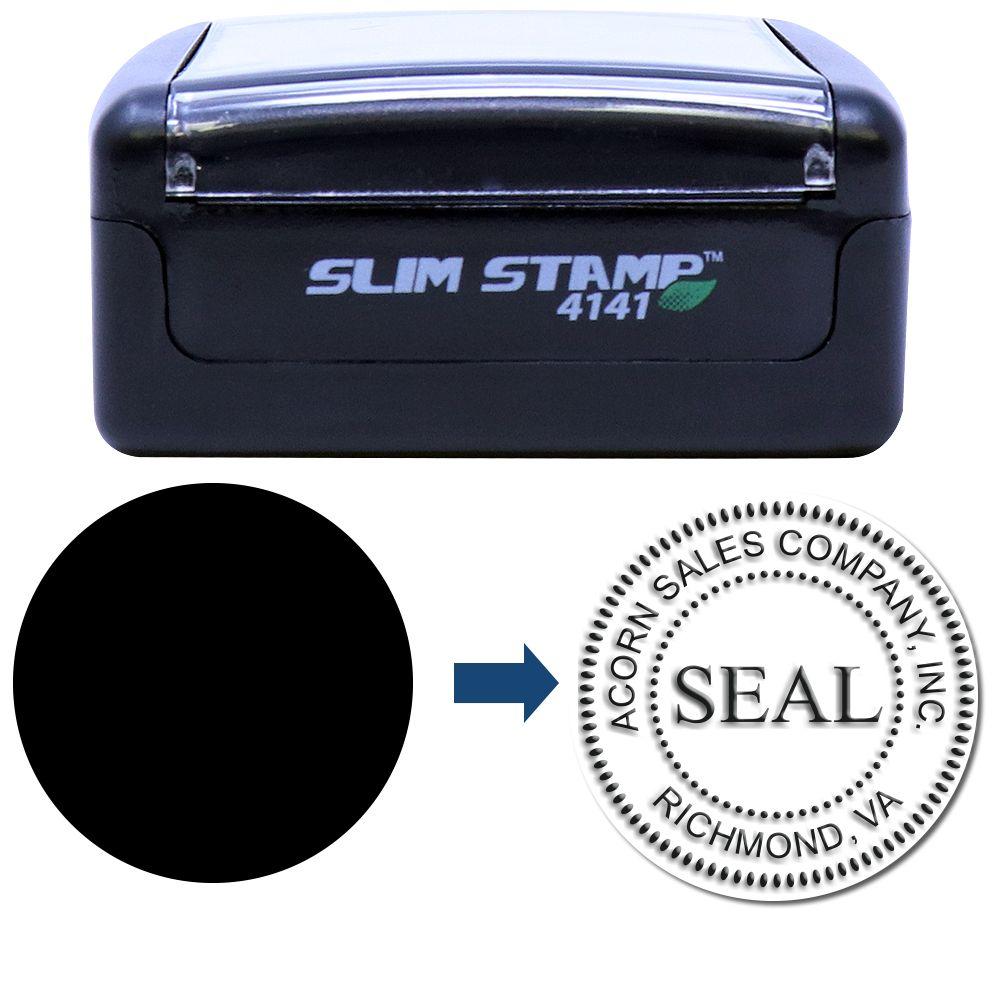
Permitted as a full alternative. The statutory definition covers both formats outright: the device “may be in the form of an ink stamp or an embosser.” The Secretary of State’s manual adds the practical steer rather than a rule, noting that rubber stamps “will show up more clearly when scanned electronically.”
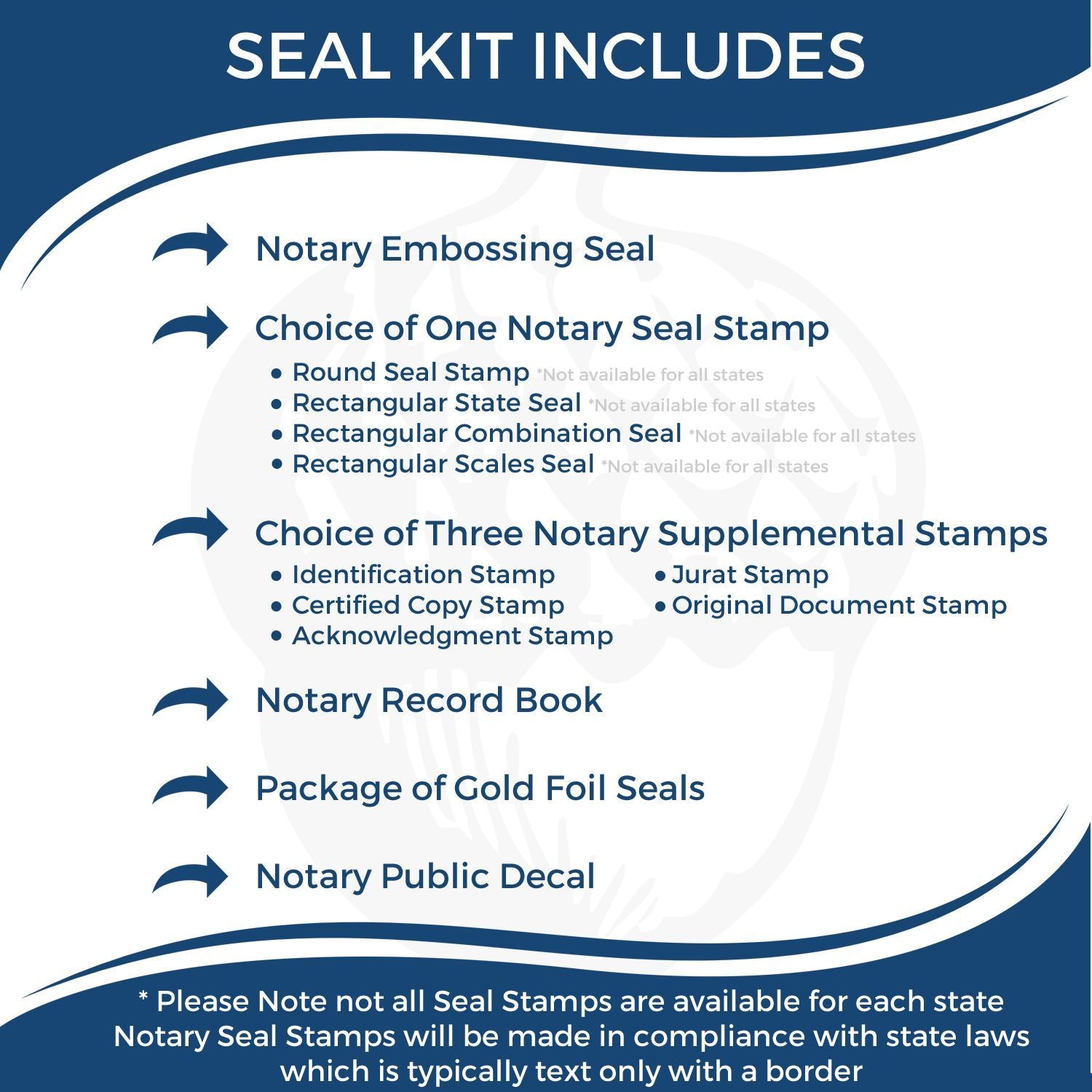
Notary embossing seal kits and inked stamp kits cover both formats. See also notary stamp vs. embosser.
A ten-year commission, and a seal that can outlive it
South Carolina gives the longest notary term in the United States: ten years. That single fact changes how you should buy a seal here, and almost no supplier mentions it.
The three required elements are your name, the words “notary public” and the words “State of South Carolina”. None of them changes over a decade. The expiration date is the only element that would, and South Carolina expressly lets it live “elsewhere in the notarial certificate” instead of on the seal. So a South Carolina seal ordered without the date can legitimately last the full ten years and through the next commission, while one ordered with the date is scrap the day your term ends. The date still has to appear below your signature either way.
The second surprise is the Electronic Notary Public Act, whose name has convinced a great many South Carolina notaries that they can notarize remotely. They cannot. The statute requires the signer to “appear in person before the electronic notary public at the time of notarization”. South Carolina permits electronic documents and has no remote online notarization at all.
One more worth carrying: a South Carolina notary may not certify or authenticate a photograph or a photocopy. Not with care, not with a disclaimer. At all.
Do I need a new stamp when my commission is renewed or my name changes?
Terms run ten years, the longest in the country. Whether you need a new seal at the end of one depends entirely on how you had it made. Because the required elements are only your name, “notary public” and “State of South Carolina”, and because the expiration date may sit in the certificate instead of on the seal, a seal without the date outlives renewals and a seal with the date does not. Worth a moment’s thought before you order, given the ten-year cycle.
Notify the Secretary of State within 45 days on a Change in Status Form with a $10 fee, for a change of address, a change of name, or a move to another county. On a name change you may keep using the former name until confirmation arrives, then you must use the new name and “destroy or deface all notary seals bearing the former name so that they may not be misused.” A move between South Carolina counties does not require a new seal.




What do I do if my South Carolina notary stamp is lost or stolen?
Not addressed for a paper seal. The words lost and stolen appear nowhere in Title 26 Chapter 1, and the Secretary of State’s manual is silent too, so there is no reporting duty and no deadline. Report a theft to local law enforcement regardless. For an electronic seal or journal the duty is real: notify law enforcement and the Secretary of State immediately of any theft or vandalism.
How do I dispose of an expired South Carolina notary stamp?
Destroy or deface, and the same phrase appears in three places: on a name change, on resignation, and on death, where the personal representative acts “as soon as reasonably practicable.” No deadline in days is attached to any of them.
More on retiring an old device in how to dispose of an expired notary stamp.
Can I notarize electronically or remotely in South Carolina?
Here is the one that catches people out. South Carolina has an Electronic Notary Public Act, and the name misleads almost everyone: it authorizes electronic documents, not remote signers. The principal must still “appear in person before the electronic notary public at the time of notarization.” There is no remote online notarization in South Carolina. Electronic notarization itself does require separate registration with the Secretary of State, a $50 fee, a course and an exam. The electronic seal carries your name as commissioned, “Notary Public”, “State of South Carolina”, your registration number and your expiration date, and the electronic journal is kept ten years by rule.
Related South Carolina guides
- Learn About Your Mandatory South Carolina Notary Supplies
- Learn About Using The South Carolina Notary Public Seal
Next step
Have your commission details in front of you before you order, because they go on the stamp and a wrong line means a reorder. Then browse notary public stamps, or contact us and we will check your wording against the statute before we make it.
Frequently asked questions about South Carolina notary seals
Is a notary seal required in South Carolina?
Yes, a notary public shall have a seal of office which must be affixed to notarial acts. But read the rest of that section: the absence of the seal or of the expiration date does not render the act invalid if the official title is affixed. The duty is real; the consequence of a missed impression is not fatal.
What has to appear on a South Carolina notary seal?
Three things: your name, the words “notary public”, and “State of South Carolina”. No county appears on a South Carolina seal, which is why moving counties does not require a new one.
Is the expiration date required on a South Carolina seal?
No. It may appear on the seal or elsewhere in the certificate. Given that South Carolina commissions run ten years, a seal ordered without the date can outlast the commission and carry into the next one, while a seal with the date cannot.
How long does a South Carolina notary commission last?
Ten years, the longest term in the United States. The Governor appoints and the Secretary of State administers.
Can I notarize remotely in South Carolina?
No. This is the most common misunderstanding about South Carolina, caused by the name of its Electronic Notary Public Act. That act authorizes electronic documents, and still requires the signer to appear in person before the notary. There is no remote online notarization in South Carolina.
What ink color does South Carolina require?
None. The words black and color do not appear in the notary chapter at all. The only ink rule concerns your pen: when notarizing a paper record you must sign by hand in ink.
Can I use an embosser in South Carolina?
Yes, as a full alternative. The statutory definition covers a device in the form of an ink stamp or an embosser. The Secretary of State's manual notes that rubber stamps show up more clearly when scanned, which is guidance rather than a rule.
Can a South Carolina notary certify a copy?
No. A South Carolina notary may not certify or authenticate a photograph or a photocopy at all. This is a flat prohibition, unlike most states where copy certification is permitted with conditions.








