

Written by Acorn Sales Company, manufacturing stamps and seals since 1964 · Product facts checked against the Acorn Sales professional and notary seal and stamp range (506 published SKUs) · Updated 25 September 2026
Regulatory facts taken only from these primary sources, each fetched 22 September 2026: NCEES, NCEES Record, https://ncees.org/records/ · NCEES, Records Program, https://ncees.org/ncees-services/records-program/ · NCEES, Licensure, https://ncees.org/licensure/ · NCARB, Reciprocity, https://www.ncarb.org/ncarb-certificate/benefits/reciprocity · NCARB, Reciprocal Out-of-State Architecture License, https://www.ncarb.org/blog/how-to-earn-a-reciprocal-out-of-state-architecture-license · Washington State Board of Registration for Professional Engineers and Land Surveyors, PE by Comity, https://brpels.wa.gov/licensing/engineering/professional-engineer-comity · Nebraska Board of Engineers and Architects, Comity, https://ea.nebraska.gov/comity-1 · Nebraska Board of Engineers and Architects, Engineer Temporary Permits, https://ea.nebraska.gov/engineer-temporary-permits · Connecticut Department of Consumer Protection, PE Reciprocity or Comity, https://portal.ct.gov/dcp/license-services-division/all-license-applications/professional-engineering-reciprocity-or-comity · Connecticut Department of Consumer Protection, seal guidance for licensees, https://portal.ct.gov/-/media/dcp/migrated-docs/sealletter2014pdf.pdf · Regulations of Connecticut State Agencies section 20-300-10, reproduced at https://www.law.cornell.edu/regulations/connecticut/Regs-Conn-State-Agencies-SS-20-300-10 · New York State Education Department, Office of the Professions, Part 68 with section 68.13, https://www.op.nysed.gov/professions/engineering/laws-rules-regulations/part-68 · Same office, engineering seals, https://www.op.nysed.gov/professional-practice/important-information-concerning-seals-new-licenses-engineering · Same office, land surveying seals, https://www.op.nysed.gov/professional-practice/important-information-concerning-seals-new-licenses-land-surveying · Same office, architecture seals, https://www.op.nysed.gov/professions/architecture/important-information-concerning-seals-new-licenses · Same office, landscape architecture seals, https://www.op.nysed.gov/professions/landscape-architecture/important-information-concerning-seals-new-licenses · Same office, Professional Seals and Signatures guideline, https://www.op.nysed.gov/professions/engineering/professional-practice/professional-seals-and-signatures · Same office, Education Law Article 145, https://www.op.nysed.gov/title8/education-law/article-145 · California Board for Professional Engineers, Land Surveyors, and Geologists, Board Rules with section 411, https://www.bpelsg.ca.gov/laws/boardrules.pdf · Texas Board of Professional Engineers and Land Surveyors, seal specification, https://www.pels.texas.gov/downloads/SealVendor.pdf · Texas Occupations Code Chapter 1001, https://statutes.capitol.texas.gov/Docs/OC/htm/OC.1001.htm · South Carolina Code of Regulations Chapter 49 with regulation 49-207, https://www.scstatehouse.gov/coderegs/Chapter%2049.pdf · South Carolina Board of Engineers and Surveyors, seal information, https://www.llr.sc.gov/eng/PDF_Files/FormSeal%20Info.pdf · Pennsylvania Department of State, Engineer, Land Surveyor and Geologist Registration Law: https://www.pa.gov/content/dam/copapwp-pagov/en/dos/department-and-offices/bpoa/engineers/Board-Document-Law.pdf · Pennsylvania Department of State, Application for Temporary Practice Permit, https://d2l2jhoszs7d12.cloudfront.net/state/Pennsylvania/Department%20of%20State/www.dos.pa.gov/Professional%20Licensing/Boards%20&%20Commissions/Engineers,%20Land%20Surveyors%20and%20Geologists/Application%20-%20Temporary%20Practice%20Permit.pdf · Virginia Administrative Code 18VAC10-20-760, https://law.lis.virginia.gov/admincode/title18/agency10/chapter20/section760/ · Appraisal Subcommittee, ASC Policy Statements, https://asc.gov/sites/default/files/documents/PolicyStatements/ASC%20Policy%20Statements%2006.01.13.pdf · Texas and Virginia publish their seal designs as illustrations that could not be read as text, so nothing is stated about their contents · Product information and published research, not legal advice · Updated 22 September 2026.
If you are licensed in one state and take work in another, the boards' own rules point one way: a second license generally means a second seal. First, comity and reciprocity are routes to a license issued by the second state, not permission to work there on a home credential; Nebraska runs comity as an application ending in a Nebraska license, and NCARB states that architects can only provide professional services in jurisdictions where they are licensed. Second, the seal is built from state specific material: New York's rule puts STATE OF NEW YORK on the band and the New York license number under the Great Seal, and California's puts State of California in the bottom border with the certificate number in the middle. Neither die carries what the other state needs. Narrow confirmed exceptions exist, and Nebraska publishes the clearest. Acorn makes seals to the specification of whichever state you name, from $39.95 for a self inking stamp of seal to $2,095.00 for the heavy duty long reach electric embosser. This is product information and published research, not legal advice.What these are for
Three people read a page like this. An engineer, surveyor or architect just approved by a second board, working out what to order before the first out of state submittal. A firm principal registering staff in a neighboring state. And a professional holding two licenses inside one state, usually a professional engineer who is also a land surveyor. Acorn publishes 371 state hub pages on single state rules; this one covers the person crossing a line. For that detail, see PE stamp and seal requirements by state.
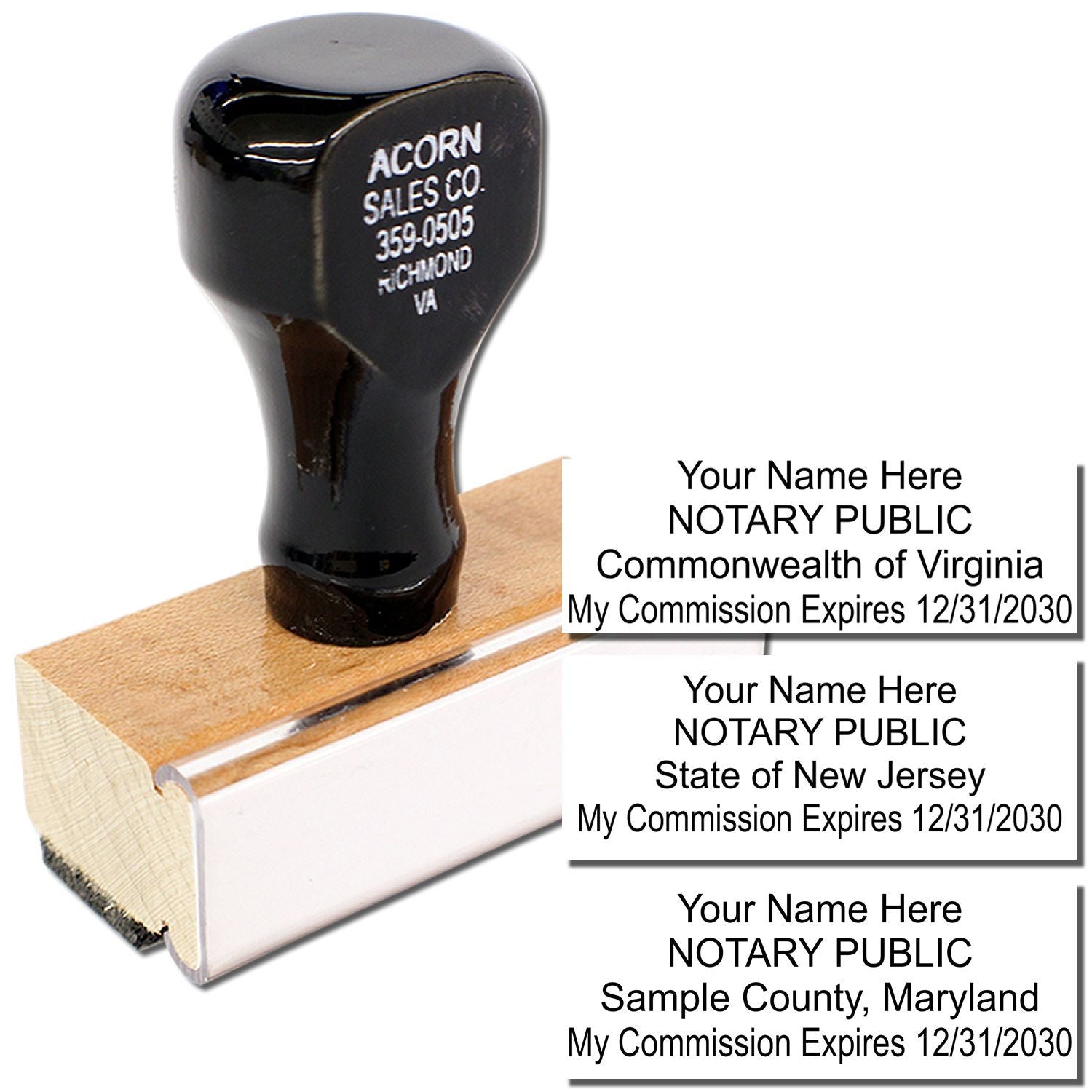


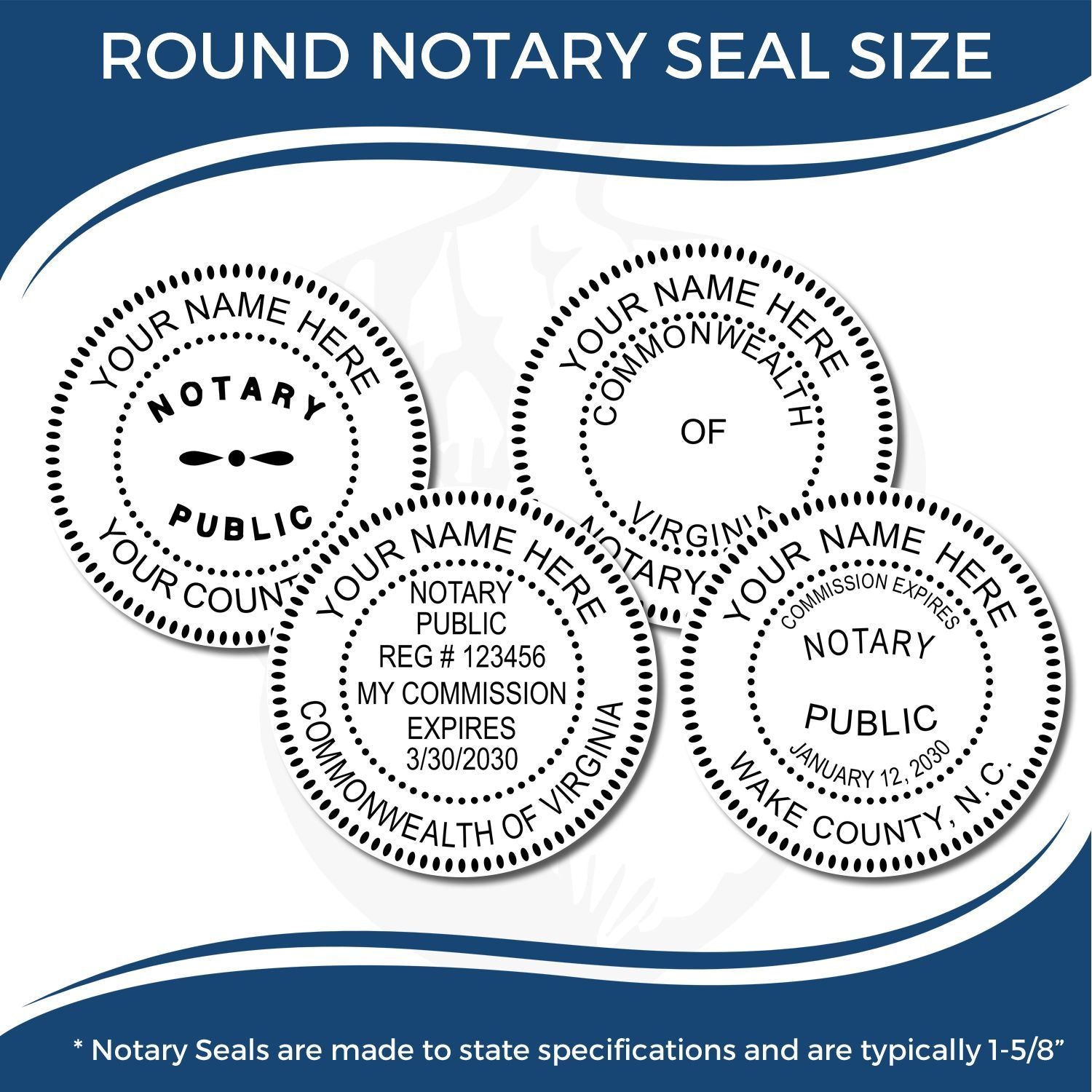


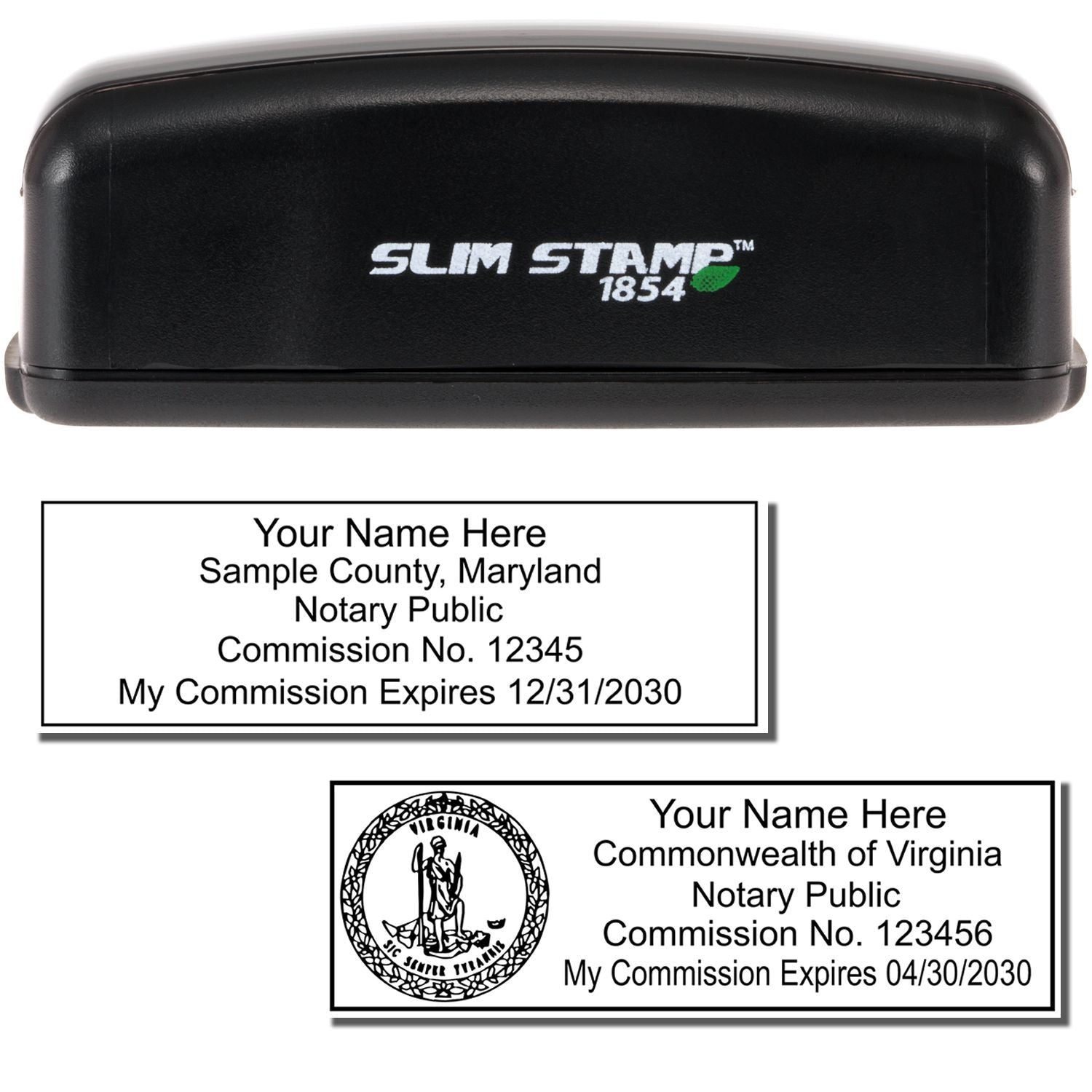
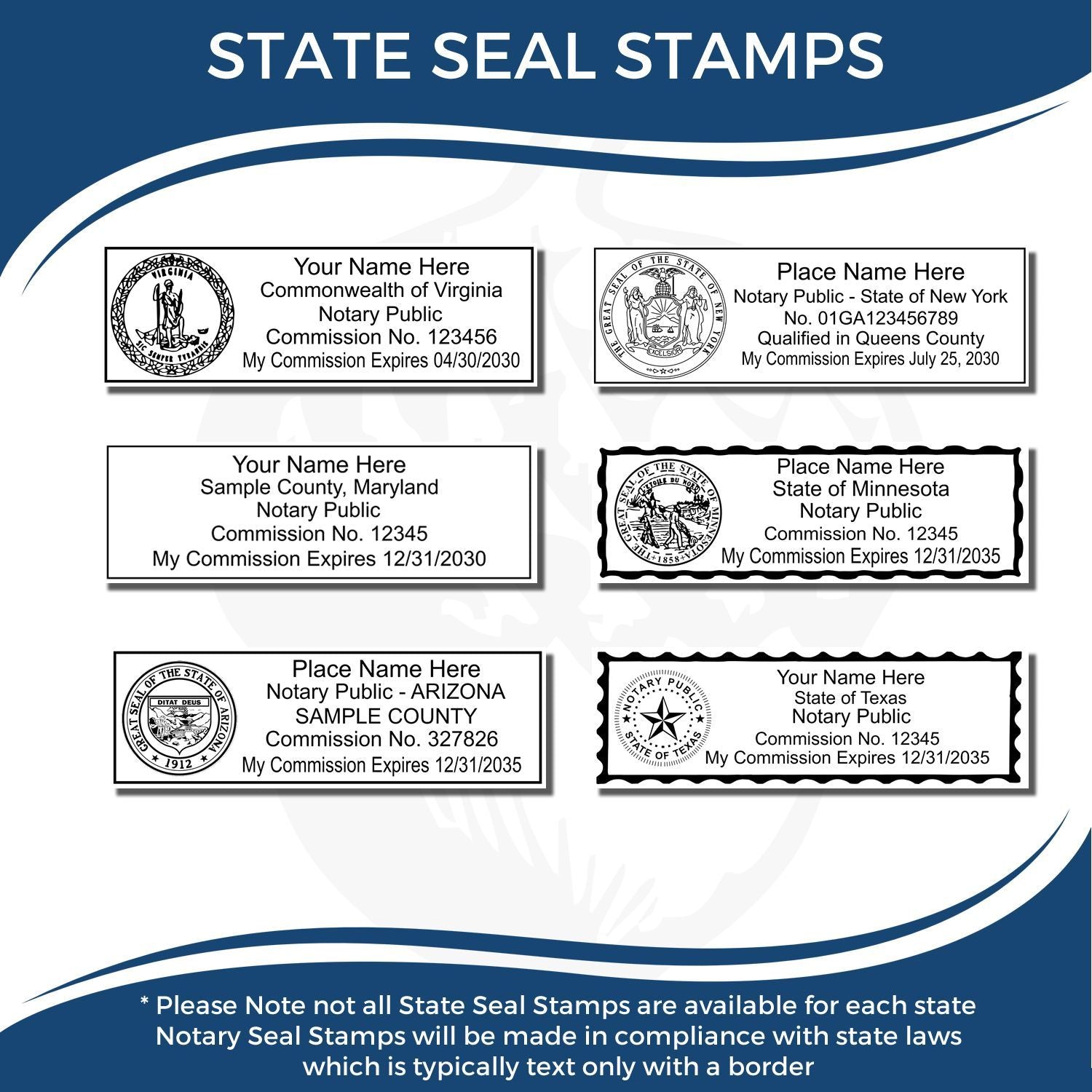
The ranges we stock
Regulatory half: what boards mean by comity and reciprocity
Boards use the two words for the same thing: an application route to a license issued by the state applied to. Connecticut's Department of Consumer Protection heads its page "Professional Engineering Reciprocity or Comity" and runs it as an application, requiring current licensure in good standing elsewhere, the NCEES Fundamentals of Engineering and Principles and Practice examinations, and a license meeting or exceeding Connecticut statutes. Nebraska's Board of Engineers and Architects sets its comity qualification as licensure in good standing in at least one other jurisdiction it recognizes, and the process ends in a Nebraska license being issued. Washington's board states that holders of an active license in a board approved jurisdiction must first apply to that board by comity. None describes comity as a right to practice on another state's license, and the statutes match: Texas Occupations Code section 1001.301 says a person may not engage in the practice of engineering unless the person holds a license issued under that chapter.
Regulatory half: the NCEES Record and the NCARB Certificate
Neither body licenses anyone. NCEES describes its members as the 68 engineering and surveying licensing boards of the 50 states, the District of Columbia, Guam, the Northern Mariana Islands, Puerto Rico and the US Virgin Islands; those boards issue the licenses. NCEES runs the Records program, built for licensed engineers and surveyors seeking a faster route through licensure in multiple jurisdictions. A Record is a verified compilation of official academic transcripts, full employment history, professional references and exam results, which NCEES submits electronically to the board on the applicant's behalf. The limit is stated plainly: an NCEES Record does not guarantee licensure in any jurisdiction, and because requirements vary a Record holder may have to submit additional information. The architectural equivalent is the NCARB Certificate, which NCARB calls the easiest way to apply for a reciprocal license and says every US jurisdiction accepts. Its requirements are an accredited degree, the Architectural Experience Program, the Architect Registration Examination and a license from at least one US jurisdiction.
Regulatory half: why the second license brings a second seal
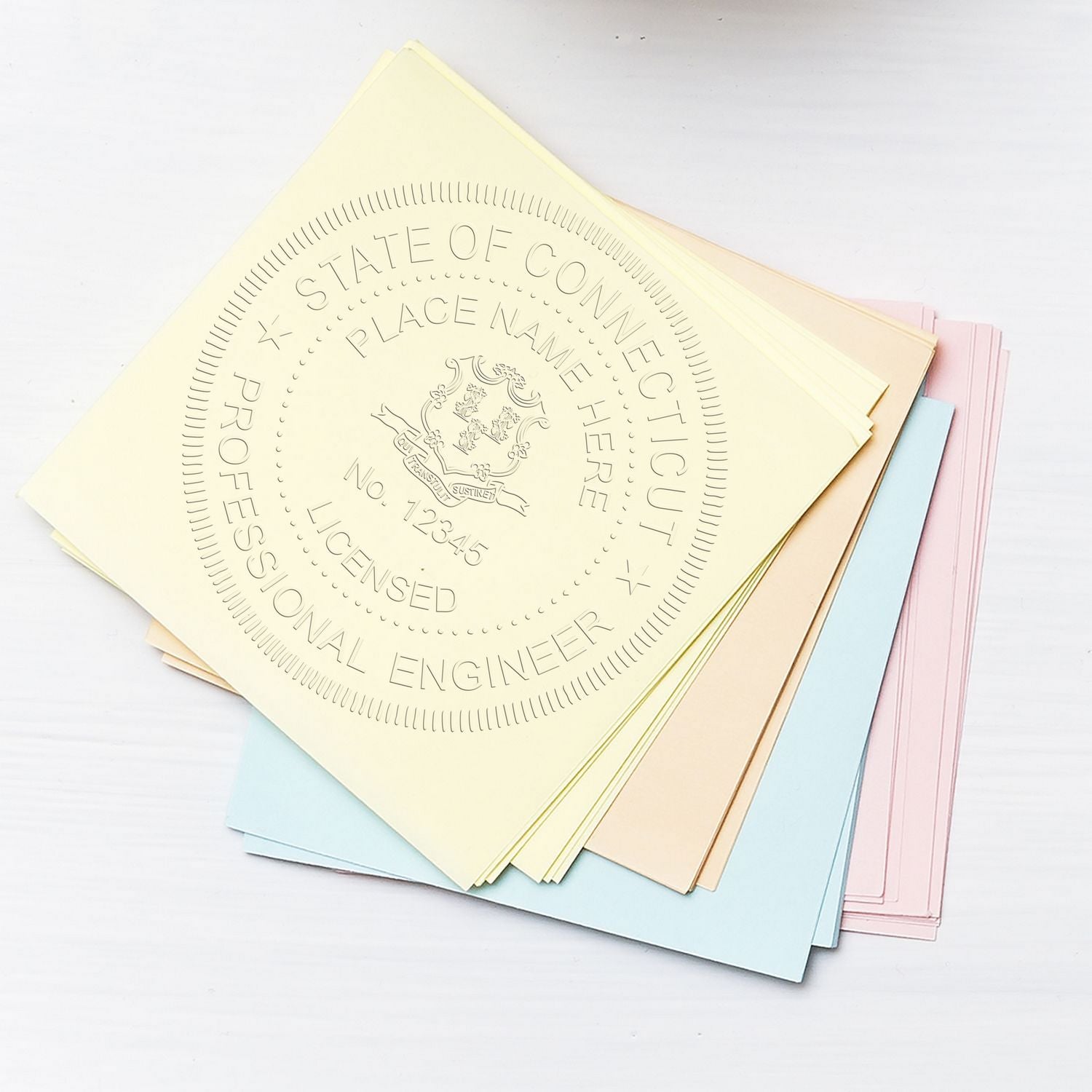
No board page found for this research says "you need a separate seal for each state" in those words, so the reasoning is set out rather than asserted. The state requires its own license before the work, and prescribes a seal made from its own material. New York is the clearest published case, because one regulation covers several professions Acorn serves. Section 68.13 of the Commissioner's Regulations says seals used by licensed professional engineers, land surveyors and professional geologists shall be circular, approximately 1-3/4″ in diameter, bearing at the top of the outer band STATE OF NEW YORK and at the bottom LICENSED PROFESSIONAL ENGINEER or LICENSED LAND SURVEYOR or LICENSED PROFESSIONAL ENGINEER AND LAND SURVEYOR or LICENSED PROFESSIONAL GEOLOGIST as the case may be. The department's seal pages add that the name sits above the Great Seal of New York and the license number below it with no other letters or numbers, and repeat the construction for Registered Architect and Registered Landscape Architect. California's board rule section 411 works the same way: the professional title in the top border, State of California in the bottom, and in the center the name, the certificate number and the branch of engineering. A state name on a die is wrong everywhere else, and the number was issued by one board.
Regulatory half: where the state name is not on the seal
The headline needs a qualification and it is real: the state name is common on professional seals, not universal. South Carolina's regulation 49-207 puts the license number and the professional designation on the individual licensee's seal and reserves the words South Carolina for the firm seal. Pennsylvania's registration law, read from the board's own law document, says at section 7(a) that each registrant shall obtain a seal of a design authorized by the board bearing the registrant's name and number and the legend Registered Professional Engineer, Registered Professional Land Surveyor or Registered Professional Geologist; no state name appears in that sentence. The Texas board's seal specification requires the board authorized design, no larger than two inches in diameter, with the engineer's name and number clearly legible. Virginia's rule 18VAC10-20-760 requires two inches in diameter and the last six digit number shown on the license. Texas and Virginia publish their designs as illustrations that could not be read as text, so nothing is claimed about their contents. The honest form of the claim: the state name is on many seals, the license number is on every specification read here, and a license number belongs to exactly one board.
Regulatory half: confirmed exceptions and temporary permits
Documented arrangements do let a professional work in a second state without that state's license, and one is a confirmed case of a single seal serving two jurisdictions. Nebraska publishes it. An engineer holding a current and valid license from another jurisdiction recognized by the Board may apply for a temporary permit to provide engineering service on a single project, not to exceed two years, and is eligible for only one. The Board then says that engineers holding a temporary permit will use their seal from the state of verified licensure when sealing documents pertaining to the Nebraska project, and must accompany this seal with the template issued by the Board, which carries the name, permit number, expiration date, project name and location. Board Rule 4.1.5 governs it. Pennsylvania differs: section 5(b) of the registration law exempts practice not exceeding thirty days in the aggregate in one calendar year by a nonresident with no place of business in the Commonwealth who is legally qualified where they reside. New York Education Law section 7208 allows a nonresident with no established place of practice there to practice once a New York application has been filed, for the reasonable time the board needs to decide. Outside the design professions, the Appraisal Subcommittee records that Title XI requires state agencies to recognize, on a temporary basis, the certification or license of an out of state appraiser entering the state to complete an assignment for a federally related transaction. Each of these is time, project or assignment limited, and set by the receiving state or by federal law.
Regulatory half: two licenses inside one state
Earlier research in this project recorded that a Connecticut dual licensee needs two seals while New York gives one combined seal. Both were checked against the boards' own material and both held. Connecticut's Department of Consumer Protection seal guidance sets seals at 1-1/2″ in diameter, notes that seals issued after July 1, 1982 contain the word Licensed, and states that where a licensee is classified as a professional engineer and as a land surveyor, two seals are necessary. The same sentence appears in the Regulations of Connecticut State Agencies at section 20-300-10. New York writes the combined option into the seal rule itself: section 68.13 lists LICENSED PROFESSIONAL ENGINEER AND LAND SURVEYOR among the legends a seal may bear. South Carolina, not part of the earlier note, does the same in regulation 49-207. Two licenses in one state is genuinely state by state.
Catalog half: what Acorn makes and what it costs
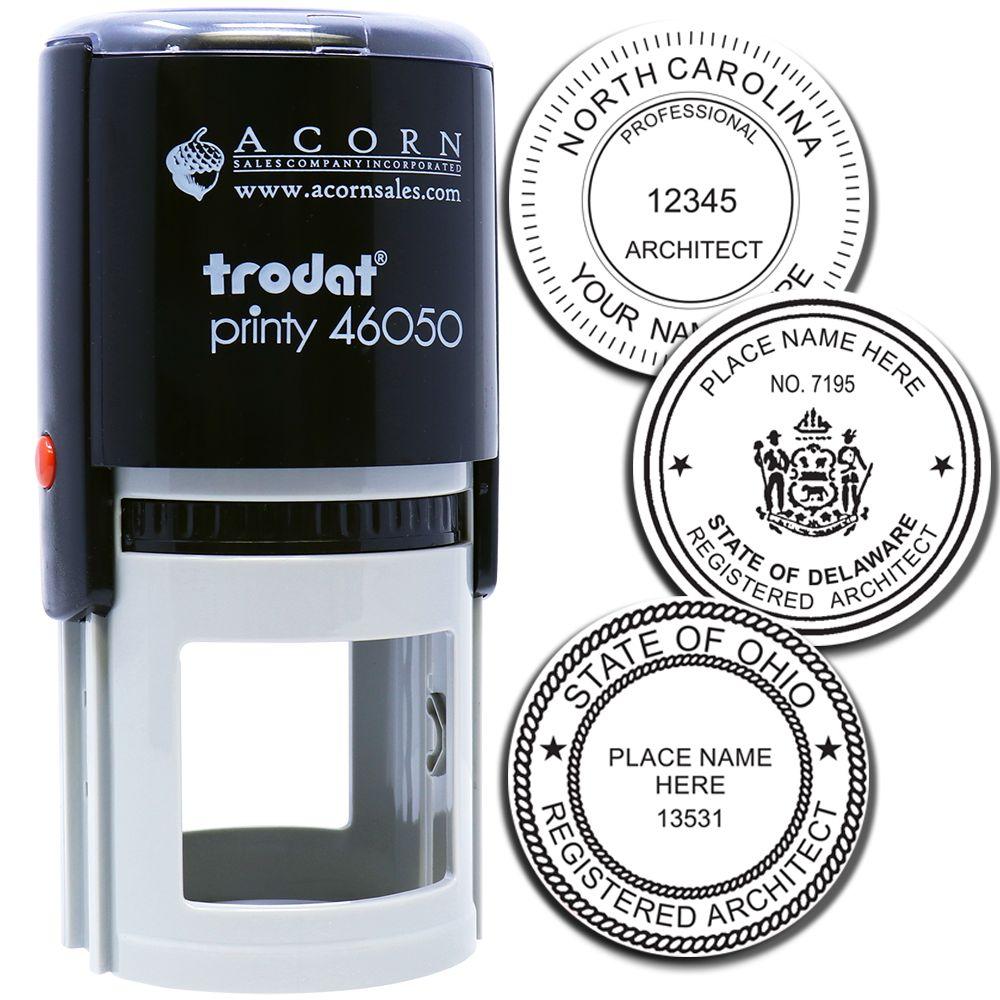
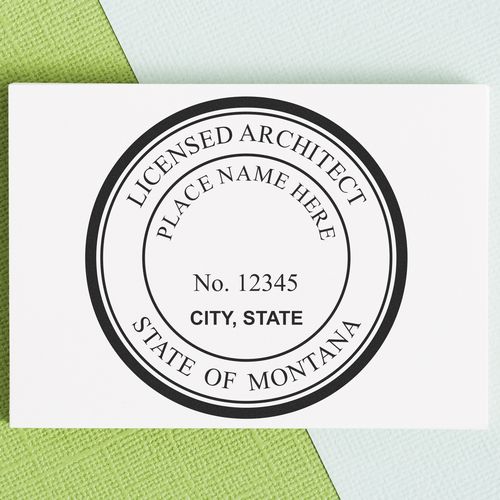
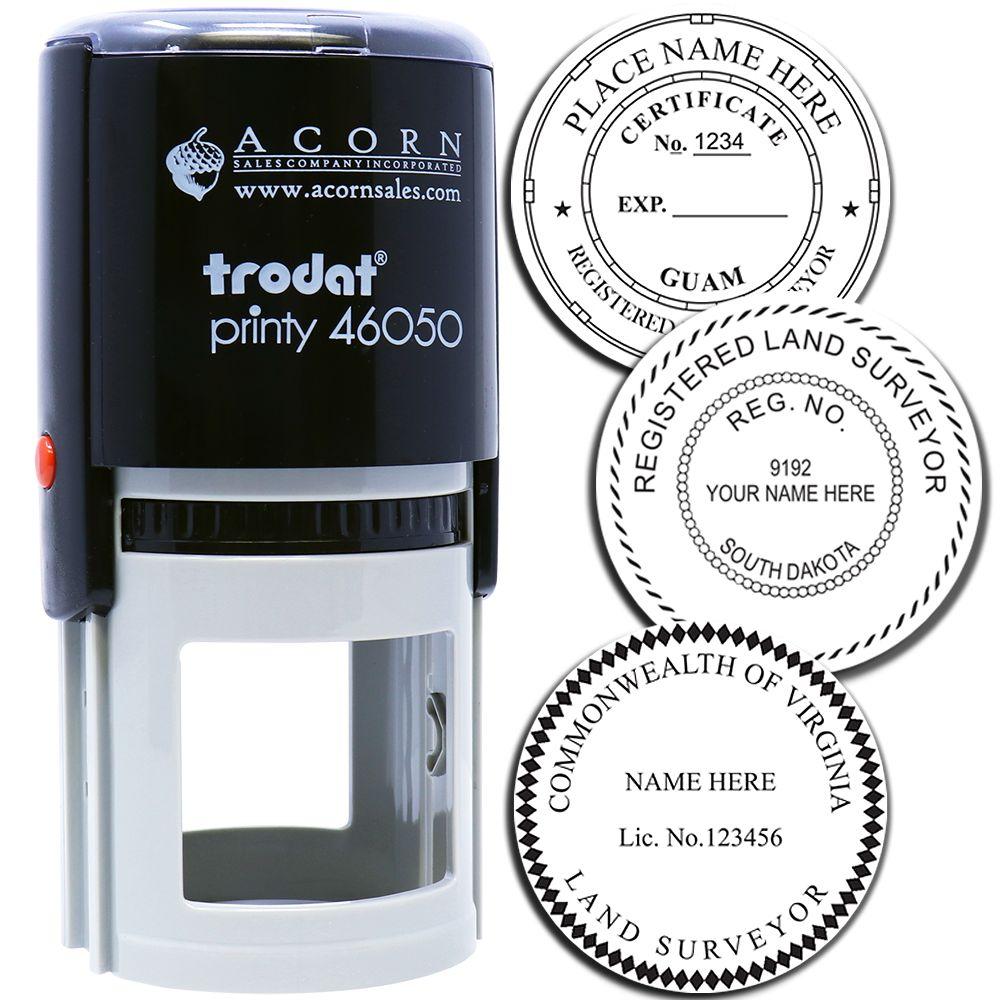
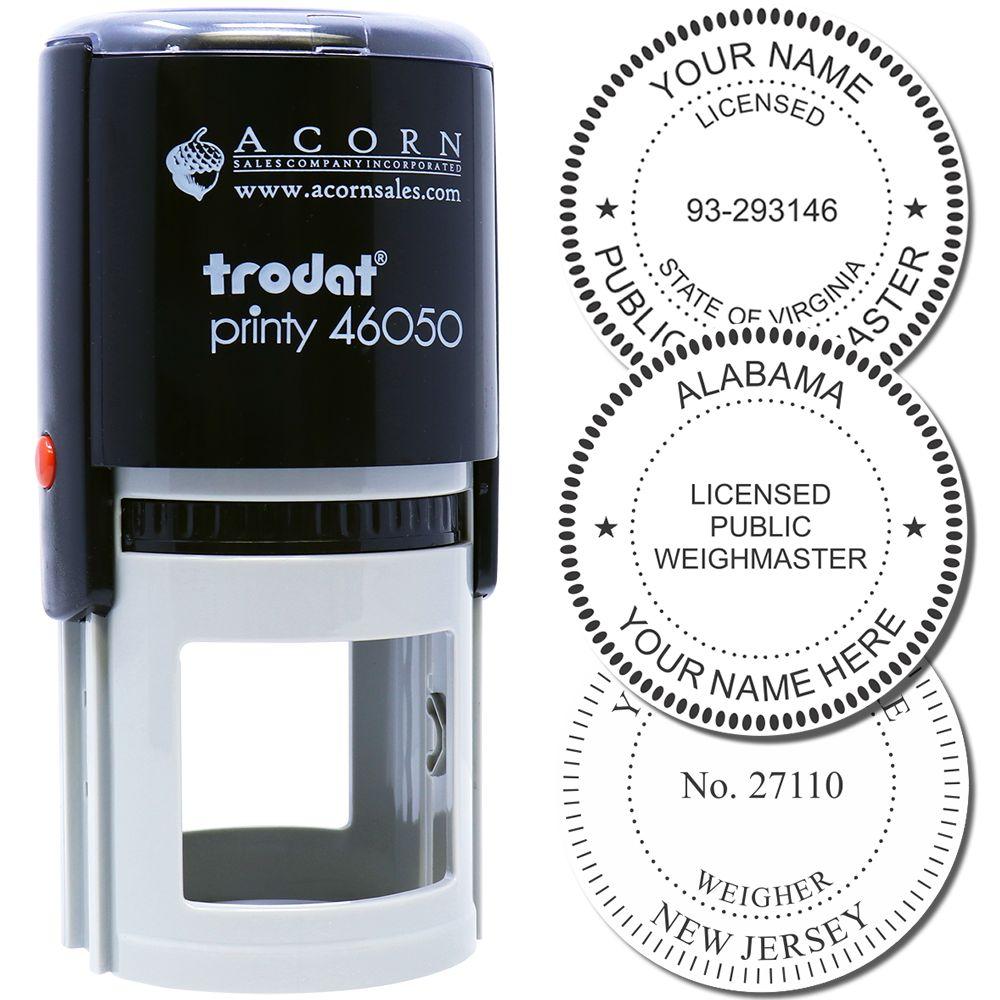
From here the page is catalog, and everything below comes from Acorn's published product data rather than from any board. Every listing in the professional range carries the same two sentences: all seals are made to your state specifications, which can vary from 1-5/8″ diameter to a 2″ diameter impression area, and we guarantee they will meet those specifications. A second license is therefore an order for a second die. The disciplines are architecture, professional engineering, land surveying, landscape architecture, interior design, geology, engineering geology, forestry, real estate appraisal, public weighmastering, a general Professional line and notary work, and the listings say the die carries your name, license number, state and job title. The ladder is the same in each: $39.95 for a self inking rubber stamp of seal, $42.95 for a hybrid handheld embosser, $46.95 for a slim or MaxLight pre inked stamp of seal, and $64.95 for an Xstamper, which is also the median price of the 506 published products in this cluster. An extended long reach desk embosser is $169.95, and the electric units are $1,795.00 and $2,095.00, the top of a cluster that starts at $5.95.
Sizes and dimensions
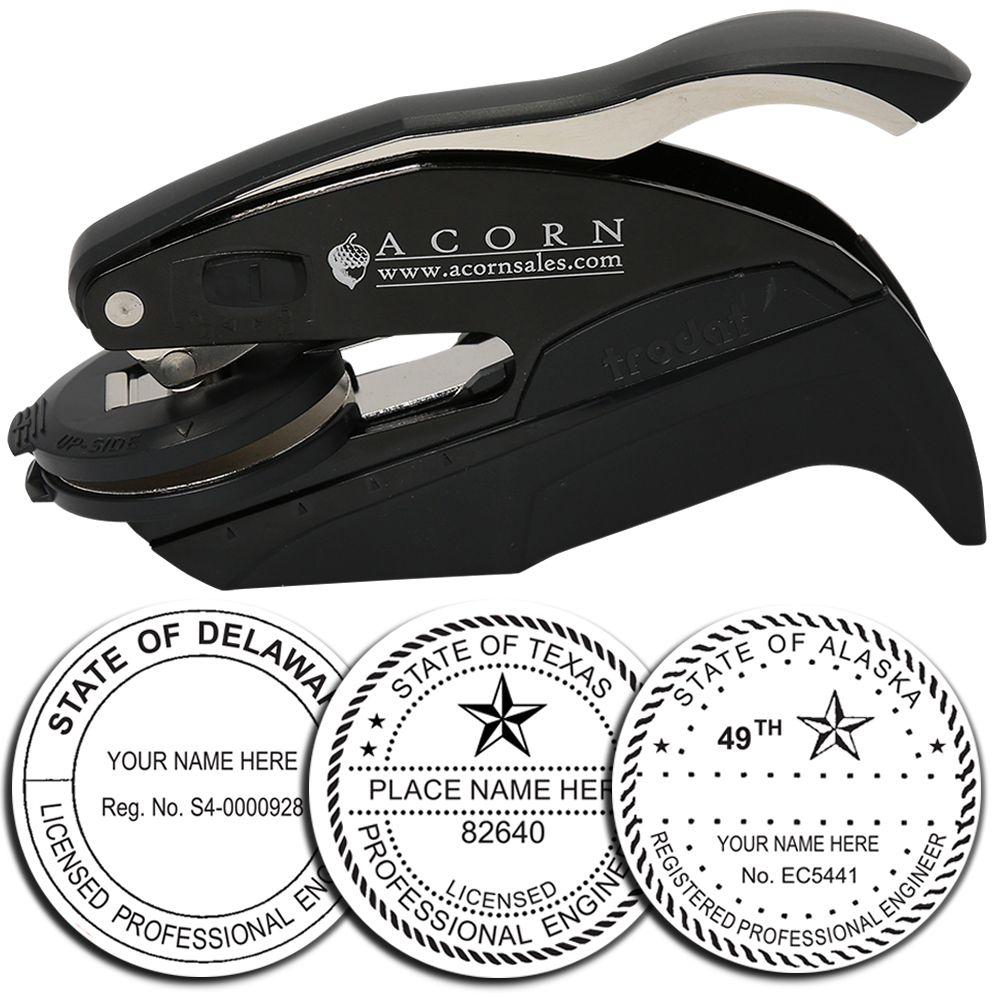
The catalog figure is one number repeated across the professional range: all seals are made to your state specifications, which can vary from 1-5/8″ diameter to a 2″ diameter impression area. It appears on the $39.95 self inking stamps, the $42.95 hybrid embossers, the $46.95 pre inked stamps and both electric units. Separately, from the board rules rather than the catalog, the size requirements read for this page sit inside that band: New York approximately 1-3/4″, California a minimum of 1-1/2″, South Carolina at least 1-1/2″, Connecticut 1-1/2″, Texas no larger than two inches, Virginia two inches. Two states at opposite ends of it mean two physically different dies. Reach is a separate axis, set by the document: the hybrid embossers reach about 1-1/2″ into the sheet, the $169.95 extended long reach desk unit reaches 4-1/2″ and can emboss the center of an 8-1/2″ wide sheet, and the electric units reach 2-3/8″ and almost five inches.
How many impressions you get
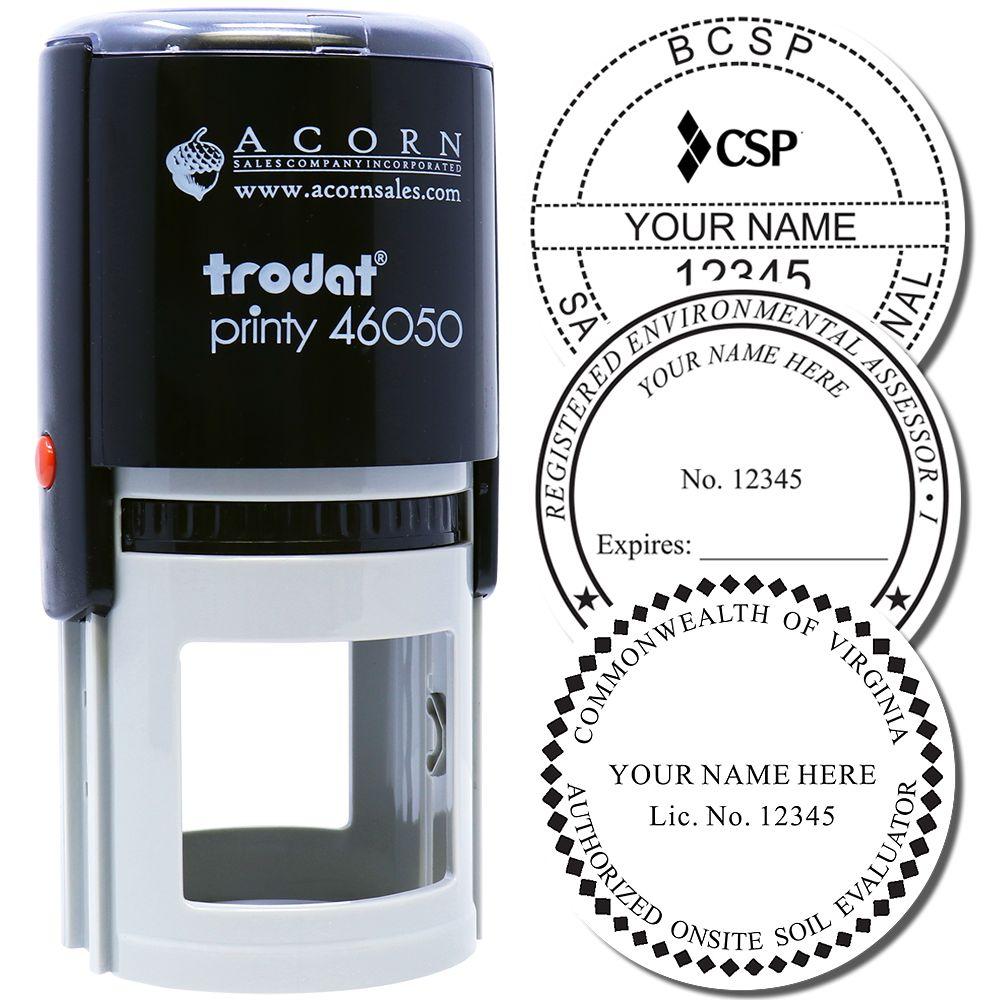
A $39.95 self inking stamp of seal makes about 5,000 impressions, a $46.95 slim pre inked stamp gives up to 25,000, and a $46.95 MaxLight pre inked stamp gives up to 15,000. On the embossing side there are no consumables and machine life is the figure that matters: both electric units, the $1,795.00 standard reach and the $2,095.00 long reach, are rated at an estimated life of 200,000 impressions, run on 110 to 120 AC volts and use a solid brass die against an alloy counter die. The standard reach weighs 12 pounds and the long reach 18 pounds, and the standard reach listing adds that the direct drive has only two moving parts and will take a staple or a paperclip without damaging the die. For a professional working two states, the stamp is the consumable and the embosser is not.


Ink and colors
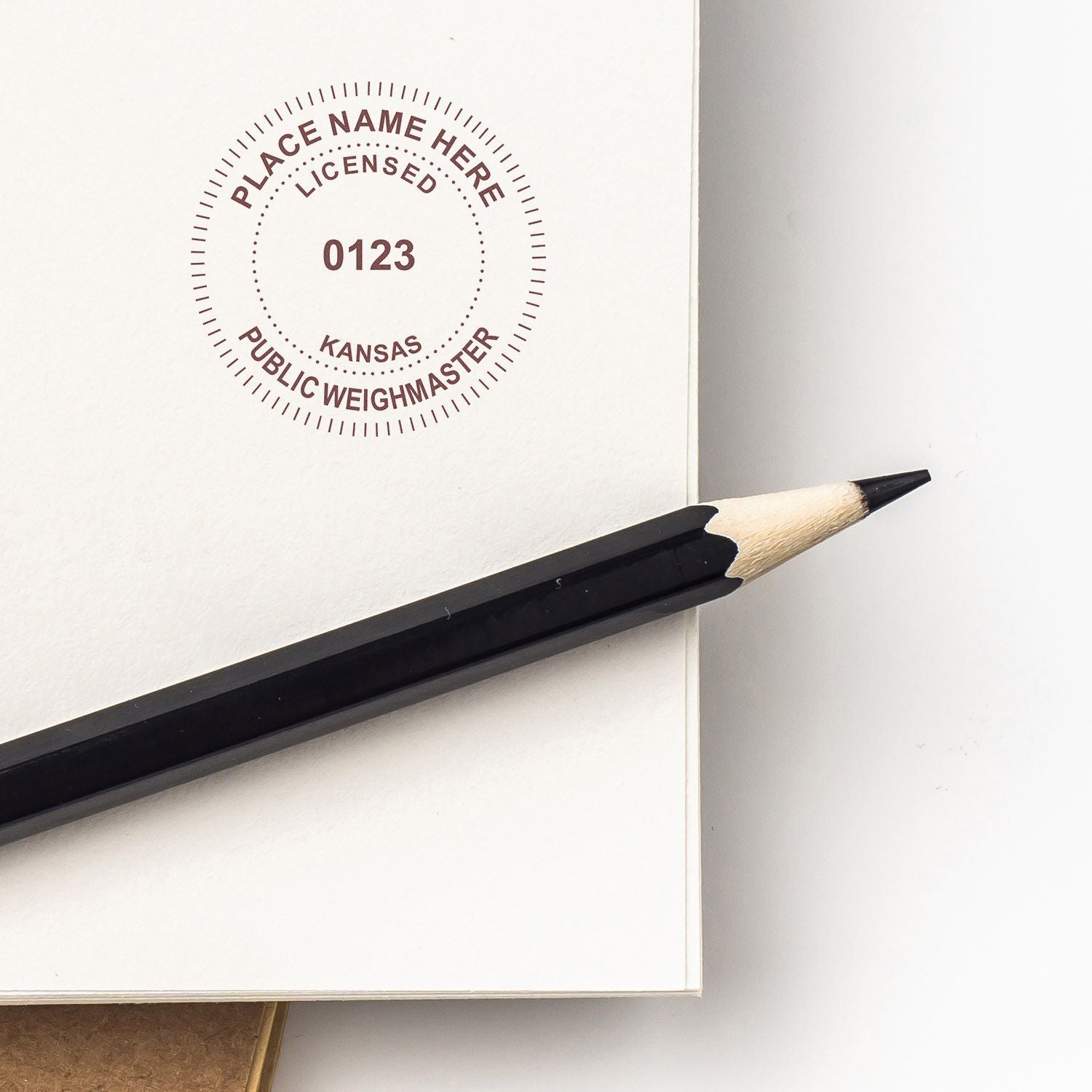
Ink is a catalog option and, on the notary side, a listed caution. The self inking stamps of seal come in 11 ink colors; the slim and MaxLight pre inked stamps come in 5, listed as red, blue, black, green and violet. Pre inked bodies use oil based ink and need no separate pad; self inking bodies use a built in pad. Plain rubber hand stamps, such as the $22.95 Regular Rubber Stamp of Notary Public Seal, need a separate felt or cloth pad. Acorn's notary listings tell you to check the state handbook for rules on colored ink, and the $32.00 Slim Pre-Inked State Seal Notary Stamp adds that where a state does not allow the state seal, it is left off.
What you can customize
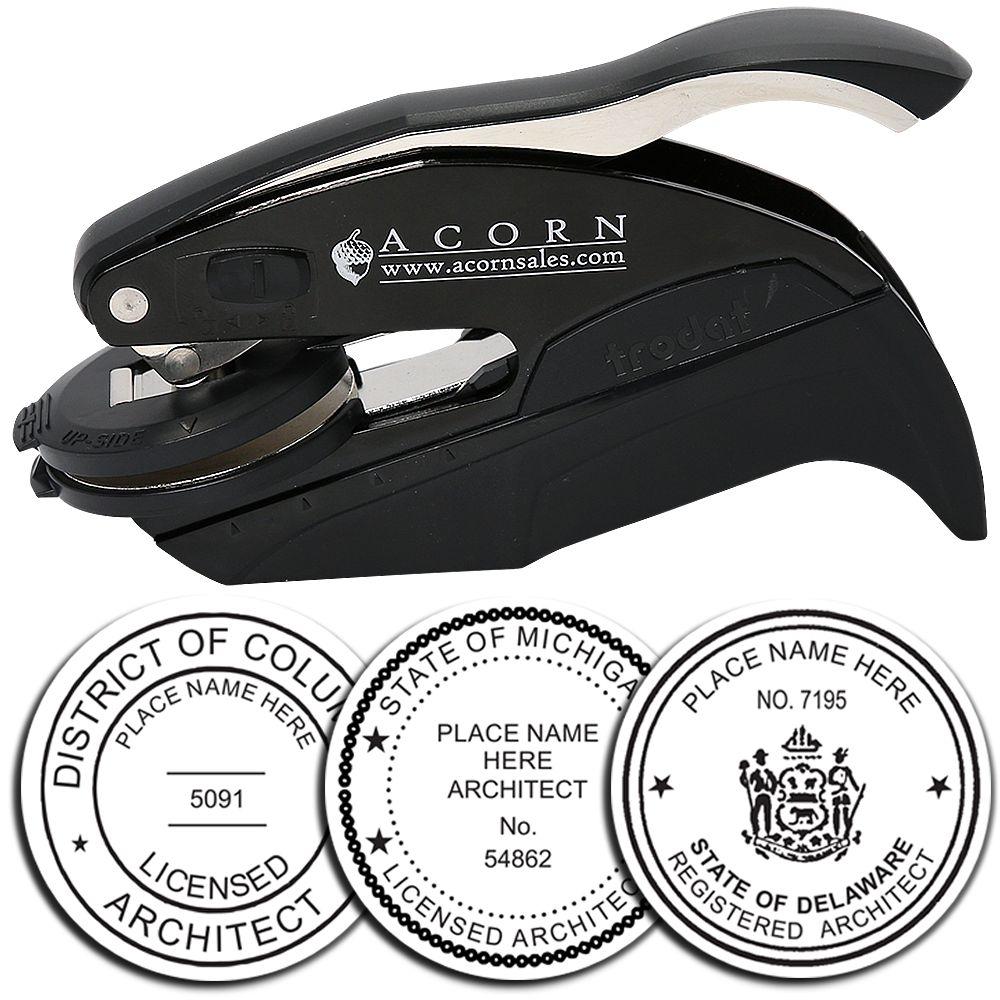
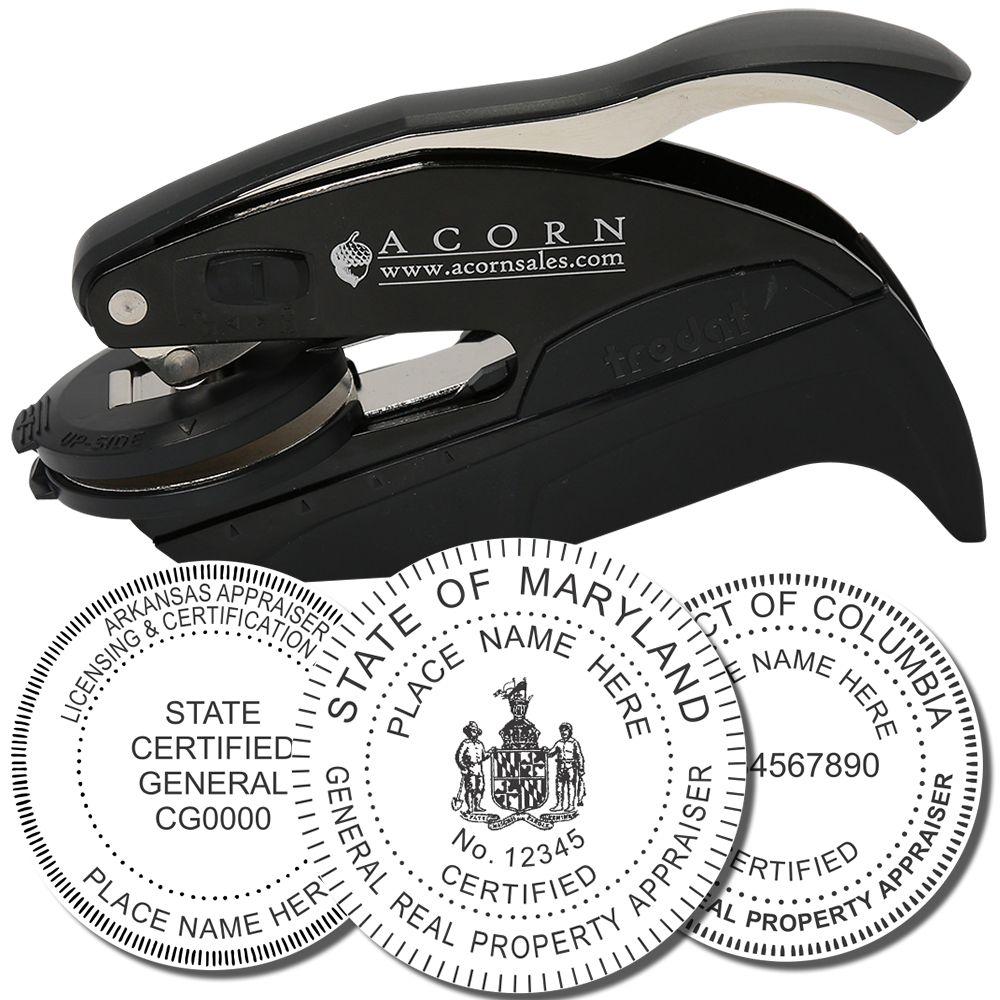
Every professional seal and stamp here is made to order, and the listings say the die is built to your state specifications with a guarantee that it will meet them. Each order includes a complimentary electronic seal, emailed as DXF, JPG, PDF and TIF files at no extra charge. That matters across state lines, because a second license produces a second electronic seal as well as a second die. What those files are for is covered in your free electronic seal and how to use it. PDF proofs are offered on the stamp listings, which is the moment to confirm that the state name and license number on the artwork are the ones the second board issued. Where a license has changed name or number rather than state, see replacing a seal after renewal or name change.
The seal is a state artifact, not a personal one
It is tempting to treat a seal as belonging to the person: your name, your credential, your tool. The published rules describe something narrower. The die is an artifact of one jurisdiction. New York prescribes the diameter, the legend at the top of the band, the words at the bottom, the name above the Great Seal and the license number below it. California prescribes the title in the top border, State of California in the bottom, and the name, certificate number and branch in the center. None of these describes you. Each describes a document a particular board will accept.
That is why a second state is a second purchase rather than a modification, and why the answer holds even where a state leaves its own name off the die: South Carolina and Pennsylvania both specify the license number without a state name, and the number alone is enough. A professional working three states carries three dies, and the useful habit is marking the handles so the right one is reached for under deadline. A second self inking stamp of seal is $39.95 and a second hybrid embosser is $42.95.



Ordering, proofs and delivery
A second state order needs the same information the first did, supplied fresh: the state, the discipline, your name exactly as the new board holds it, and the license or certificate number that board issued. Acorn builds artwork to that state's specification and guarantees it will meet the state board specification. PDF proofs are available on request on the stamp listings, worth using because the muscle memory of the first state is what puts the wrong legend on artwork. Production is quoted as one to two days on the stamps, and several professional embosser listings quote shipping in 24 to 48 hours. For wording outside the standard layout, contact us before production. Acorn has manufactured stamps and seals since 1964 and does not advise on where anyone may practice.
Care and longevity
The warranty is two years on seals and six months on stamps. Beyond that, the care that matters for a multi state professional is organizational. Keep the dies apart and labeled: the handheld and hybrid embossers have a sliding lock mechanism for storage, which also makes two identical bodies easy to confuse when different states are cut into them. Store pre inked and self inking stamps flat and capped so the impression area stays clean. Keep the electronic seal files in folders named for the state, since a mis-filed DXF is easier to attach to the wrong drawing than a die is to press onto the wrong sheet. When a license lapses, retire the lapsed die.
Products in this range
Browse the full range: Professional Engineer Stamps and Seals, Architect Stamps and Seals, Land Surveyor Stamps and Seals, Landscape Architect Stamps and Seals.
Related guides
- Replacing a Seal After a Renewal, Expiration or Name Change
- Electronic Seals and eSeal Image Files: What You Get and What You Do Not
- Real Estate Appraiser Stamps and Seals
- Why a State Board Guaranteed Stamp Supplier Matters
- PE Stamp and Seal Requirements by State
- Replacing a Seal After a Renewal or Name Change
- Electronic Seals and eSeal Image Files
Frequently asked questions
Do I need a second seal if I get licensed in a second state?
Generally yes. No board page read for this research states it in those words, so here is the reasoning. The second state issues the license and requires it before the work: Texas Occupations Code section 1001.301 says a person may not engage in the practice of engineering unless the person holds a license issued under that chapter. The second state also prescribes its seal out of its own material, with STATE OF NEW YORK and a New York license number under section 68.13, or State of California and the certificate number under board rule section 411. A die cut for one satisfies nothing in the other. Confirm with your board; this is not legal advice.
What is the difference between comity and reciprocity?
In practice the boards use them for the same thing. Connecticut titles its page "Professional Engineering Reciprocity or Comity" and runs it as one application route; Nebraska and Washington call it comity; NCARB calls the architectural equivalent a reciprocal license. All describe an application to the second board that, if approved, produces a license issued by that board.
Does an NCEES Record get me a license in another state?
No, and NCEES says so: an NCEES Record does not guarantee licensure in any jurisdiction, and because requirements vary a Record holder may have to submit additional information. What it does is hold a verified compilation of transcripts, employment history, references and exam results and transmit them to the board, so the same documents are not gathered again for each state. The 68 member boards still decide.
What does the NCARB Certificate do for an architect?
It is the standard route to a reciprocal license. NCARB says the easiest way to apply for one is through the Certificate and that every US jurisdiction accepts it. NCARB issues no license, and its reciprocity page states that architects can only provide professional services in jurisdictions where they are licensed.
Is there any case where one seal covers two states?
One confirmed case turned up, and it is narrow. Nebraska says engineers holding a Nebraska temporary permit will use their seal from the state of verified licensure when sealing documents pertaining to the Nebraska project, and must accompany this seal with the template issued by the Board. The permit covers a single project, runs no more than two years, and an engineer is eligible for only one. That is a permission granted by Nebraska, not general portability.
What about a few days of work in another state?
Some states publish a narrow nonresident exemption with tight limits. Pennsylvania exempts at section 5(b) practice not exceeding thirty days in the aggregate in one calendar year by a nonresident with no place of business in the Commonwealth who is legally qualified where they reside. New York Education Law section 7208 allows a nonresident with no established place of practice there to practice once a New York application has been filed, for the reasonable time the board needs to decide. These are the receiving state's rules.
Is a real estate appraiser treated differently?
Appraisers have a federal layer the design professions do not. The Appraisal Subcommittee records that Title XI requires state agencies to recognize, on a temporary basis, the certification or license of an out of state appraiser entering the state to complete an assignment for a federally related transaction. Those statements do not address which seal is used. Acorn makes appraiser seals to whichever state you name, from $39.95.
I am a PE and a PLS in the same state. One seal or two?
It depends on the state, and the three specifications read here split. Connecticut's seal guidance says that where a licensee is classified as a professional engineer and as a land surveyor, two seals are necessary, and the same sentence appears in the Regulations of Connecticut State Agencies at section 20-300-10. New York allows one combined die: section 68.13 lists LICENSED PROFESSIONAL ENGINEER AND LAND SURVEYOR among its legends. South Carolina also allows one, in regulation 49-207.
Does every state put its own name on the seal?
No, and that is the main qualification to the headline. New York and California both require it. South Carolina reserves the words South Carolina for the firm seal under regulation 49-207. Pennsylvania specifies the registrant's name and number and a legend such as Registered Professional Engineer, with no state name. Every specification read here does carry the license number, and that number belongs to one board.
What does Acorn need to make a second state seal?
The state, the discipline, your name as the new board holds it, and the license or certificate number that board issued. The listings say the die is made to your state specifications and guaranteed to meet them. PDF proofs are offered on the stamp listings, and the proof catches a first state habit before the die is cut. For wording outside the standard layout, use contact us.
Does a second license mean a second electronic seal?
Yes, because the e-seal is a picture of the die. Acorn includes a complimentary electronic seal with each professional seal and stamp, emailed as DXF, JPG, PDF and TIF files. A second state produces a second set, so keep them in folders named for the state. Their use is in your free electronic seal and how to use it.
What does a second seal cost?
For most professionals it is the smallest line in the move. A self inking rubber stamp of seal is $39.95, a hybrid handheld embosser is $42.95, and a slim or MaxLight pre inked stamp of seal is $46.95. An Xstamper is $64.95, the median of the 506 published products in this cluster. An extended long reach desk embosser is $169.95, and the electric units are $1,795.00 and $2,095.00.
Is this page legal advice about where I can practice?
No. This is product information from Acorn's catalog plus a summary of primary sources listed at the foot of the page. Nothing here tells anyone where they may practice. Licensing requirements, seal specifications and temporary practice arrangements differ by state and change; confirm with your board before ordering a die against them.








