

Written by Acorn Sales Company, manufacturing stamps and seals since 1964 · Product facts checked against the Acorn Sales notary range (279 published SKUs) on 22 September 2026 · Not legal advice and not insurance advice. Acorn does not sell notary bonds or errors and omissions insurance. Confirm bonding with your own commissioning authority and any coverage with a licensed insurance professional. · Updated 25 September 2026
Regulatory facts come only from these primary sources, each fetched on 22 September 2026. Seventeen states read: ten requiring a bond, seven not listing one.
- Arizona Secretary of State, Notary
- California Secretary of State, Notary Public Commission Check List
- California Secretary of State, File Notary Public Oath and Bond
- California Secretary of State, Purchase Notary Public Materials
- California Notary Public Handbook, California Secretary of State
- Colorado Secretary of State, New Notary Commission
- Florida Statutes section 117.01, Florida Legislature
- Indiana Notary Public Guide, Indiana Secretary of State INBiz
- Massachusetts, Apply to become a notary public
- Michigan Department of State, Notary application
- Minnesota Secretary of State, Become a Notary
- Missouri Revised Statutes section 486.615, Missouri Revisor of Statutes
- Nevada Revised Statutes chapter 240, Nevada Legislature
- New York Department of State, Become a Notary Public
- North Carolina General Statutes Chapter 10B Article 1, North Carolina General Assembly
- Ohio Secretary of State, Notary
- Ohio Revised Code section 147.01, Ohio Laws and Administrative Rules
- Pennsylvania Department of State, Bonding Requirement
- Texas Secretary of State, Frequently Asked Questions for Notaries Public
- Texas Government Code Chapter 406, Texas Statutes
- Virginia Secretary of the Commonwealth, Notary Application Process
- Washington Revised Code section 42.45.200, Washington State Legislature
- Washington State Department of Licensing, Frequently asked questions: Notaries public
What these are for
Two products with similar paperwork do opposite jobs, and the confusion has a cost. A notary who treats the bond as personal protection learns otherwise when the surety pays the injured party and then looks to the notary. A notary who treats errors and omissions insurance as a commissioning requirement either buys something no authority we read asks for, or skips it believing the bond already covers that ground. Three groups land here: new applicants working a commissioning checklist, notaries renewing who bought a bond years ago without reading it, and notaries in states that require no bond at all who wonder what that silence means. The regulatory half below answers from state sources and stops where they stop. The product half says what Acorn actually makes, which is equipment and nothing else.



The ranges we stock
Part one, the regulatory half: what a notary surety bond is
A surety bond here is a three party instrument. The notary buys it, a surety company issues it, and the beneficiary is the member of the public who is harmed. Florida Statutes section 117.01 requires a notary to "give bond" before executing the duties of the office, "payable to any individual harmed as a result of a breach of duty by the notary public acting in his or her official capacity." Texas Government Code section 406.010 requires a bond payable to the governor which "may be sued on in the name of the injured party." Washington uses different vocabulary for the same object: RCW 42.45.200 requires "an assurance in the form of a surety bond," under which "the surety or issuing entity is liable." Every formulation points outward, at the harmed party. None points at the notary. Not legal advice.
What actually happens when a bond claim is paid
This is the step that changes how the bond should be read, and two sources describe it explicitly. The California Notary Public Handbook: the bond "is designed only to provide a limited source of funds for paying claims against the notary public," and "The notary public remains personally liable to the full extent of any damages sustained and may be required to reimburse the bonding company for sums paid by the company because of misconduct or negligence." The Indiana Notary Public Guide walks the sequence. If a complainant is awarded damages by a court, the "bond insurance provider will pay the damages up to the amount of the surety bond," then "seek reimbursement from the notary public for the amount paid," with anything above the bond "collected directly from the notary public." Florida adds that on payment, "the entity who has issued the bond for the notary public shall notify the Governor." A paid claim is visible to the appointing authority. Not legal advice.
Part one continued: what errors and omissions insurance is
Errors and omissions insurance is a two party contract between a notary and an insurer, bought by the notary for the notary. The Texas Secretary of State sets the two side by side: a surety bond "is a promise to pay for any financial loss due to the actions of a notary," while "Errors and Omission policies are additional insurance purchased by the notary to protect the notary, and not the public." Pennsylvania frames it as an option with a stated purpose, a notary "may also wish to purchase errors and omissions insurance for the notary's protection in the event that the notary public commits a negligent act or makes an error or omission." Indiana uses almost the same construction: "A notary may purchase an errors and omission policy if they wish to protect themselves financially." Three states, three descriptions of one object, all optional and all pointed at the notary. Not insurance advice.
Which states we confirmed require a bond, and exactly how we counted
A state is counted as requiring a bond only where we fetched that state's own commissioning authority page or its own statute and that document states the requirement. No summaries, no vendor pages, no secondhand lists. Ten states met the test. Arizona, whose Secretary of State lists an "Original notarized Notary Bond" among the items filed. California: "A notary public must file an oath of office and bond with the county clerk's office." Florida, section 117.01. Indiana: "Before receiving an Indiana notary commission an applicant must secure an approved official surety bond." Michigan, where an applicant must "have filed with the appropriate county clerk a proper surety bond." Missouri, section 486.615. Nevada, NRS section 240.030, "Enter into a bond to the State of Nevada." Pennsylvania. Texas, section 406.010. Washington, RCW 42.45.200. The count is ten because we read ten such documents. It is not a claim about the other forty states. Not legal advice.
Which states we confirmed do not list a bond, and how we counted those
The honest form of this count is narrower than people expect, so here is the test. A state is counted here only where we fetched its own page listing the requirements to be commissioned, or the statute setting out qualifications and the commissioning procedure, and no bond appeared among them. Seven states met it. Colorado, five steps: qualification, state approved training, online testing, reading the notary law, applying. Massachusetts, age, living or working in the Commonwealth, signatures from known members of the community. Minnesota, the application, fee, age minimum and residency rule. New York, three requirements: application and fee, the state notary examination, residency or a place of business. North Carolina, sections 10B-5 and 10B-10, from age and residency through course, examination, manual and oath before the register of deeds. Ohio, Revised Code section 147.01. Virginia, application through oath before a circuit court. The careful statement: a bond is not among the requirements stated in the documents we read. That says nothing about your own exposure. Not legal advice.
Is errors and omissions insurance ever required by a state
Across all seventeen states we read, errors and omissions insurance was not a condition of being commissioned anywhere. One says so in terms. Pennsylvania: "Errors and omissions insurance is not required in order to obtain or maintain a Pennsylvania notary commission." Two more describe it as elective. Indiana: a notary "may purchase" a policy "if they wish to protect themselves financially." Texas calls it "additional insurance purchased by the notary." Washington makes the point in reverse, refusing to let a policy stand in for the bond: "No, you are required to submit a copy of the surety bond." The remaining authorities do not mention the subject, and silence is not a rule either way. So the defensible statement is narrow: in the seventeen states we read it is optional, and one states expressly that it is not required. We did not read all fifty. A lender, title company or signing service is not a commissioning authority and sets its own terms. Not insurance advice.
Where the bond sits in the commissioning sequence
Two patterns appeared, and which one applies decides what can be ordered when. In the more common pattern the bond comes before the commission has force. Washington requires the assurance "Before issuance of a commission as a notary public." Missouri: a commission "shall not become effective until an oath of office and a bond have been presented to the county clerk." Indiana requires it "Before receiving an Indiana notary commission." Florida requires it "prior to executing the duties of the office." In the second pattern the appointment lands first. California's checklist runs seven steps, and "File Notary Public Oath & Bond" is step seven, after "Await Commission Packet" and "Purchase Notary Public Materials," due within thirty calendar days of the commencement date with no extension. Pennsylvania executes the bond within forty five days after appointment and records it with the county recorder of deeds before the notary begins notarizing. Either way the seal comes later. Not legal advice.
Part two, the product half: Acorn sells neither a bond nor a policy
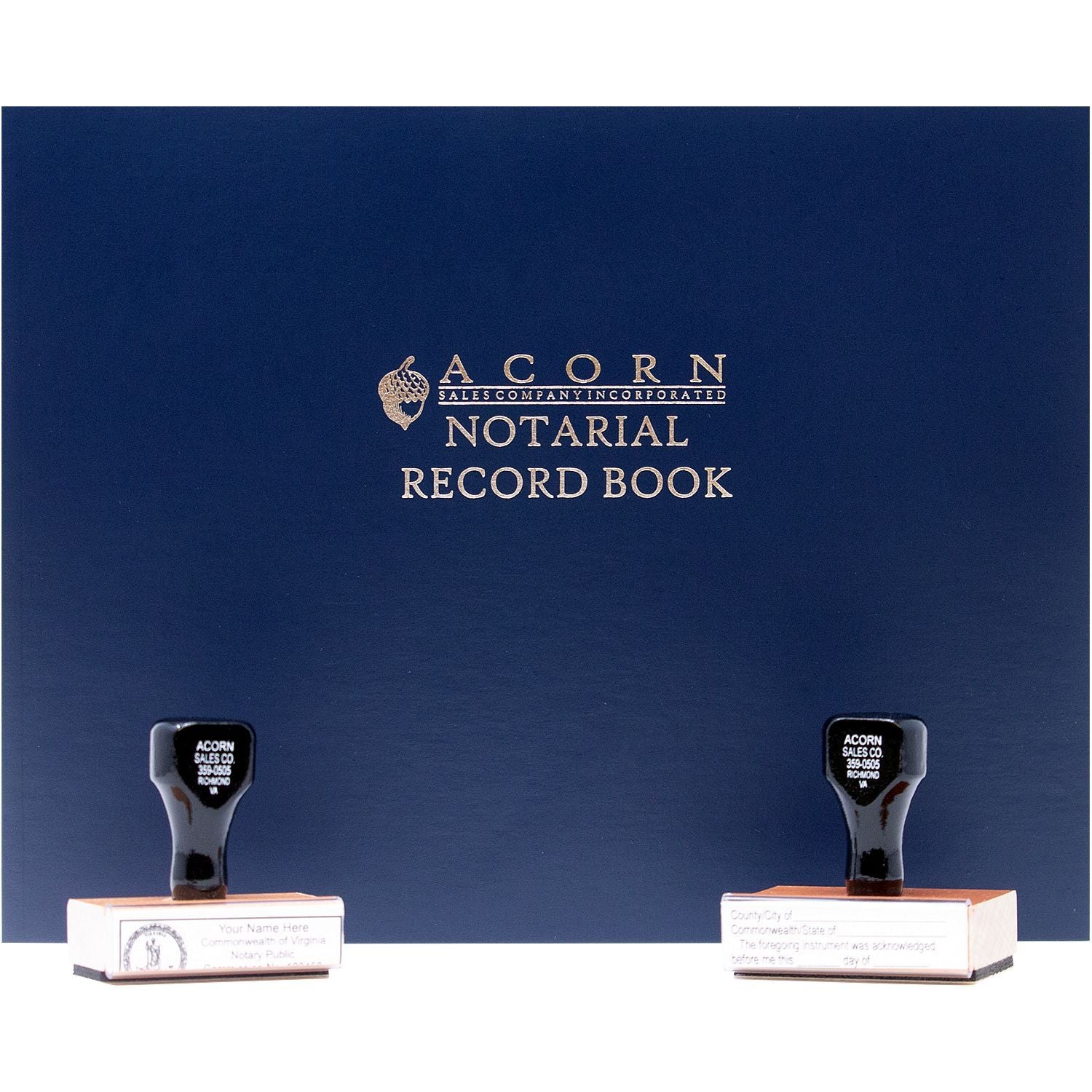
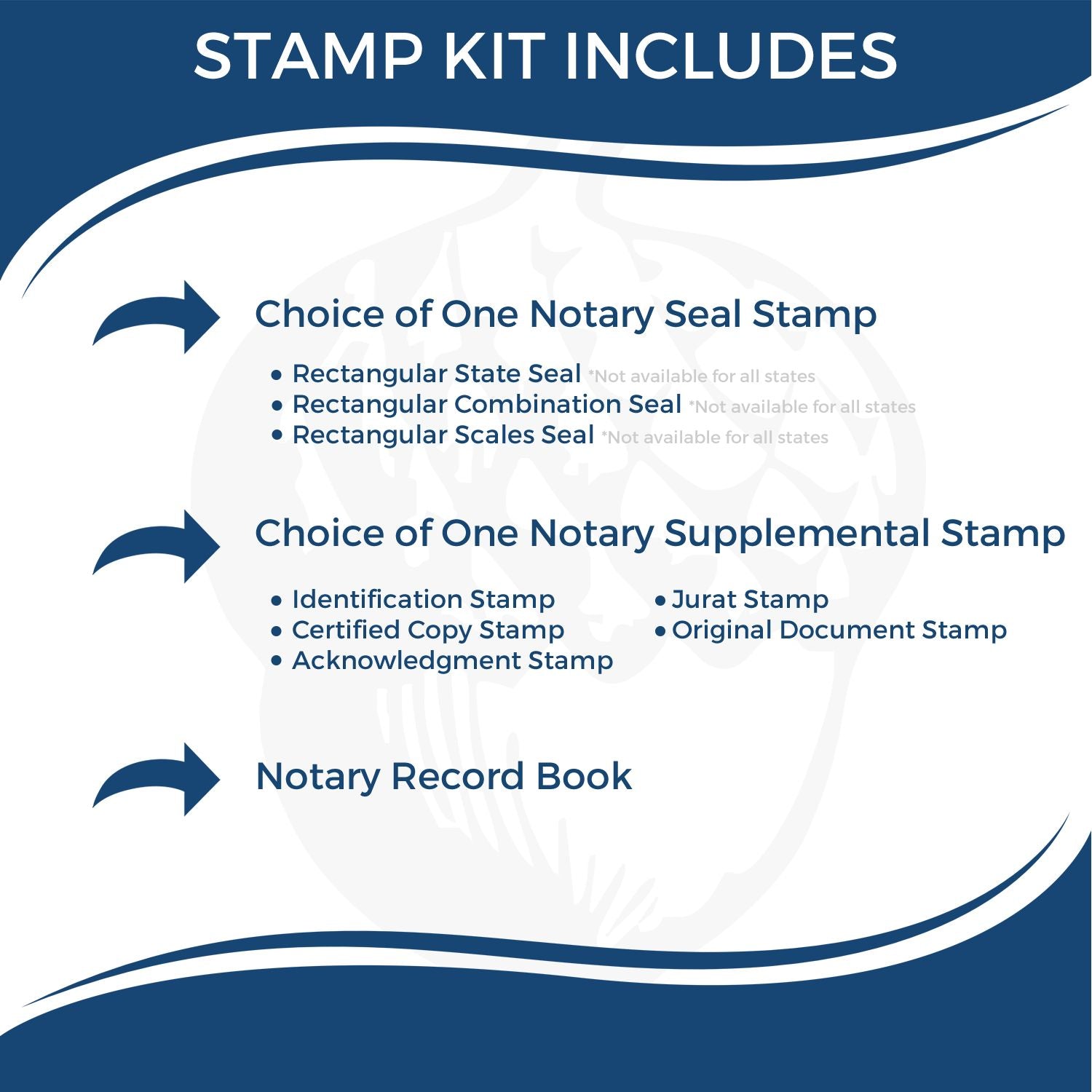
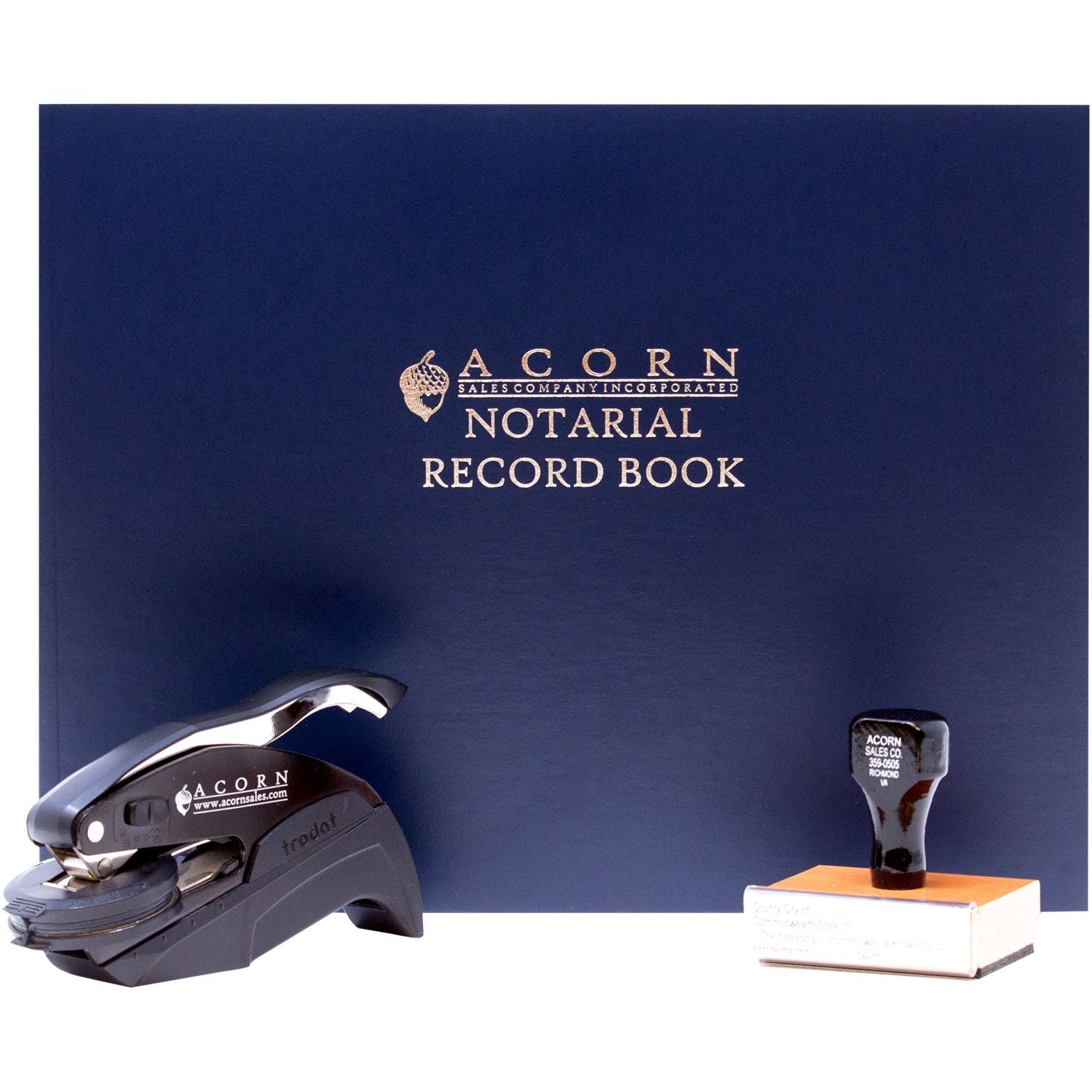
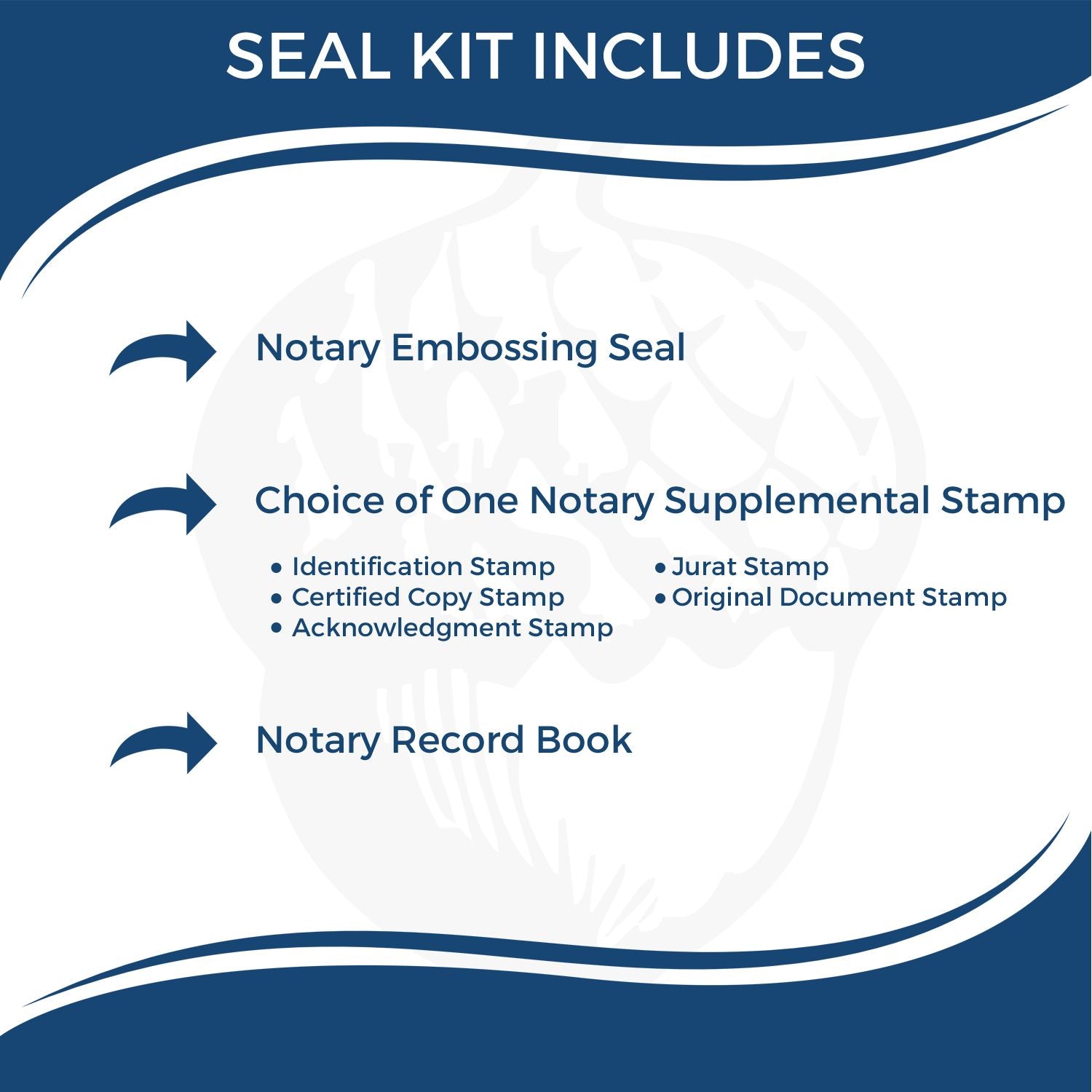
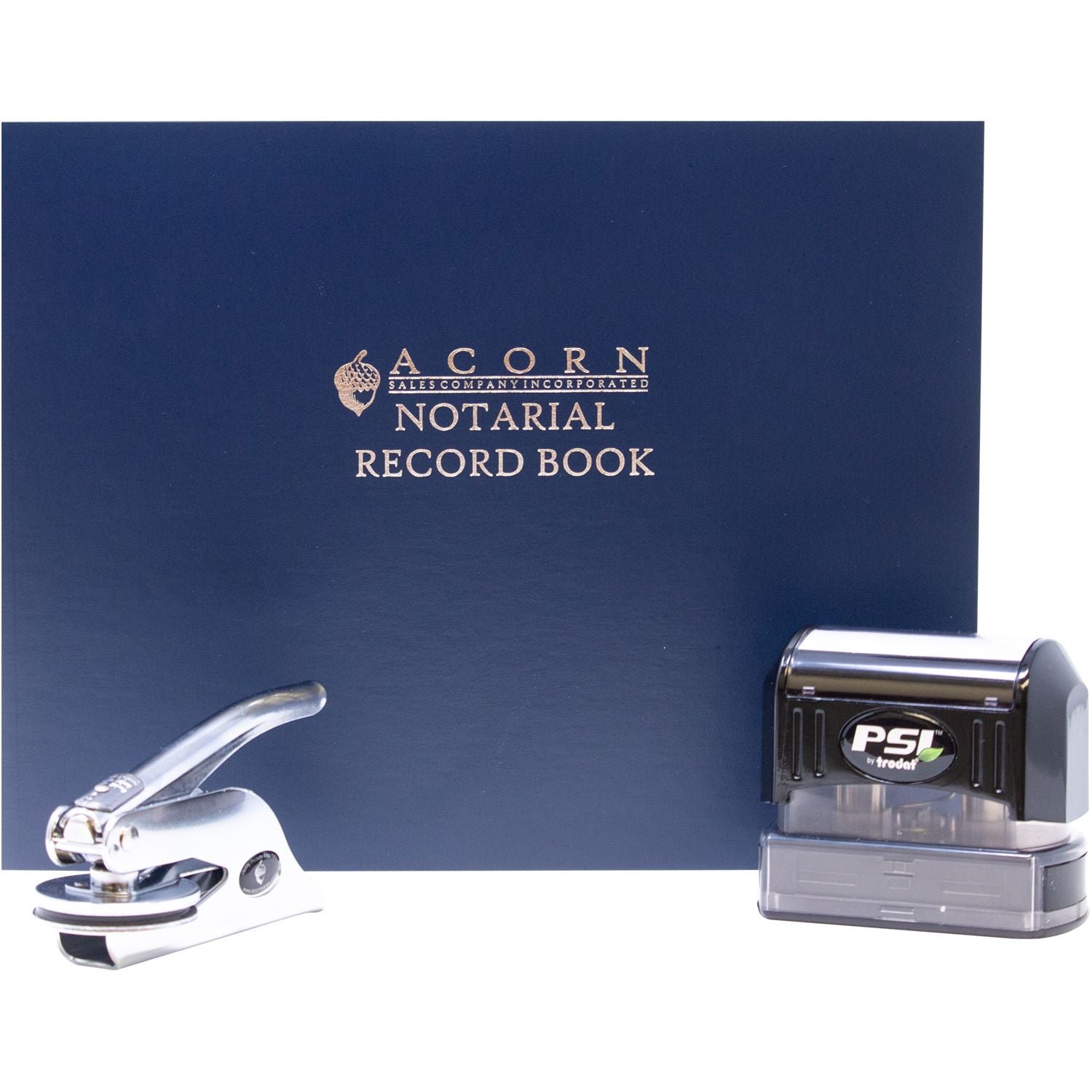
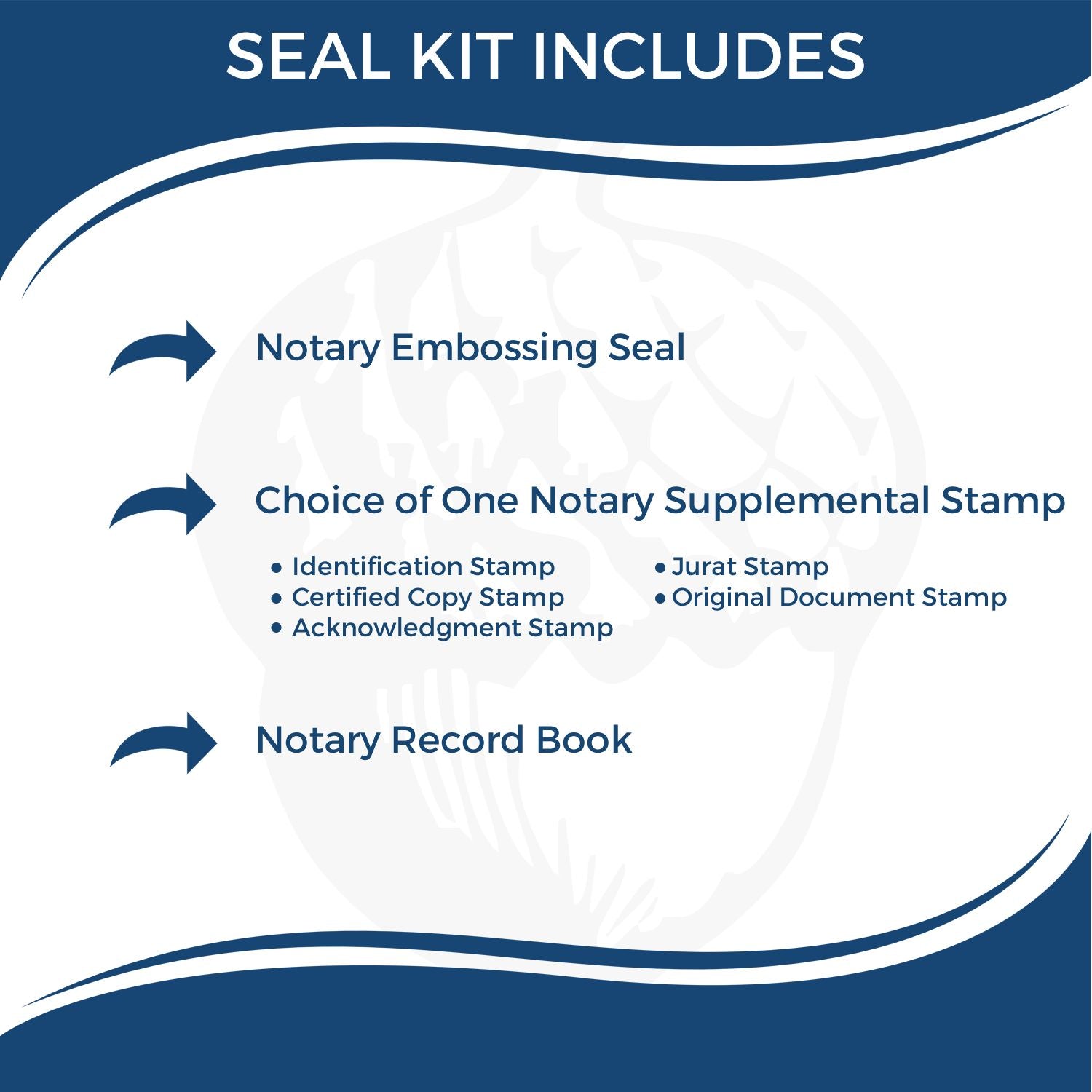
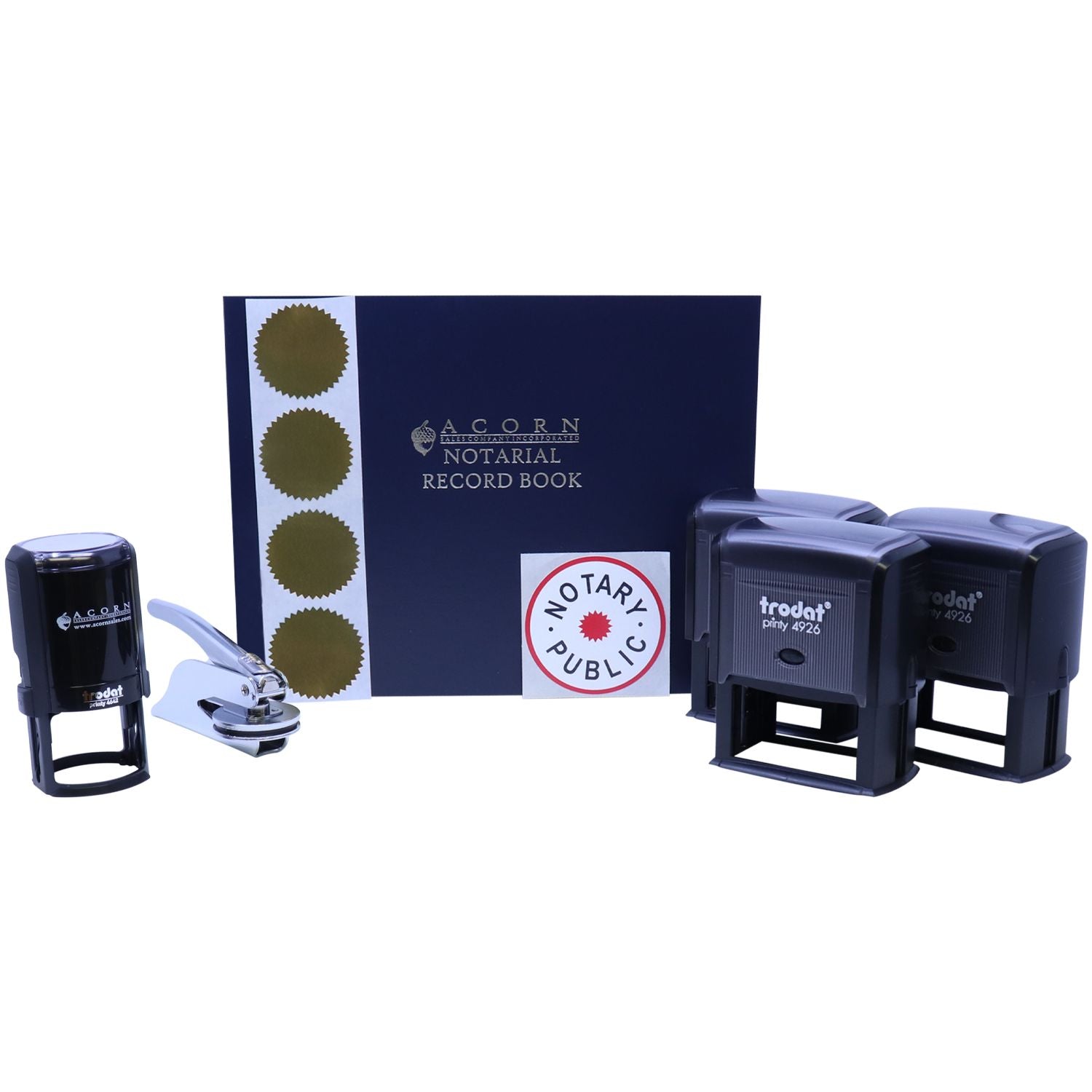
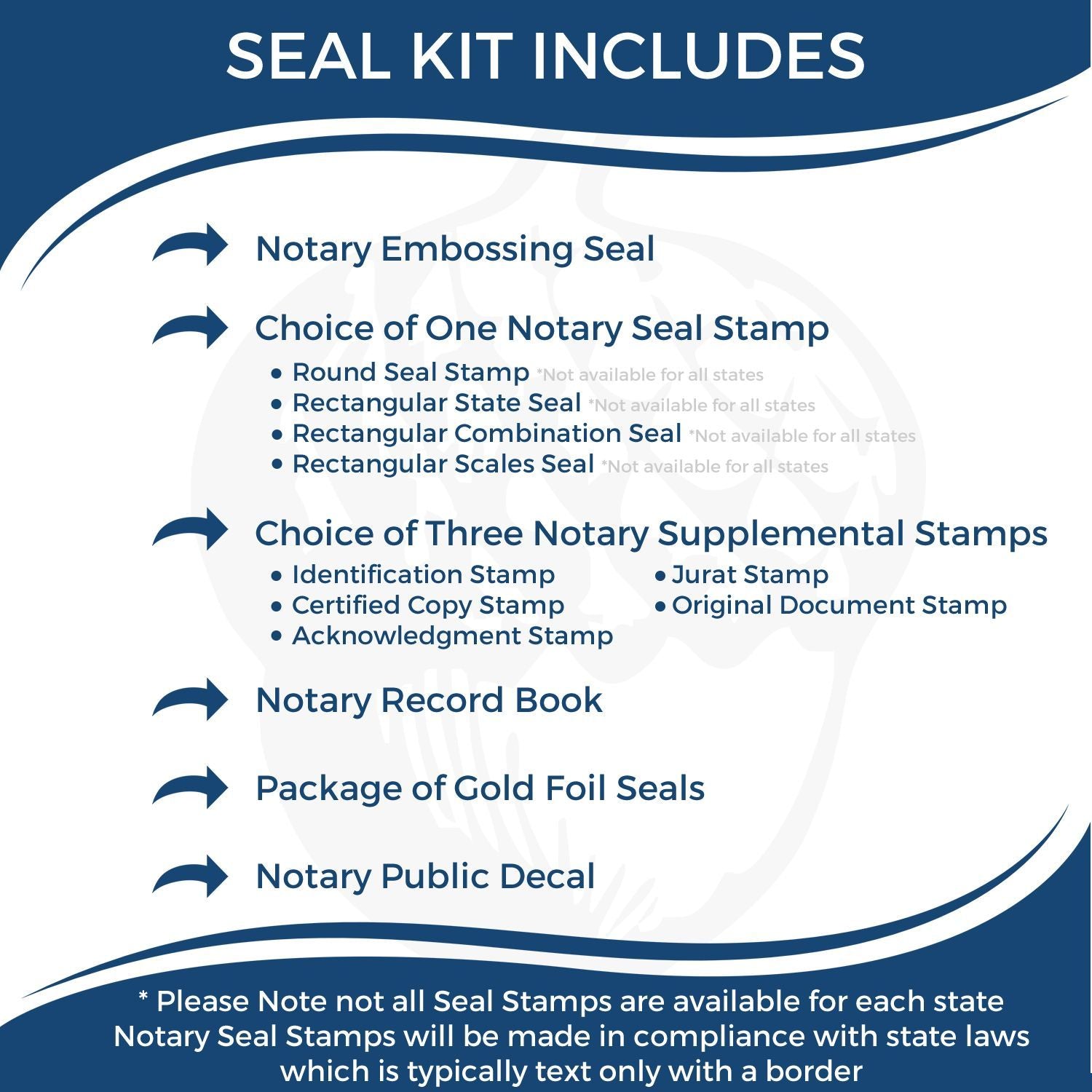
Here the page changes subject, and the limit is worth stating plainly. Acorn Sales has manufactured stamps and seals since 1964. It is not a surety, an insurance agency or a broker, and sells neither a notary bond nor an errors and omissions policy. A bond comes from a surety or bonding company; California notes only that a notary "may utilize any bonding or insurance company of their choice." A policy comes from an insurer. What Acorn supplies is equipment: the official seal or stamp, supplemental stamps for certificate wording, the record book, and the small items around them. Every figure below is an Acorn catalog price and none is a bond, premium or coverage figure. The official stamp starts at $22.95 for the Regular Rubber Stamp of Notary Public Seal and $34.95 for the MaxLight Pre-Inked Stamp of Notary Public Seal. The one Acorn item that touches this subject at all is the Official Notary Public Record Book at $12.95, "over 50 pages and space for more than 250 entries," which the catalog frames as documentation "just in case you are ever audited." It is included in the Deluxe and Supreme packages.
Sizes and dimensions
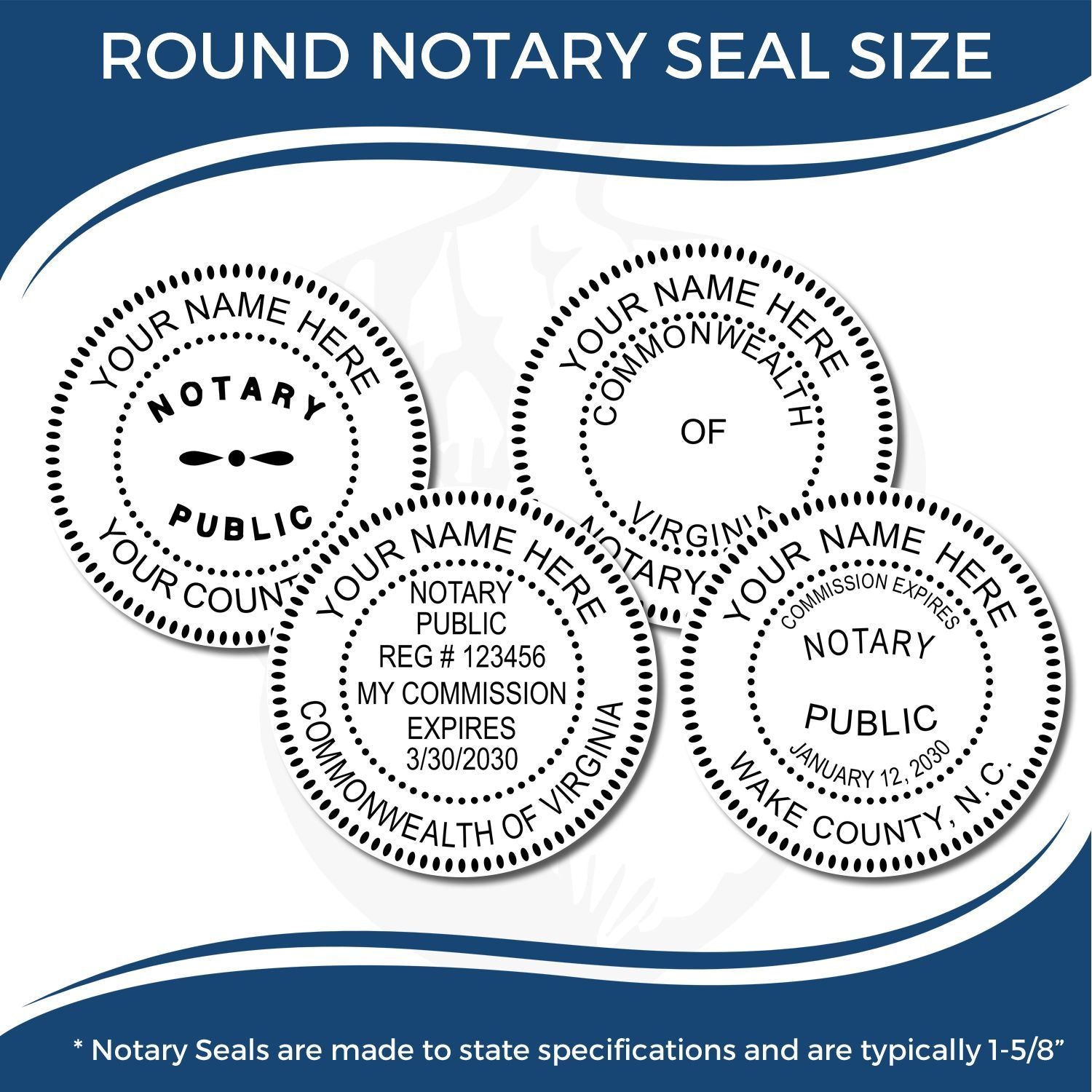
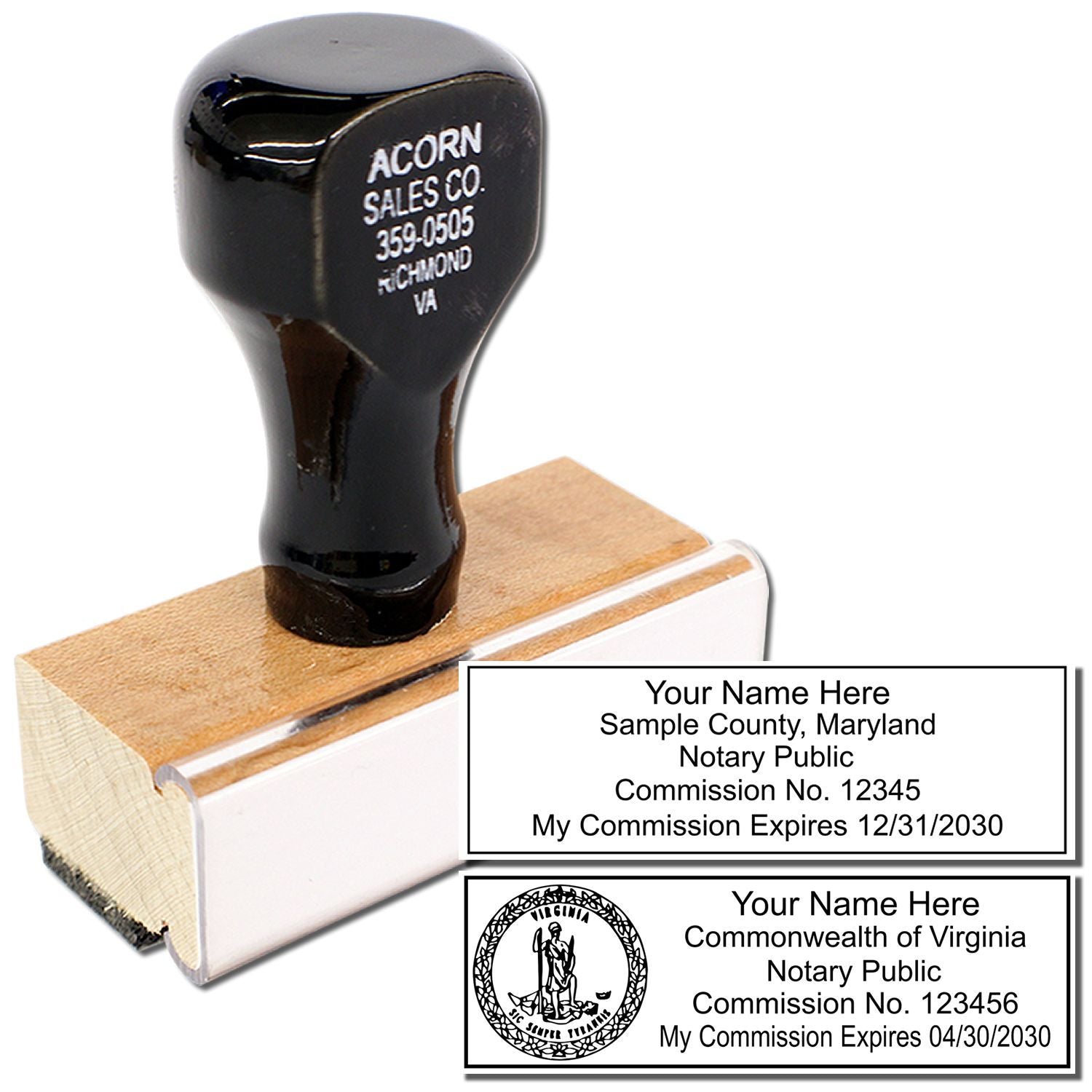
Sizes here are set by state specification, not preference. The round notary seal impression is 1-5/8″ in diameter, the figure quoted for the embossers in the Deluxe and Supreme packages and for the Notary Seal Impression Inker at $15.95, which is listed as usable with 1-5/8″ impressions. Rectangular stamps are the other format. The Regular Combination Stamp at $22.95 and the Regular State Seal Notary Stamp at $22.95 are both 7/8″ tall by 2-3/8″ wide. The MaxLight Pre-Inked Stamp of Notary Public Seal at $34.95 is 9/16″ tall by 1-1/2″ wide. The Notary eSeal Electronic Image Stamp of Seal at $20.00 follows the state shape, typically 1-5/8″ round or 7/8″ x 2-1/4″ rectangular. None of this has any bearing on a bond.
How many impressions you get
Impression count is the practical difference between the stamp families. Self inking stamps, including the Self Inking Combination Stamp at $26.00 and the Self Inking Acknowledgment Notary Stamp at $22.95, are rated at up to 5,000 impressions. PSI pre inked stamps run longer: the Deluxe Handheld Seal Package with PSI Stamps at $69.95 states the stamp "can be used up to 15,000 times" and is built with minimal moving parts. MaxLight pre inked stamps are quoted at 20,000 impressions, with the die plate absorbing the ink so there is no separate pad.
Ink and colors
Ink is where a notary can quietly go wrong, and the catalog says so. The Regular Rubber Stamp of Notary Public Seal at $22.95 uses ink pads sold separately in a choice of colors, with the caution attached: "you should make sure you use the ink color required by your state." That is a state question, and the state by state picture is in Notary Stamp Requirements by State. The Self Inking Combination Stamp at $26.00 comes in 11 ink colors with water based ink. MaxLight pre inked stamps come in 5, and the Deluxe Handheld Seal Package with PSI Stamps at $69.95 is listed in 5. One more item matters to anyone who embosses: a raised impression does not photograph, and the Notary Seal Impression Inker at $15.95 is a blank stamp carrying no text, used to ink over one so it reproduces.
What you can customize
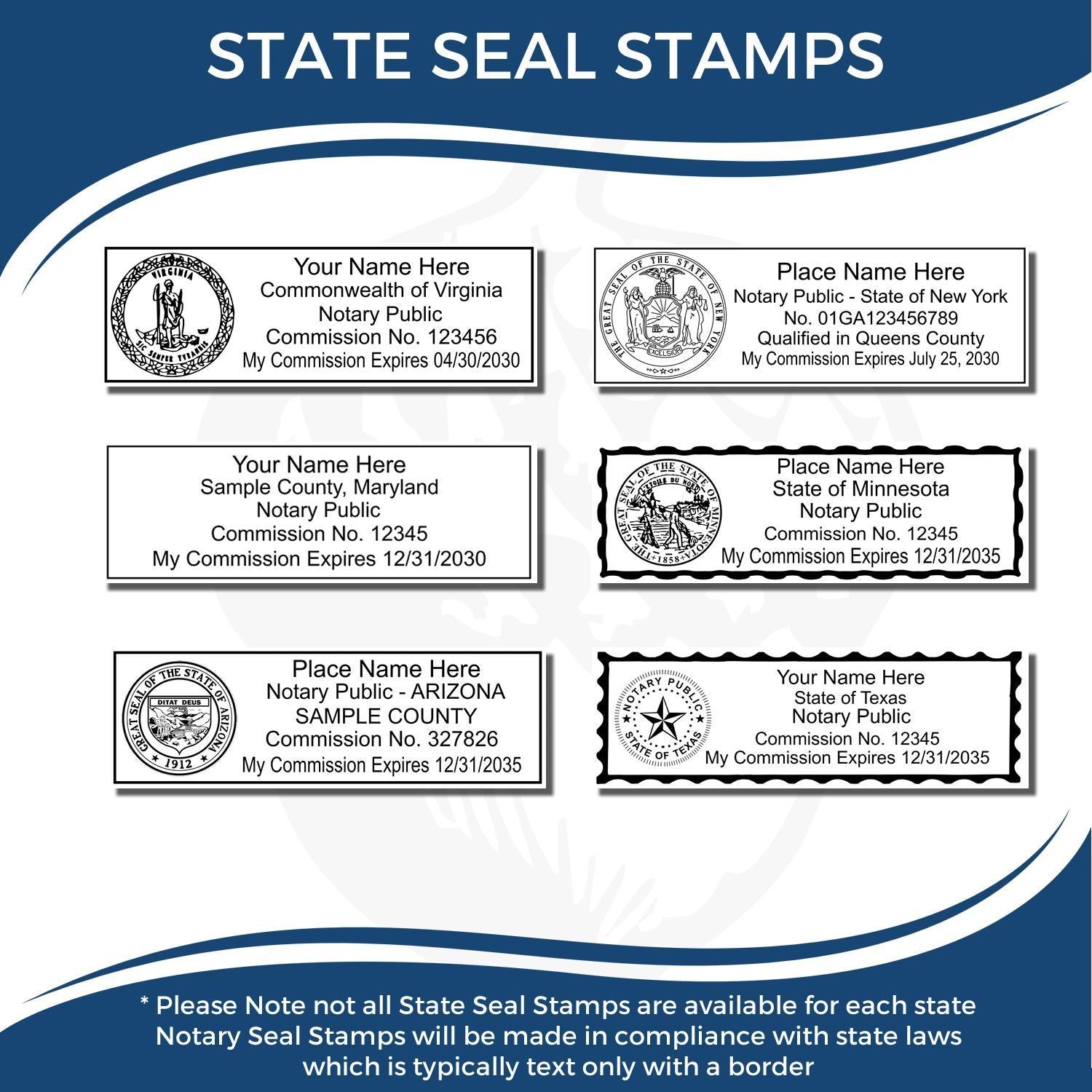
Every notary seal and official stamp Acorn makes is engraved to order, which is why the commission has to exist before the order does. The Regular Rubber Stamp of Notary Public Seal at $22.95 offers four layouts: name only, name and commission number, name and expiration date, or name with both. The Self Inking Combination Stamp at $26.00 carries name, expiration and commission number, and the listing notes that "If your state does not require your commission number, it will not be included," with four date formats offered. The Regular State Seal Notary Stamp at $22.95 exists only where the state seal is permitted, and the listing is blunt about it: "Some states specifically prohibit using the grand seal." None of that customization changes a bonding position. A seal layout and a surety contract are unrelated objects.
The bond pays claims against you, and that is not the same as protecting you
The confusion starts from a reasonable assumption: that a thing you are obliged to buy, which pays out when you get something wrong, must exist for your benefit. Read the sources and the arrangement inverts. Pennsylvania states that the bond "is intended to protect the customer from financial loss, not the notary." The California Notary Public Handbook calls it "a limited source of funds for paying claims against the notary public," which is a different sentence from protection, then closes the loop: the notary "remains personally liable to the full extent of any damages sustained and may be required to reimburse the bonding company for sums paid by the company." Indiana describes the surety paying court awarded damages and then seeking "reimbursement from the notary public for the amount paid," with anything above the bond "collected directly from the notary public." So the bond behaves less like insurance and more like a guarantee that the public gets paid quickly, with the notary as the party who ultimately funds it. The instrument that works the way people expect the bond to work is the separate, optional errors and omissions policy, which Texas describes as bought "by the notary to protect the notary, and not the public." Two products, one paperwork step apart, facing opposite directions. Acorn sells neither.





Ordering, proofs and delivery
The supply side follows from the regulatory half. The commission, and the bond where a state requires one, are transactions with a state and a surety company. Seal and stamps come after, because they are engraved with facts that do not exist until the commission does. The application sequence is in How to Become a Notary Public, and the full supply range is in Notary Supplies: Stamps, Seals, Journals and Kits. Once the commission number and expiration date exist, a package is the cheapest complete start: the Deluxe Notary Rectangular Stamp Package at $44.95 covers a rectangular stamp, a record book and one supplemental stamp with no embosser, and the Deluxe Black Hybrid Seal Package with Hand Stamps at $54.95 adds a custom engraved seal. Order questions go through contact us.
Care and longevity
Care here is about protecting an engraved die carrying facts you cannot alter. Acorn warrants embossing seals for two years and stamps for six months. The Notary Pocket Seal Storage Box at $4.95 is for handheld and soft embossers, and the listing is specific: "This cannot be used with a desk model embosser." Self inking stamps hold an internal pad and take water based ink. The record book needs nothing except being kept. One thing care cannot fix: if a name, commission number or expiration date changes, the device is reordered rather than corrected, which is covered in Notary Stamp Requirements by State.
Products in this range
Browse the full range: Notary Public Stamps and Seals, Notary Public Embossing Seal Kits, Notary Public Inked Stamp Kits, Notary Public Stamp and Notary Public Seal Supplies.
Related guides
- How to Become a Notary Public: The Steps and the Supplies
- Notary Supplies: Stamps, Seals, Journals and Kits
- Notary Journals and Record Books: What They Are and What Goes In Them
- Apostilles and Document Authentication for Notaries
- Remote Online Notarization and What It Means for Your Seal
- How to Properly Dispose of an Expired Notary Stamp or Seal
- Notary Stamp Requirements by State
- How to Become a Notary Public
- Notary Supplies: Stamps, Seals, Journals and Kits
Frequently asked questions
What is a notary surety bond in plain terms?
A three party financial instrument. The notary buys it, a surety company issues it, and the beneficiary is a member of the public harmed by the notary acting in that office. Florida makes it "payable to any individual harmed as a result of a breach of duty by the notary public acting in his or her official capacity." Texas makes it payable to the governor and suable "in the name of the injured party." Not legal advice.
Who does the bond protect, the public or me?
The public. The Pennsylvania Department of State states it directly: "A surety bond is intended to protect the customer from financial loss, not the notary." Every bond provision we read points at the harmed party rather than at the notary. Not legal advice.
If my bond pays a claim, am I finished with it?
Generally no, and this is the most misunderstood point on the subject. The California Notary Public Handbook states that a notary "remains personally liable to the full extent of any damages sustained and may be required to reimburse the bonding company for sums paid by the company." Indiana describes the provider paying the damages and then seeking "reimbursement from the notary public for the amount paid." Not legal advice.
Then what is errors and omissions insurance for?
For the notary. Texas describes these as "additional insurance purchased by the notary to protect the notary, and not the public." Pennsylvania describes buying it "for the notary's protection in the event that the notary public commits a negligent act or makes an error or omission." What a given policy covers is a question for the insurer. Not insurance advice.
Is errors and omissions insurance ever required by a state?
In the seventeen states we read, no. Pennsylvania says so expressly: "Errors and omissions insurance is not required in order to obtain or maintain a Pennsylvania notary commission." Indiana calls it something a notary "may purchase." We did not read all fifty states, so we make no claim about the rest. Not insurance advice.
Can an errors and omissions policy satisfy a state bond requirement?
Not in the one state we read that answers the question. Washington's Department of Licensing, asked whether a policy will do, answers: "No, you are required to submit a copy of the surety bond given or sent to you by the insurance or bond company." The two instruments are not interchangeable. Not legal advice.
Which states did you confirm require a bond?
Ten: Arizona, California, Florida, Indiana, Michigan, Missouri, Nevada, Pennsylvania, Texas and Washington. The count is ten because we fetched ten documents, each one that state's own commissioning authority page or its own statute, each stating the requirement. All are listed with URLs in the sources below.
Which states did you confirm do not list a bond?
Seven: Colorado, Massachusetts, Minnesota, New York, North Carolina, Ohio and Virginia. The precise statement is that no bond appears among the requirements set out in the documents we fetched, which were the authority's own requirements page or the statute covering qualifications and commissioning. Not legal advice.
Does the bond come before or after the commission is issued?
Both patterns exist. Washington requires the assurance "Before issuance of a commission as a notary public," and Missouri provides that a commission "shall not become effective until an oath of office and a bond have been presented to the county clerk." California runs the other way: filing the oath and bond is step seven of seven on its own checklist, due within thirty calendar days of the commencement date. Not legal advice.
My state requires no bond. Does that mean nobody can come after me?
No, and nothing here should be read that way. A bond requirement is a funding mechanism a state imposes, not a description of who is liable. Liability comes from the notary's own acts. What a bond changes is where an injured party looks first. Not legal advice and not insurance advice.
Does Acorn sell notary bonds or errors and omissions insurance?
No. Acorn Sales has manufactured stamps and seals since 1964 and is not a surety, an insurance agency or a broker. Bonds come from surety or bonding companies; California notes only that a notary "may utilize any bonding or insurance company of their choice." Policies come from insurers. Acorn makes the seal, stamps, record book and supplies, from $3.95 to $2,095.00 across 279 published notary items.
If a claim is ever made, does my record book matter?
It is the one contemporaneous record of a signing a notary controls. The Official Notary Public Record Book at $12.95 holds over 50 pages with space for more than 250 entries, and the catalog gives the reason: documentation "just in case you are ever audited or need to reference back to an event." What weight a journal carries in a proceeding is a legal question, not a product one.
What should I buy from Acorn, and when?
After the commission exists, because the seal is engraved with its details. The official stamp starts at $22.95 for the Regular Rubber Stamp of Notary Public Seal and $34.95 for the MaxLight Pre-Inked Stamp of Notary Public Seal. The Deluxe Notary Rectangular Stamp Package at $44.95 covers a stamp, record book and one supplemental stamp; the Deluxe Black Hybrid Seal Package with Hand Stamps at $54.95 adds a custom engraved seal.
Is there an Acorn product that covers this topic as training?
One, and it is a class rather than a policy. The Quick Start Notary Combo for Virginia Notaries at $99.00 is a two hour Virginia notary law and procedures class packaged with a self inking state seal stamp and a record book, and the listing names "the importance of errors and omissions insurance" among its topics. Buying the class does not buy coverage.








